Mots-c
$58.00 $200.00Price range: $58.00 through $200.00
Mots-c — available in multiple dosages. For research use only.
MOTS-C Peptide for Sale: The Mitochondrial Hormone Researchers Are Studying
MOTS-C rewrote a basic assumption in biology. For decades, mitochondria were treated as passive energy producers that took direction from the nucleus. MOTS-C showed they send signals back. This 16-amino-acid peptide is encoded inside mitochondrial DNA, produced within the mitochondria, and released into circulation where it functions as what researchers now call a mitokine, a mitochondrial hormone that coordinates metabolism across skeletal muscle, adipose tissue, bone, and the vascular endothelium.
Pure Peptide Factory stocks research-grade MOTS-C with batch-specific HPLC verification and domestic cold-chain shipping. If you have been looking for MOTS-C peptide for sale from a supplier that backs its purity claims with actual data, this is it.
Why Researchers Buy MOTS-C from Pure Peptide Factory
Purity Documentation That Goes Beyond the Label
MOTS-C is a short 16-amino-acid sequence. Short peptides are among the easiest compounds to adulterate or mislabel because the molecular weight difference between an intact and degraded peptide is small enough to miss without proper analysis. This is why the research community on Reddit and in institutional labs flags MOTS-C sourcing as a real concern. Every batch we ship includes a lot-specific HPLC chromatogram and mass spectrometry report confirming sequence integrity. Download the COA for your specific lot, compare the mass/charge ratio to published values, and verify before you run your protocol.
Domestic Cold-Chain That Protects Peptide Stability
Mitochondrial-derived peptides are temperature sensitive. We ship from domestic cold-storage with phase-change cooling, and most orders arrive within 1 to 3 business days. International vendors cannot match that reliability for a compound this sensitive.
Four Configurations for Any Protocol Scale
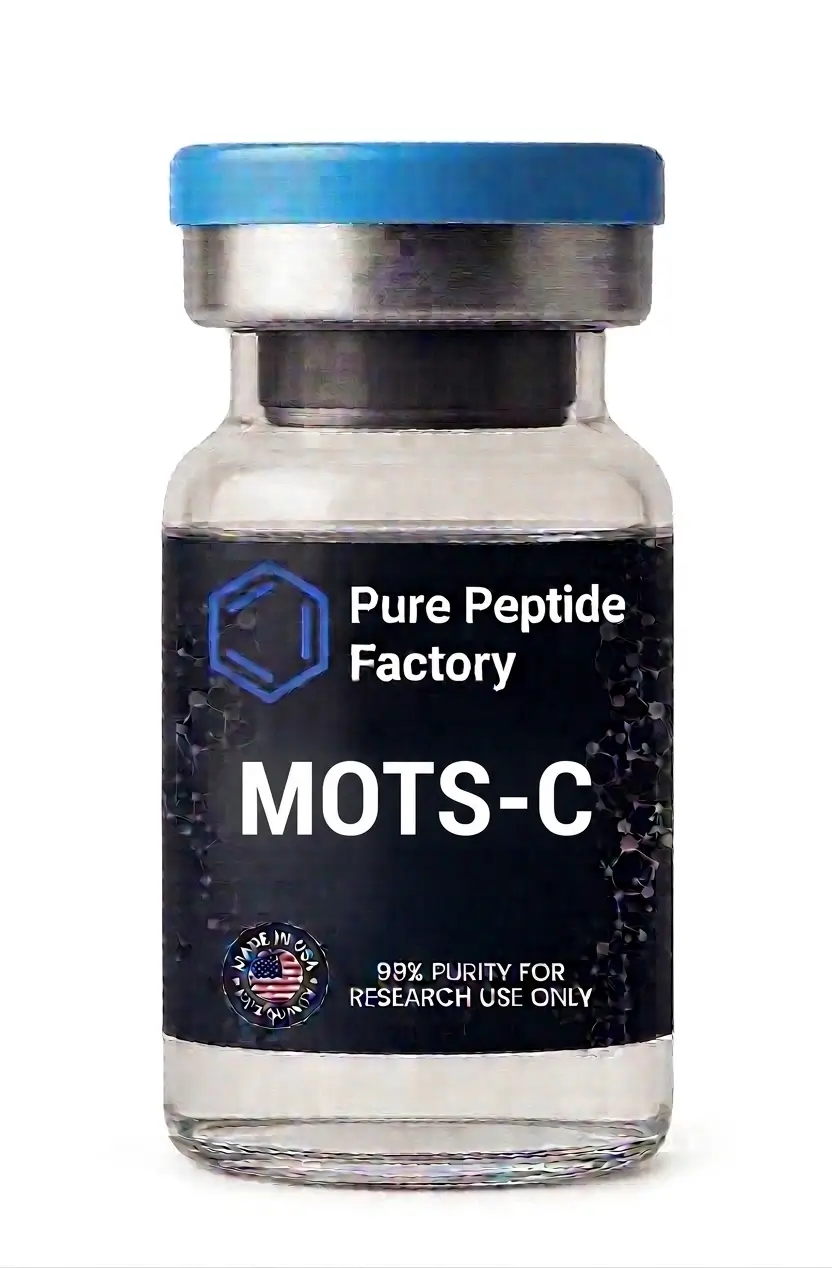
We carry MOTS-C in 10mg, 15mg, 20mg, and 40mg vials. Dose-finding studies, standard rodent protocols, and extended institutional research programs all have a configuration without splitting vials or overbuying.
Synthesis Logs Archived for 24 Months
Every batch is documented and archived. If your IRB or compliance office requests chain-of-custody records, they are ready to provide before your compound arrives.
What Is MOTS-C?
A Peptide Encoded in Mitochondrial DNA
MOTS-C stands for Mitochondrial Open Reading Frame of the 12S rRNA Type-C. It is a 16-amino-acid peptide encoded within the 12S ribosomal RNA gene of mitochondrial DNA, expressed in tissues and plasma, and operating with both cell-specific and hormonal characteristics. Only two mitochondrial-derived peptides have been studied in depth: Humanin and MOTS-C. Of the two, MOTS-C has generated more research interest in metabolic contexts.
The peptide is produced inside mitochondria, released into circulation, and under metabolic stress conditions, translocated into the cell nucleus where it binds directly to gene regulatory regions and alters gene expression. This mitonuclear communication, where mitochondrial and nuclear genomes cross-regulate each other, is the mechanistic foundation that makes MOTS-C worth studying.
Molecular Profile:
- Sequence: MRWQEMGYIFYPRKLR
- Molecular Formula: C101H152N28O22S2
- Molecular Weight: 2174.64 g/mol
- CAS: 1627580-64-6
- Also known as: Mitochondrial-derived peptide MOTS-c, mitokine
The AMPK Pathway: How MOTS-C Works
MOTS-C’s primary mechanism runs through AMPK activation, but the route is not direct. When cellular energy stress occurs, MOTS-C moves into the nucleus and suppresses the folate cycle and de novo purine biosynthesis. This suppression diverts one-carbon metabolites and leads to AICAR accumulation, which then activates AMPK. From that activation point, downstream effects extend to glucose uptake, fat oxidation, mitochondrial biogenesis, and inflammatory regulation.
What separates MOTS-C from synthetic AMPK activators is its origin and its age-dependence. It is produced by the cell’s own mitochondria in response to metabolic conditions, making it a physiologically relevant signal. Research also suggests that MOTS-C levels and activity decline with age, hinting at its involvement in the development of age-related metabolic dysfunction and its potential interactions with known aging regulators including NAD+ and sirtuins.
MOTS-C Research Applications
Skeletal Muscle Metabolism and Insulin Sensitivity
The foundational MOTS-C study published in Cell Metabolism demonstrated that exogenous administration improved insulin sensitivity in diet-induced obese and aged mouse models. The mechanism involves AMPK activation in skeletal muscle, which increases glucose transporter expression and improves the muscle’s response to insulin signaling.
With increasing age, skeletal muscles tend to develop insulin resistance and decreased glucose uptake. MOTS-C exposure appears to reverse this by stimulating AMPK-dependent pathways and targeting the folate-methionine cycle and purine biosynthesis, shifting the metabolic balance within the cell toward improved glucose utilization and lipid handling.
Research using this compound examines:
- AMPK-dependent glucose transporter upregulation in aged skeletal muscle
- Insulin receptor signaling downstream of MOTS-C administration
- Comparative glucose tolerance between aging and young mouse models
- Dose-response relationships for glycemic endpoints
Fat Cell Metabolism and Obesity Prevention
In high-fat diet mouse studies, animals exposed to MOTS-C were leaner and more energetic than controls receiving the same diet. The peptide appeared to prevent fat accumulation and promote glucose uptake through AMPK pathway activation, working partly through its suppression of the folate cycle directly linked to de novo purine biosynthesis.
Beyond its intracellular actions, MOTS-C interacts with genes containing antioxidant response elements, pointing to a regulatory relationship with stress-responsive transcription factors including NRF2. This mitonuclear signaling system, where both mitochondrial and nuclear genomes encode factors that regulate each other, affects glucose uptake restriction and metabolic gene expression in adipose tissue alongside skeletal muscle.
Exercise Biology and Physical Performance
Published in Nature Communications in 2021, research from Reynolds et al. described MOTS-C as an exercise-induced mitochondrial-encoded regulator of age-dependent physical decline and muscle homeostasis. Plasma MOTS-C levels rise during physical exercise in humans. In sedentary aged mice, exogenous MOTS-C administration reversed age-related declines in exercise capacity and muscle function, producing adaptations similar to those seen in physically trained animals.
The endogenous expression of MOTS-C is also posited to increase through physical activity, potentially creating a positive feedback loop between exercise and mitochondrial metabolic signaling. Researchers studying exercise mimetics, muscle wasting prevention, and mitochondrial adaptations to physical stress use MOTS-C to examine these mechanisms without the confounds of actual exercise protocols.
Bone Metabolism and Osteogenic Differentiation
MOTS-C regulates the transforming growth factor beta (TGF-beta)/SMAD pathway, which has significant implications for bone tissue research. The peptide upregulates TGF-beta1, TGF-beta2, and Smad7 expression, stimulating osteogenic differentiation of bone marrow mesenchymal stem cells.
Research confirms this mechanism by showing that osteogenic differentiation promoted by MOTS-C is reversed upon TGF-beta1 knockdown, indicating the pathway is not incidental but central to the compound’s bone effects. The peptide also stimulates expression of osteogenesis-related genes including ALP, Bglap, and Runx2, potentially improving bone density and strength markers in research models. Researchers studying osteoporosis, bone marrow stem cell differentiation, and age-related bone loss use MOTS-C to investigate TGF-beta-mediated osteogenesis.
Cardiovascular and Endothelial Function
MOTS-C does not appear to directly influence cardiac contractility. Instead, research suggests its cardiovascular effects operate through endothelial cells lining blood vessels, which regulate blood pressure and clotting. Studies have found a positive correlation between MOTS-C levels and microvascular and epicardial endothelial function, with researchers proposing MOTS-C as a potential biomarker for endothelial health.
A study published in the International Journal of Cardiology found downregulation of circulating MOTS-C levels in patients with coronary endothelial dysfunction. The mechanistic basis is speculative but likely involves AMPK activation in endothelial tissue, consistent with the peptide’s mechanism in skeletal muscle and adipose tissue. Researchers studying cardiovascular risk, endothelial dysfunction, and vascular biology are beginning to examine MOTS-C as a marker and potential tool in these protocols.
Cellular Longevity and Aging Biology
MOTS-C is associated with enhanced longevity at the cellular level. Research has identified a structural polymorphism in the peptide where a glutamate residue is replaced by lysine, producing functional changes linked to extended lifespan in certain population studies. As Noriyuki Fuku et al. noted in published research, there appears to be a biological link between MOTS-C and extended lifespan through the putative endocrine action of this mitokine.
Research also suggests MOTS-C may interact with NAD+ and sirtuin pathways, known aging regulators, indicating involvement in broader longevity pathways beyond its metabolic actions. Age-related decline in MOTS-C expression correlates with the development of metabolic dysfunction, making restoration of youthful MOTS-C levels a productive research angle for aging biology programs.
MOTS-C vs Humanin: Understanding the Mitochondrial Peptide Family
Two Studied Compounds, Different Mechanisms
MOTS-C and Humanin are the only two mitochondrial-derived peptides with a significant research base. Understanding the difference matters for designing the right protocol:
| Feature | MOTS-C | Humanin |
|---|---|---|
| Encoding location | 12S rRNA gene | 16S rRNA gene |
| Primary pathway | AMPK, folate cycle | STAT3, IGF-1R |
| Main research areas | Metabolism, exercise, aging, bone | Neuroprotection, apoptosis, beta-cell |
| Age-dependence | Declines with age, linked to metabolic decline | Also declines, linked to neurodegeneration |
| Tissue focus | Skeletal muscle, adipose, bone, endothelium | Brain, pancreas, multiple tissues |
MOTS-C is the stronger compound for metabolic research. Humanin is better positioned for neuroprotection and apoptosis work. Neither should be used as a substitute for the other in protocol design.
Dosage Protocols in Published Research
The MOTS-C dosage conversations on Reddit reflect genuine uncertainty because human clinical data is limited. The animal studies that built the research foundation used these protocols:
- Mouse metabolic studies: 15mg/kg administered intraperitoneally, 3 to 5 times per week
- Aging model protocols: 15mg/kg subcutaneous injection, 5 days per week for 4 to 8 weeks
- Exercise mimetic studies: Single and repeated dosing at 5 to 15mg/kg in rodent models
These come from peer-reviewed publications in Cell Metabolism and Nature Communications. They provide a validated framework for laboratory protocol design. Translating to other species requires allometric scaling specific to your model.
We do not provide human dosing recommendations. MOTS-C is not approved for human use and is sold strictly for research purposes.
How to Reconstitute MOTS-C
Step-by-Step Laboratory Protocol
- Sanitize the vial stopper with 70% isopropyl alcohol
- Inject bacteriostatic water slowly against the vial wall. Do not aim directly at the lyophilized cake
- Allow the cake to dissolve without agitation for 2 to 3 minutes
- Gently swirl until the solution runs clear. Do not shake
- Inspect for clarity and label with date and concentration before storage
Concentration reference:
- 10mg vial + 2mL water = 5mg/mL
- 15mg vial + 3mL water = 5mg/mL
- 20mg vial + 4mL water = 5mg/mL
- 40mg vial + 8mL water = 5mg/mL
Storage Requirements
- Lyophilized powder: 24 months at -20°C, protected from light
- Reconstituted solution: 14 days at 2 to 8°C under sterile conditions. Do not freeze
- Avoid repeated freeze-thaw cycles on reconstituted solution
- Label every vial with reconstitution date and final concentration
MOTS-C Peptide for Sale: Sourcing and Regulatory Context
Research Use Status
MOTS-C is not FDA approved for any indication and is not scheduled under the Controlled Substances Act. It is available for laboratory research under research-use-only terms without a prescription. You must agree to these terms at checkout. This compound is not for human consumption, veterinary use, or diagnostic application.
Why Sourcing Quality Matters More for MOTS-C
MOTS-C sits in a niche where vendor quality varies significantly. The peptide is short, straightforward to synthesize cheaply, and easy to mislabel. The research community flags this repeatedly because degraded MOTS-C is not always obvious without proper mass spectrometry analysis. Our batch-specific HPLC and MS documentation addresses this directly. Every COA is lot-specific, downloadable before purchase, and verifiable against published molecular data.
Product Specifications
Available Configurations
MOTS-C is available in 10mg, 15mg, 20mg, and 40mg vials. Select from the product options above.
Quality Verification
- Purity: 98% minimum (HPLC verified)
- Sequence identity: Mass spectrometry confirmed against published MRWQEMGYIFYPRKLR sequence
- Endotoxin: Less than 0.1 EU/mL
- Sterility: Verified per USP 71
- Form: Lyophilized powder
- Storage: -20°C long-term, 2 to 8°C short-term
Current Batch: #PPF-MOT-0426 Purity: 98.4% Download: HPLC Certificate | MS Report
FAQ
What is MOTS-C peptide used for in research?
MOTS-C is used to study mitochondrial-to-nuclear signaling, AMPK activation, insulin sensitivity, exercise mimetic effects, aging biology, bone metabolism via the TGF-beta/SMAD pathway, endothelial function, and cellular longevity. It is the most studied mitochondrial-derived peptide for metabolic research.
Where can I find MOTS-C peptide for sale?
Pure Peptide Factory stocks research-grade MOTS-C with domestic cold-chain shipping. Orders placed before 2 PM EST ship same-day and arrive within 1 to 3 business days.
What does Reddit say about MOTS-C dosage?
Reddit discussions reflect published animal study protocols of 5 to 15mg/kg in rodent models administered subcutaneously or intraperitoneally. Human clinical data does not yet exist in peer-reviewed literature. We provide the compound for research purposes only.
How is MOTS-C different from Humanin?
Both are mitochondrial-derived peptides, but they operate through different pathways and tissue targets. MOTS-C primarily activates AMPK and regulates metabolism in skeletal muscle, adipose tissue, and bone. Humanin signals through STAT3 and IGF-1R with a focus on neuroprotection and apoptosis.
Is MOTS-C an exercise mimetic?
Published research describes it as one. Plasma MOTS-C rises during physical exercise in humans, and exogenous administration in sedentary aged rodents reversed age-related physical decline and produced adaptations associated with trained animals.
Does MOTS-C affect bone density?
Research indicates MOTS-C promotes osteogenic differentiation of bone marrow mesenchymal stem cells through the TGF-beta/SMAD pathway and stimulates expression of osteogenesis-related genes including ALP, Bglap, and Runx2.
How does MOTS-C relate to aging?
Endogenous MOTS-C levels decline with age in both rodents and humans. This decline correlates with reduced metabolic flexibility and increased insulin resistance. Research suggests MOTS-C interacts with NAD+ and sirtuin pathways, and a structural polymorphism in the peptide has been linked to extended lifespan in population studies.
How should MOTS-C be stored?
Lyophilized powder stores at -20°C for up to 24 months. Reconstituted solution stores at 2 to 8°C for up to 14 days. Do not freeze reconstituted solution and avoid light exposure at all stages.
Order MOTS-C Peptide for Research
Secure Checkout
- Credit card, cryptocurrency, or wire transfer
- Same-day dispatch for orders placed before 2 PM EST
- Cold-chain packaging with phase-change cooling
- Discreet labeling and full tracking
Institutional Accounts
Net-30 terms and purchase order acceptance available for universities and pharmaceutical companies. Contact us for bulk pricing on 50 vials or more.
Add to cart and get batch-verified MOTS-C delivered to your lab without the sourcing uncertainty.
Related products
-
Pinealon 10mg
$130.00 -
Thymalin 10 mg
$50.00