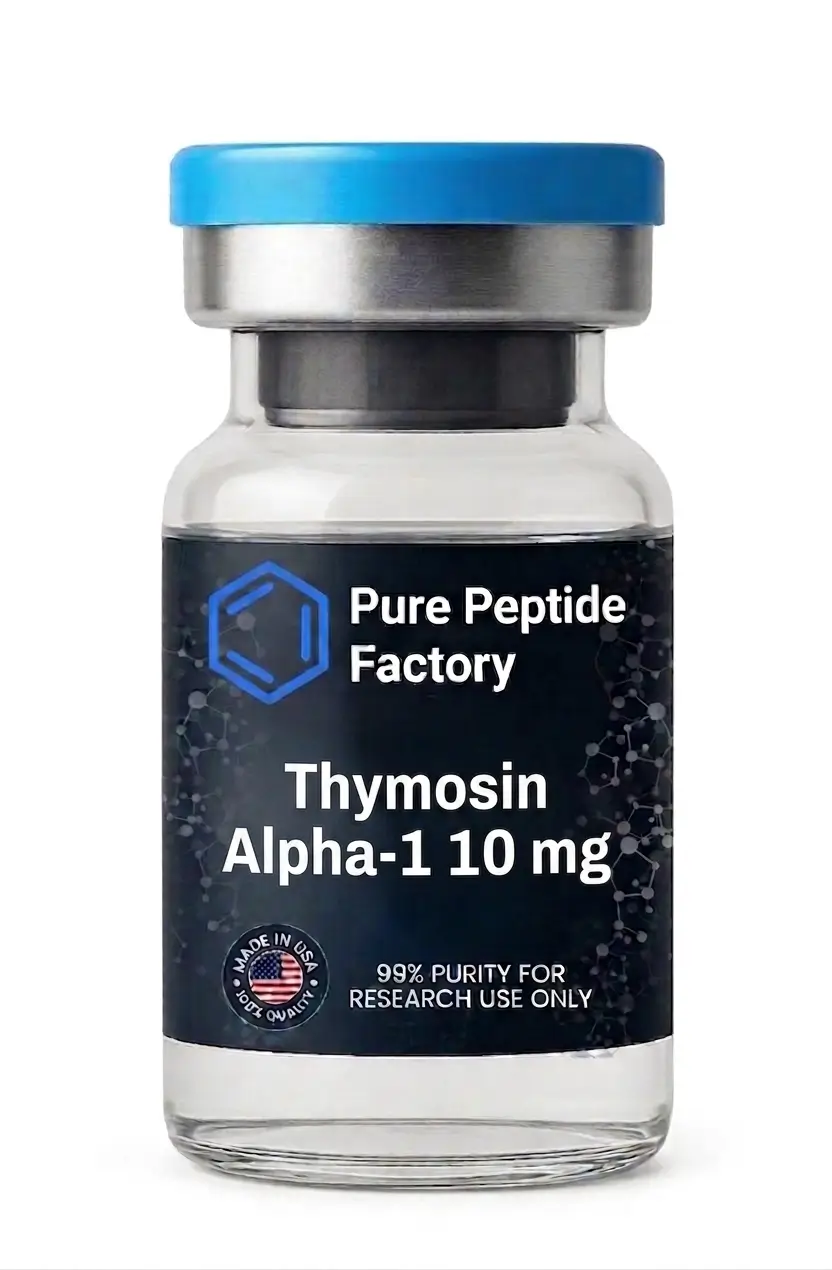
Thymosin Alpha-1 10 mg
$50.00 $75.00Price range: $50.00 through $75.00
Buy thymosin alpha-1 for research, thymalfasin (Tα1), a 28-amino acid synthetic immune peptide for TLR2/9-mediated dendritic cell activation, T-cell differentiation, and antiviral immune studies. 5mg, 10mg vials. Domestic cold-chain shipping, HPLC verified. Research use only.
Buy Thymosin Alpha-1: Research-Grade Thymalfasin Immune Peptide
Researchers investigating innate and adaptive immune regulation, dendritic cell biology, T-cell differentiation, or antiviral defense mechanisms need a reliable domestic source for thymosin alpha-1. Pure Peptide Factory supplies this research-grade synthetic 28-amino acid peptide in 5mg and 10mg lyophilized vials with full batch documentation and cold-chain shipping. Unlike thymic extract preparations that contain undefined mixtures, thymalfasin (Tα1) is a single, precisely sequenced peptide identical to the active N-terminal fragment of human prothymosin-alpha. Researchers who thymosin alpha 1 buy from our domestic stock receive a compound that has been studied in over 30 clinical trials involving more than 11,000 human subjects, providing a pharmacokinetic and safety reference base that few research peptides can match (1).
What distinguishes Tα1 from other immune-modulating research compounds is its unique mechanism: it acts as an agonist at Toll-like receptors (TLR2 and TLR9) on dendritic cells, the professional antigen-presenting cells that determine whether the immune system mounts a defensive attack or maintains tolerance. Activation of these TLRs triggers the MyD88-dependent signaling cascade, leading to NF-κB nuclear translocation and IRF7-mediated interferon production. Consequently, Tα1 primes dendritic cells to present antigens more effectively, shifts T-helper balance toward a Th1 antiviral response, and enhances natural killer (NK) cell cytotoxicity, all without the global immune activation that characterizes less selective immunostimulants (2). Researchers who thymosin alpha 1 buy therefore acquire a tool for studying immune modulation through a receptor-defined mechanism rather than through undefined cellular effects.
Why Researchers Buy Thymosin Alpha-1 from Pure Peptide Factory
Documentation for a Clinically Validated 28-mer Peptide
Thymosin alpha-1 is a precisely sequenced, N-terminally acetylated 28-amino acid peptide (Ac-Ser-Asp-Ala-Ala-Val-Asp-Thr-Ser-Ser-Glu-Ile-Thr-Thr-Lys-Asp-Leu-Lys-Glu-Lys-Lys-Glu-Val-Val-Glu-Glu-Ala-Glu-Asn-OH) with a molecular formula of C₁₂₉H₂₁₅N₃₃O₅₅ and a molecular weight of 3108.3 g/mol. Every batch we ship includes lot-specific HPLC and mass spectrometry documentation verifying purity (≥98%) and sequence integrity. Consequently, researchers who thymosin alpha 1 buy from our facility can trust that the compound matches the published molecular identity, which is critical because this peptide’s immune effects depend on its full-length, properly folded structure rather than a short bioactive fragment.
Two SKU Configurations for Protocol Flexibility
We stock Tα1 in 5mg and 10mg lyophilized vials. The 5mg configuration accommodates pilot studies, in vitro dendritic cell assays, and dose-response experiments using nanomolar to micromolar concentrations. The 10mg format supports extended in vivo protocols where rodent dosing ranges from 100 to 600 µg/kg/day subcutaneously over one to two weeks, which is the standard range across published preclinical immunology studies.
Domestic Cold-Chain Integrity
This 28-amino acid peptide is stable as lyophilized powder but degrades with moisture exposure and temperature excursion after reconstitution. We store all inventory under domestic cold-storage conditions and ship using phase-change cooling. Most orders arrive in 1 to 3 business days, protecting the peptide from degradation before it reaches your laboratory bench.
Compare Against Other Thymic and Immune Peptides Without Batch Variables
Many research protocols compare Tα1 against other thymic peptides such as Thymalin (thymus polypeptide extract), Thymosin Beta-4 (actin-binding fragment), or LL-37 (antimicrobial peptide). Because we stock the full immune peptide panel under identical cold-storage conditions, researchers who thymosin alpha 1 buy alongside these complementary compounds eliminate supplier variability from their comparison data.
Synthesis Logs Archived for 24 Months
Should your IRB or compliance office request chain-of-custody records, we provide them without delay.
What Is Thymosin Alpha-1?
A 28-Amino Acid Immune Peptide with a Defined Receptor Mechanism
Thymosin alpha-1 (Tα1), also known by its pharmaceutical name thymalfasin and the brand name Zadaxin, is a synthetic 28-amino acid peptide corresponding to the biologically active N-terminal fragment (residues 2-29) of prothymosin-alpha, a 109-amino acid nuclear protein. It was originally isolated from Thymosin Fraction 5, a partially purified extract of bovine thymus tissue, but the synthetic version used in research today is chemically identical to the natural human peptide. Tα1 contains no cysteine residues and therefore has no disulfide bonds, giving it a relatively flexible linear structure in solution.
Unlike thymic extract preparations that contain complex mixtures of polypeptides, Tα1 is a single defined molecular species. This precision matters: when researchers thymosin alpha 1 buy, they work with a compound whose exact structure, binding partners, and signaling pathways have been characterized across decades of mechanistic research. The peptide is N-terminally acetylated, a modification that enhances its stability and may contribute to its ability to activate cell-surface Toll-like receptors (2).
Molecular Profile:
- Sequence: Ac-Ser-Asp-Ala-Ala-Val-Asp-Thr-Ser-Ser-Glu-Ile-Thr-Thr-Lys-Asp-Leu-Lys-Glu-Lys-Lys-Glu-Val-Val-Glu-Glu-Ala-Glu-Asn-OH
- Molecular Formula: C₁₂₉H₂₁₅N₃₃O₅₅
- Molecular Weight: 3108.3 g/mol
- CAS Number: 62304-98-7
- Classification: Synthetic 28-amino acid immunomodulatory peptide
- Synonyms: Thymalfasin, Zadaxin, Tα1, Thymosin α1, Thymosin-alpha-1
- Clinical status: Approved in 35-37 countries as Zadaxin (hepatitis B, hepatitis C, melanoma adjuvant); FDA Category 2 bulk drug substance (not FDA-approved; restricted from compounding)
- Clinical trials: 30+ trials, 11,000+ human subjects (Dinetz 2024 comprehensive review)
How Thymosin Alpha-1 Works: TLR-Mediated Dendritic Cell Activation and Th1 Immune Shift
The mechanism of Tα1 is fundamentally different from non-specific immune stimulants. Rather than triggering a broad inflammatory response, the peptide engages specific Toll-like receptors (TLR2 and TLR9) on the surface of dendritic cells and macrophages, the body’s professional antigen-presenting cells that control whether the immune system activates or tolerates a given target (3). Activation of TLR2 and TLR9 initiates the MyD88-dependent signaling pathway, which branches into two arms: NF-κB nuclear translocation drives the production of pro-inflammatory cytokines (IL-12, IL-2, IFN-γ) that orchestrate a Th1-predominant adaptive immune response, while IRF7 activation triggers Type I interferon production that is critical for antiviral defense.
Beyond the TLR pathway, Tα1 exerts pleiotropic effects on multiple immune cell subsets. Specifically, it upregulates MHC Class I and Class II molecule expression on antigen-presenting cells, improving the presentation of viral and tumor antigens to T-cells. It enhances the maturation and cytotoxicity of natural killer cells. It promotes the differentiation of CD4+ T-helper cells toward a Th1 phenotype while simultaneously modulating regulatory T-cell (Treg) activity, which helps explain the peptide’s unusual bidirectional immune profile: it can stimulate suppressed immune function in immunocompromised models while attenuating overactive inflammatory responses in autoimmune contexts (1). This context-dependent modulation is precisely what distinguishes Tα1 from simple immune stimulants and makes it a uniquely valuable research tool for studying the regulation of immune homeostasis.
A 2025 review published in the International Journal of Molecular Sciences further documented that Tα1 upregulates 1,198 genes tied to energy metabolism, DNA repair, and cell cycle regulation across five organ systems, with particularly pronounced effects on thymic IL-7 expression, a critical growth factor for T-cell survival at every stage of maturation. The peptide also suppresses the NF-κB inflammatory pathway while simultaneously increasing Nrf-2, the body’s master transcriptional regulator of antioxidant defense. These multi-system effects position Tα1 at the intersection of immune function, oxidative stress biology, and aging research (1).
Thymosin Alpha-1 Research Applications
T-Cell Differentiation and Thymic Function
The primary research application of Tα1 is the study of T-cell maturation and thymic output. Researchers use the peptide to examine how TLR-mediated dendritic cell activation translates into CD4+ and CD8+ T-cell proliferation, Th1 versus Th2 polarization, and the restoration of T-cell receptor diversity in models of immune senescence and thymic involution. The 2025 IJMS review documented that Tα1 enhances the conversion of stem cells into new T-cells in thymic tissue and boosts immune cell production in bone marrow, the source where all blood cells originate, making it a tool for studying immune system reconstitution from its earliest developmental stages.
Antiviral and Vaccine Adjuvant Research
Tα1 has been investigated as a vaccine adjuvant and antiviral agent across multiple clinical contexts. A 2024 comprehensive safety review by Dinetz and colleagues examined over 11,000 human subjects across more than 30 clinical trials and concluded that Tα1 is a well-tolerated and effective immune modulator. A clinical trial currently underway is evaluating whether Tα1 can enhance COVID-19 vaccine responses in older adults, a population characterized by diminished thymic output and reduced vaccine efficacy. Preclinically, Tα1 activates the TLR9/MyD88/IRF7-dependent murine cytomegalovirus sensing pathway, directly linking TLR activation to antiviral gene expression programs (2).
Cancer Immunology and Tumor Antigen Presentation
Tα1 upregulates MHC Class I and Class II molecules on dendritic cells, enhancing the presentation of tumor antigens to cytotoxic T-cells. Researchers studying cancer immunotherapy use the peptide to model how improved antigen presentation, combined with Th1 cytokine production (IL-2, IFN-γ), can shift the tumor microenvironment from immune tolerance to immune activation. A Phase 2 malignant melanoma trial evaluating Tα1 combined with dacarbazine chemotherapy met its primary endpoint, and the peptide continues to be investigated as an immune adjuvant in oncology protocols.
Immune Senescence and Aging Research
The thymus gland loses approximately 95% of its functional tissue by age 70, and the resulting decline in naive T-cell output is a central driver of immunosenescence. Tα1 directly counters this biology at two independent production sites. In thymic tissue, it increases IL-7 expression, enhances stem cell conversion into T-cells, and prevents premature apoptosis of developing thymocytes. In bone marrow, it enhances hematopoietic cell proliferation. These dual actions make Tα1 a research tool for studying the reversibility of age-related immune decline and the possibility of restoring youthful immune surveillance in aged organisms.
Chronic Inflammatory Modulation and Autoimmune Research
Tα1’s bidirectional immune profile, enhancing suppressed responses while attenuating hyperactive inflammation, makes it a research compound for studying the regulation of immune homeostasis in chronic inflammatory and autoimmune models. The peptide suppresses the NF-κB inflammatory pathway, reduces production of TNF-α, IL-1β, and IL-6 from macrophages, increases anti-inflammatory IL-10, and boosts Nrf-2 antioxidant defenses. These multi-pathway anti-inflammatory effects underpin its investigation in models of severe acute pancreatitis, where a double-blind randomized controlled trial demonstrated improved cellular immunity and reduced infection rates with Tα1 administration in the early phase of disease.
Thymosin Alpha-1 vs Thymalin vs Thymosin Beta-4: Choosing the Right Thymic Peptide for Your Protocol
Researchers who thymosin alpha 1 buy often compare it against other thymic peptides. However, these compounds differ fundamentally in structure, mechanism, and research application:
| Feature | Thymosin Alpha-1 (Tα1) | Thymalin | Thymosin Beta-4 (TB-500) |
|---|---|---|---|
| Type | Single defined synthetic 28-mer peptide | Multi-component thymus polypeptide extract | Synthetic 43-amino acid actin-binding fragment |
| Molecular Weight | 3108.3 g/mol | Mixture (undefined) | 4963.5 g/mol |
| Primary Mechanism | TLR2/9 agonist → dendritic cell activation → Th1 immune shift | Multi-component immune modulation; exact mechanism undefined | G-actin sequestration → cell migration; Notch pathway angiogenesis |
| Immune Effects | T-cell differentiation, NK cell activation, cytokine modulation, MHC upregulation | Broad immune regulation; T-cell and B-cell modulation | Minimal direct immune modulation; primarily a tissue repair peptide |
| Clinical Status | Approved in 35-37 countries (Zadaxin); FDA Category 2 (restricted from compounding) | Registered pharmaceutical in Russia; not FDA approved | Not FDA approved; research use only |
| Clinical Trials | 30+ trials, 11,000+ human subjects | Khavinson longevity studies (6-year mortality reduction) | Preclinical wound healing and cardiac repair |
| Best for Studying | TLR-mediated immune activation, antiviral defense, cancer immunotherapy, thymic function | Immune aging, multi-component thymic biology, Khavinson bioregulator framework | Actin dynamics, cell migration, angiogenesis, tissue repair |
Choose Tα1 when your protocol requires studying immune modulation through defined receptor mechanisms (TLR2/TLR9), when dendritic cell function is a primary endpoint, or when you need the clinical reference data from 30+ human trials. Thymalin is more appropriate when studying multi-component thymic extract effects within the Khavinson bioregulator framework. Thymosin Beta-4 (TB-500) serves tissue repair and cell migration studies rather than immune modulation. Our facility stocks all three compounds under identical conditions for direct comparison protocols.
Thymosin Alpha-1 Dosage Reference for Preclinical Research
For laboratory protocols only. We do not provide human dosing recommendations.
| Research Model | Dose Range | Route | Frequency | Key Finding |
|---|---|---|---|---|
| Mouse IL-2 potentiation (cytotoxic activity) | 200 µg/kg/day | Subcutaneous | 4 days | Significant enhancement of IL-2-induced cytotoxicity |
| Mouse Candida albicans infection | 100 µg/kg | Subcutaneous | Before or before and after challenge | Significant resistance to lethal infection; no protection when given after inoculation only |
| Mouse peritoneal macrophage function (10-day range) | 0.1-1000 µg/kg/day | Intraperitoneal | 10 days | Optimal immune enhancement at 0.1-10 µg/kg; macrophage phagocytosis, rosette formation, hemolysin increased |
| Rat hepatic CYP enzyme study | 150-600 µg/kg/day | Subcutaneous | 14 days | CYP2E1, CYP1A2, CYP2D2, CYP3A1/2 activities increased at 600 µg/kg |
| Mouse biodistribution | 500 µg total | Subcutaneous | Single dose | 8.97% total recovery: 2% urine, 1.25% serum; widespread organ distribution |
For researchers designing immune modulation protocols, the published preclinical literature provides the validated reference framework. The 100 µg/kg anti-infective threshold and the 150-600 µg/kg/day range for hepatic CYP studies represent the most commonly employed dose windows in rodent immunology research.
How to Reconstitute Thymosin Alpha-1
Step-by-Step Laboratory Protocol
- Sanitize the vial stopper with 70% isopropyl alcohol.
- Inject bacteriostatic water or sterile PBS slowly against the vial wall. The peptide is soluble in aqueous solution; avoid directing the stream at the lyophilized cake to minimize foaming.
- Allow the powder to dissolve without agitation for 1 to 2 minutes.
- Gently swirl until the solution is completely clear. Do not shake vigorously.
- Verify a clear, colorless solution. Discard if any turbidity or particulate matter remains.
- Label with date and concentration.
Concentration Reference:
- 5mg vial + 1 mL bacteriostatic water = 5 mg/mL; + 2 mL = 2.5 mg/mL
- 10mg vial + 1 mL bacteriostatic water = 10 mg/mL; + 2 mL = 5 mg/mL
Storage Requirements:
- Lyophilized powder: 24 months at -20°C, protected from light and moisture.
- Reconstituted solution: 21-28 days at 2 to 8°C. For long-term storage of reconstituted peptide, aliquot and store at -80°C.
- The peptide does not contain cysteine residues and therefore has no disulfide bonds to oxidize, giving it relatively good stability in solution. Avoid repeated freeze-thaw cycles.
Thymosin Alpha-1: Regulatory Context
International Approval Status
Thymosin alpha-1 is one of the few research peptides with extensive regulatory history. As thymalfasin (brand name Zadaxin, manufactured by SciClone Pharmaceuticals), it is approved for clinical use in 35 to 37 countries across Asia, Latin America, Eastern Europe, and the Middle East, including China (where it is approved for hepatitis B treatment and as a vaccine adjuvant), Singapore, the Philippines, Italy, and over 30 other nations. The approved indications vary by country but include chronic hepatitis B, hepatitis C (as an adjunct to interferon therapy), and as an immune adjuvant for certain cancer treatments. In China alone, SciClone has conducted late-stage clinical trials for malignant melanoma and hepatitis C.
FDA Status in the United States
Tα1 is not FDA-approved in the United States. In 2023, the FDA included thymosin alpha-1 on the Category 2 list of bulk drug substances that may not be compounded by 503A compounding pharmacies. A comprehensive review by Dinetz and colleagues (2024), analyzing over 11,000 human subjects across more than 30 clinical trials, concluded that the FDA’s restriction appears unfounded based on substantial evidence of safety and efficacy. However, the regulatory restriction remains in place, and the review recommended urgent intervention to ensure continued availability through 503A compounding pharmacies. The peptide remains legally available for laboratory procurement under research-use-only provisions. Researchers who thymosin alpha 1 buy from Pure Peptide Factory receive a research-grade synthetic peptide sold strictly for in vitro and controlled laboratory animal studies. It is not the pharmaceutical Zadaxin formulation, and it is not for human use.
Research Use Only
This product is strictly for laboratory research. It is not intended for human consumption, veterinary use, or diagnostic application. You must agree to research-use-only terms at checkout.
Product Specifications
Available Configurations
Thymosin alpha-1 is available in 5mg and 10mg lyophilized powder vials. Select your configuration from the product options above.
Quality Verification
- Purity: ≥98% (HPLC verified)
- Identity: Mass spectrometry confirmed against the 3108.3 g/mol molecular weight target with sequence verification
- Endotoxin: Less than 0.1 EU/mL
- Sterility: Verified per USP 71
- Form: Lyophilized powder (acetate salt)
- Storage: -20°C long-term, 2 to 8°C short-term after reconstitution
- CAS Number: 62304-98-7
Current Batch: #PPF-TA1-0526
Purity: 98.8%
Download: HPLC Certificate | MS Report
Frequently Asked Questions
Where can I buy thymosin alpha-1 for research?
Pure Peptide Factory supplies research-grade thymalfasin domestically in 5mg and 10mg vials. Orders ship same-day with cold-chain packaging and full HPLC/MS documentation. Most arrive within 1 to 3 business days.
What is thymosin alpha-1 used for in research?
Researchers use Tα1 to study TLR2/TLR9-mediated dendritic cell activation, T-cell differentiation and thymic function, antiviral immune responses, tumor antigen presentation through MHC upregulation, NK cell cytotoxicity enhancement, and the modulation of immune homeostasis in chronic inflammatory and autoimmune models.
How does thymosin alpha-1 work at the receptor level?
Tα1 acts as an agonist at Toll-like receptors 2 and 9 (TLR2/TLR9) on dendritic cells and macrophages. Activation triggers the MyD88-dependent signaling cascade, leading to NF-κB nuclear translocation and IRF7-mediated Type I interferon production. This results in enhanced antigen presentation, Th1 cytokine production (IL-2, IL-12, IFN-γ), and NK cell activation.
Is thymosin alpha-1 FDA approved?
Not in the United States. It is approved as the pharmaceutical Zadaxin (thymalfasin) in 35 to 37 countries for hepatitis B, hepatitis C, and as a cancer immunotherapy adjuvant. The FDA placed it on the Category 2 bulk drug substances list in 2023, restricting compounding. However, a comprehensive 2024 review of 11,000+ human subjects concluded the restriction appears unfounded based on the peptide’s safety and efficacy profile.
What is the difference between thymosin alpha-1 and Thymalin?
Thymosin alpha-1 is a single, precisely defined 28-amino acid synthetic peptide with a known TLR-mediated mechanism. Thymalin is a multi-component polypeptide extract derived from thymus tissue containing an undefined mixture of peptides. Tα1 offers a defined molecular tool for mechanism studies; Thymalin provides broader but less mechanistically traceable immune effects. See the full comparison table above.
What is the thymosin alpha-1 dosage used in preclinical rodent research?
Mouse studies use 100 µg/kg for anti-infective protection, 200 µg/kg/day for 4 days for IL-2 potentiation, and 0.1-1000 µg/kg/day for 10-day immune function assays (with optimal activity at 0.1-10 µg/kg). Rat CYP studies use 150-600 µg/kg/day subcutaneously for 14 days. Refer to the dosage reference table above for model-specific details.
How does thymosin alpha-1 compare to Thymosin Beta-4 (TB-500)?
Despite the similar name, these are entirely different peptides. Tα1 is an immune peptide that activates TLRs on dendritic cells. TB-500 is a cell migration peptide that binds G-actin and promotes angiogenesis. Tα1 is for immune research; TB-500 is for tissue repair research. They do not share the same mechanism, receptor, or research applications.
Why was thymosin alpha-1 placed on the FDA Category 2 list?
In 2023, the FDA nominated Tα1 (along with 21 other bulk drug substances) to Category 2, meaning 503A compounding pharmacies may not compound it. Multiple clinical reviews, including a 2024 comprehensive analysis of 11,000+ subjects, have argued that this restriction lacks scientific justification given the peptide’s extensive safety data and ongoing clinical use in over 35 countries.
How should I store thymosin alpha-1 after reconstitution?
Store the reconstituted solution at 2 to 8°C and use within 21 to 28 days. For long-term storage, aliquot and freeze at -80°C. The peptide contains no cysteine residues and therefore has no disulfide bonds susceptible to oxidation, giving it relatively good solution stability. Avoid repeated freeze-thaw cycles.
Can thymosin alpha-1 be combined with other immune peptides in research?
Yes. Published preclinical studies have combined Tα1 with IL-2 for enhanced cytotoxic activity, with cytokines (IRX-2) for improved tumor survival in murine models, and alongside other immune-modulating peptides such as LL-37. Researchers should design appropriate single-agent control arms to isolate contribution of each component. Pure Peptide Factory stocks all these complementary compounds under identical handling conditions.
Buy Thymosin Alpha-1 for Your Research
Secure Checkout
- Credit card, cryptocurrency, or wire transfer
- Same-day dispatch for orders placed before 2 PM EST
- Cold-chain packaging with phase-change cooling
- Discreet labeling with full tracking
Institutional Accounts
Net-30 terms and purchase order acceptance available for universities and research institutions. Contact us for bulk pricing on 50 vials or more, including matched orders alongside Thymalin, Thymosin Beta-4, LL-37, and other immune-modulating research peptides.
Add to cart and secure the most extensively clinically characterized thymic immune peptide for your dendritic cell, T-cell, antiviral, or cancer immunology research program.
Related products
-
Humanin 10 mg
Original price was: $147.00.$100.00Current price is: $100.00. -
Pinealon 10mg
$130.00 -
Thymalin 10 mg
$50.00