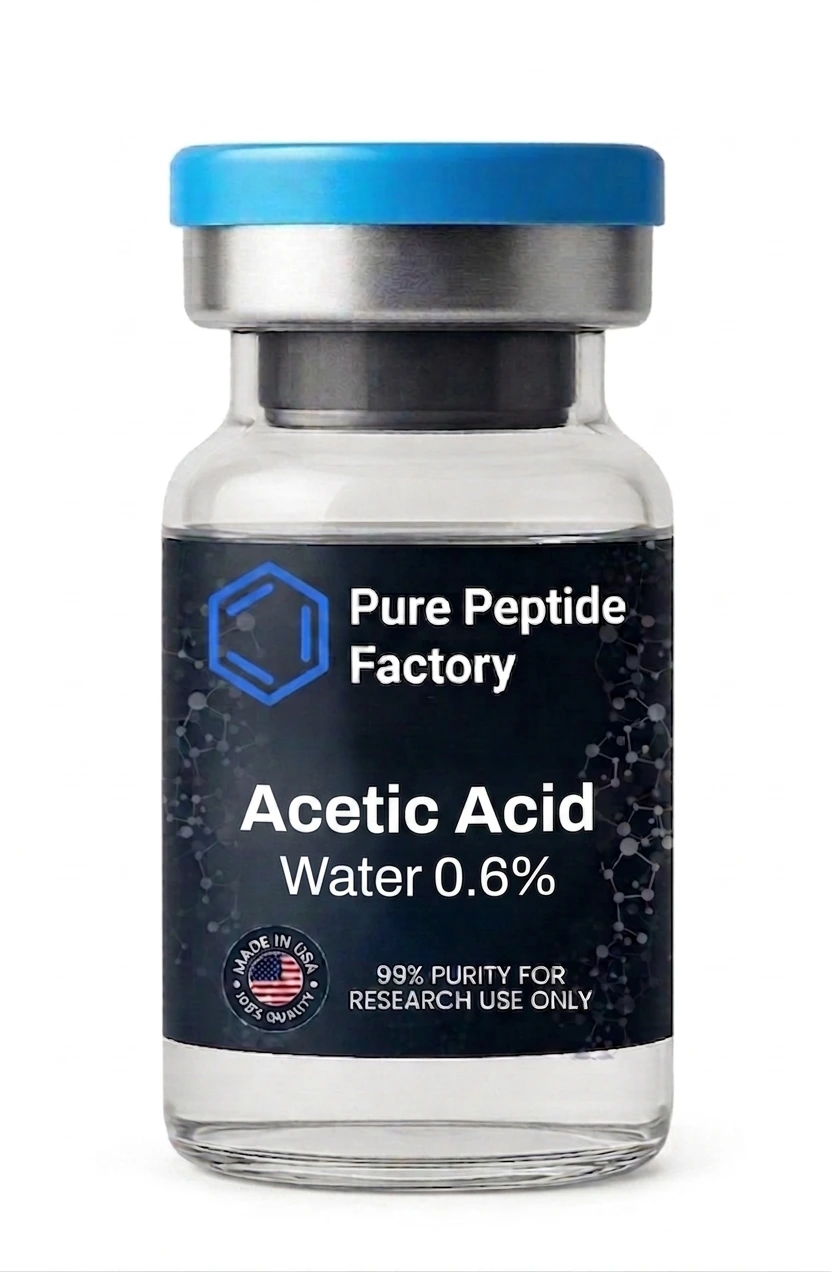
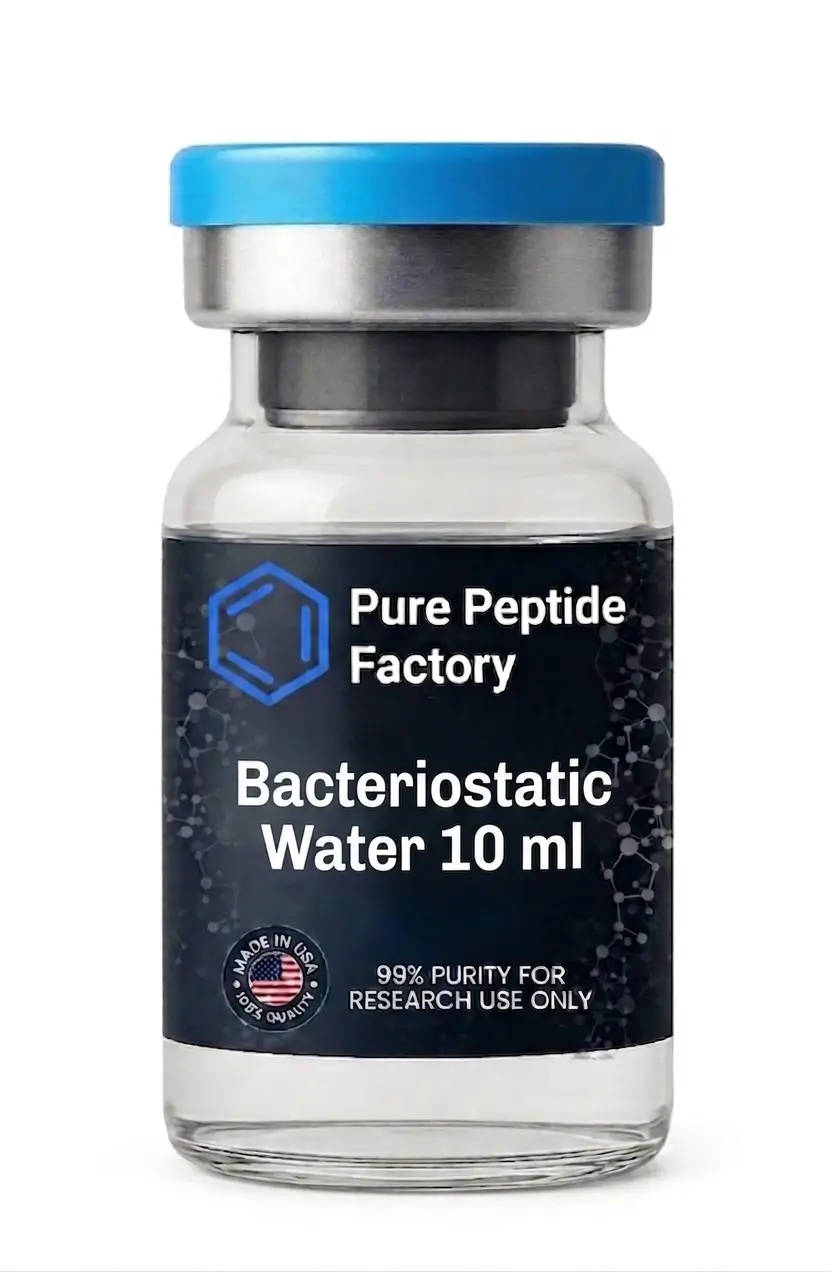
bacteriostatic water for peptides
$8.00 $10.00Price range: $8.00 through $10.00
Bacteriostatic water for peptides is the standard reconstitution vehicle for research-grade lyophilized compounds. Furthermore, it is the only multi-draw water preparation that prevents bacterial growth between uses through 0.9% benzyl alcohol preservation, making it essential for any laboratory that reconstitutes peptides into solutions used across multiple experiments. Available in 3mL and 10mL vials. Sterile, pyrogen-tested, suitable for all research peptide reconstitution protocols.
Bacteriostatic Water for Peptides: The Essential Research Reconstitution Supply
Bacteriostatic water for peptides is not a commodity. Specifically, it is the most critical ancillary supply in any peptide research laboratory because the quality of your reconstitution vehicle directly affects the stability, sterility, and biological activity of every compound you prepare. Furthermore, using the wrong water preparation introduces bacterial contamination risk that invalidates cell culture results, corrupts in vivo data, and wastes expensive peptide compound. Consequently, researchers who invest in verified, pharmaceutical-grade bacteriostatic water protect the integrity of every experiment that follows.
Pure Peptide Factory supplies bacteriostatic water for peptides in 3mL and 10mL vials, preserved with 0.9% benzyl alcohol to prevent bacterial proliferation between draws. Additionally, every vial is sterile filtered, pyrogen tested, and manufactured under the same quality controls applied to our research peptides. Because we supply both the peptides and the reconstitution vehicle, your entire research supply chain comes from one verified domestic source.
Why Researchers Buy Bacteriostatic Water for Peptides from Pure Peptide Factory
The Reconstitution Vehicle That Comes With Every Peptide Protocol
Every reconstitution guide across our catalog, from BPC-157 to Ipamorelin to Epitalon, specifies bacteriostatic water as the recommended preparation vehicle. Consequently, researchers who source their peptides from us can complete their entire supply order in one transaction without sourcing the reconstitution vehicle separately. Furthermore, sourcing from the same supplier eliminates the risk of introducing contamination variables through a secondary supply chain.
Two Vial Sizes for Any Protocol Scale
The 3mL vial suits single-compound reconstitutions and short-duration protocols where the entire volume will be used within the 28-day post-puncture stability window. The 10mL vial suits laboratories reconstituting multiple peptide vials from one water source, extended study timelines, or researchers who need higher total volume for large animal protocols. Consequently, both configurations serve specific research needs rather than forcing researchers to choose between too little and too much.
Sterility and Pyrogen Testing Documented
Every batch of our bacteriostatic water undergoes sterility verification and endotoxin testing before release. Because endotoxin contamination in the reconstitution vehicle produces false inflammatory responses in cell culture and in vivo models, pyrogen-free verification is not optional for research-grade applications. We provide batch documentation on request for researchers who need to demonstrate reconstitution vehicle quality for publication or IRB review.
Same-Day Domestic Shipping
Bacteriostatic water is stable at room temperature and does not require cold-chain shipping. Consequently, orders ship same-day for requests placed before 2 PM EST and arrive in 1 to 3 business days without the cold-packaging requirements that apply to our peptide compounds.
What Is Bacteriostatic Water for Peptides?
The Definition and What Makes It Different from Regular Sterile Water
Bacteriostatic water is sterile water for injection preserved with 0.9% benzyl alcohol. The benzyl alcohol acts as an antimicrobial agent that inhibits bacterial growth in the solution after the vial stopper has been punctured. Because of this preservation, bacteriostatic water vials can be re-entered multiple times with a needle over a 28-day period without introducing bacterial contamination, which is the defining feature that makes it the standard vehicle for peptide reconstitution.
In contrast, sterile water for injection contains no preservative. Consequently, once the stopper is punctured and the vial is opened to the environment, bacterial contamination can occur with subsequent needle insertions. For this reason, sterile water without benzyl alcohol should only be used for single-draw reconstitutions where the entire volume is withdrawn in one step. Multi-draw peptide vials, which is the standard format for research-grade lyophilized peptides, require bacteriostatic water for peptides to maintain sterility across multiple uses.
Bacteriostatic Water vs Sterile Water: Which to Use for Peptides
This is the most common question researchers ask when setting up a peptide reconstitution protocol. The answer depends on how the reconstituted solution will be used:
| Feature | Bacteriostatic Water (0.9% benzyl alcohol) | Sterile Water for Injection |
|---|---|---|
| Preservative | 0.9% benzyl alcohol | None |
| Multi-draw safe | Yes, up to 28 days post-puncture | No, single draw only |
| Reconstituted solution stability | 14 to 28 days at 2 to 8°C depending on peptide | 24 hours maximum after puncture |
| Best for | Multi-draw research peptide vials, extended protocols | Single-dose reconstitution, immediate use |
| Benzyl alcohol sensitivity | Consider sterile water for certain sensitive cell lines | Safe for all cell types |
| Standard for peptide research | Yes, industry standard | Limited use cases |
Additionally, researchers working with certain sensitive mammalian cell lines should verify that 0.9% benzyl alcohol at the concentrations present after peptide dilution does not affect their specific cell type. Because the final benzyl alcohol concentration in the working solution is considerably lower than the stock concentration, most cell culture applications are unaffected at standard research concentrations. However, researchers using primary neurons or highly sensitive cell lines should consult published literature for their specific system.
How to Use Bacteriostatic Water for Peptides: Complete Reconstitution Guide
Step-by-Step Reconstitution Protocol for Research Peptides
Because reconstitution technique directly affects compound stability and sterility, following a consistent protocol for every peptide vial is essential. Furthermore, this protocol applies across all lyophilized research peptides in our catalog.
- Allow both the peptide vial and the bacteriostatic water vial to reach room temperature before reconstitution. Consequently, temperature differentials that can cause foaming or aggregation during mixing are avoided.
- Sanitize both vial stoppers with 70% isopropyl alcohol and allow to dry for 30 seconds.
- Draw the required volume of bacteriostatic water into a sterile syringe.
- Insert the needle into the peptide vial at an angle and inject the water slowly down the side of the vial wall. Do not inject directly onto the lyophilized cake as this causes foaming and potential denaturation.
- Remove the syringe and allow the lyophilized cake to dissolve without agitation. Most peptides dissolve within 1 to 5 minutes. Larger peptides like Tesamorelin and ACTH 1-39 may require 5 to 10 minutes.
- Gently swirl the vial until the solution runs clear. Do not shake vigorously as this introduces air bubbles and can shear peptide bonds in longer sequences.
- Inspect for clarity before labeling. Discard if any particulate matter or cloudiness persists after full dissolution time has elapsed.
- Label the reconstituted vial with the peptide name, reconstitution date, final concentration, and lot number.
Calculating Your Bacteriostatic Water Volume
The volume of bacteriostatic water you add to a peptide vial determines the final concentration of your working solution. Consequently, calculating this correctly before reconstitution prevents errors that waste expensive compound. Use this formula:
Final concentration (mg/mL) = Peptide mass (mg) divided by Water volume added (mL)
For example, adding 2mL of bacteriostatic water to a 10mg peptide vial produces a 5mg/mL solution. Adding 5mL produces a 2mg/mL solution. Additionally, you can work backwards from your required dose concentration to determine the optimal water volume for your specific protocol.
How Much Bacteriostatic Water Do You Need Per Vial Size?
| Peptide Vial Size | Common Water Volume Added | Resulting Concentration | Best Bacteriostatic Water Vial |
|---|---|---|---|
| 2mg peptide | 1 to 2mL | 1 to 2mg/mL | 3mL vial |
| 5mg peptide | 1 to 2.5mL | 2 to 5mg/mL | 3mL vial |
| 10mg peptide | 2 to 5mL | 2 to 5mg/mL | 3mL or 10mL vial |
| 20mg peptide | 4 to 10mL | 2 to 5mg/mL | 10mL vial |
| Multiple peptide vials in one session | Variable | Per protocol | 10mL vial |
Bacteriostatic Water for Peptides: Storage and Stability
Before Opening
Unopened bacteriostatic water vials store at room temperature, between 15 and 30°C, protected from light and freezing. Because the benzyl alcohol preservative provides antimicrobial protection in the sealed vial, refrigeration is not required before first use. Consequently, bacteriostatic water does not consume refrigerator or freezer space that should be reserved for your temperature-sensitive peptide compounds.
After First Puncture
After the vial stopper is first punctured, bacteriostatic water maintains sterility for 28 days when stored at room temperature. However, because temperature stability of the dissolved peptides in your reconstituted solutions is a separate concern, always store reconstituted peptide vials at 2 to 8°C regardless of the water vehicle stability window.
Reconstituted Peptide Stability by Compound
The stability of a reconstituted peptide solution depends on the specific compound, not just the water vehicle. Furthermore, the benzyl alcohol in bacteriostatic water does not extend peptide stability beyond the published stability window for each compound. Below are the reconstituted stability windows for the main compounds in our catalog:
| Peptide | Reconstituted Stability | Storage Temperature |
|---|---|---|
| Semaglutide | 28 days | 2 to 8°C |
| Ipamorelin | 14 days | 2 to 8°C |
| BPC-157 | 14 days | 2 to 8°C |
| Tesamorelin | 14 days | 2 to 8°C |
| Semax | 14 days | 2 to 8°C |
| Tirzepatide | 28 days | 2 to 8°C |
| GHK-Cu | 14 days | 2 to 8°C |
| MOTS-C | 14 days | 2 to 8°C |
| Epitalon | 14 days | 2 to 8°C |
| ACTH 1-39 | 7 to 14 days | 2 to 8°C |
Bacteriostatic Water for Peptides: Product Specifications
Composition and Quality Standards
- Active preservative: Benzyl alcohol 0.9% w/v
- Vehicle: Water for injection, USP
- pH: 4.5 to 7.0
- Sterility: Sterile filtered through 0.22 micron membrane
- Pyrogen testing: Endotoxin below 0.25 EU/mL
- Particulate matter: Meets USP requirements for injectable preparations
- Container: Borosilicate glass vial with rubber stopper and aluminum crimp seal
Available Configurations
| SKU | Volume | Best For |
|---|---|---|
| BW3 | 3mL vial | Single peptide reconstitution, small vial sizes (2mg to 10mg), short protocols |
| BW10 | 10mL vial | Multiple reconstitutions, large peptide vials (20mg plus), extended protocols, multi-compound sessions |
Frequently Asked Questions About Bacteriostatic Water for Peptides
What is bacteriostatic water for peptides?
Bacteriostatic water for peptides is sterile water for injection preserved with 0.9% benzyl alcohol. Furthermore, it is the standard reconstitution vehicle for research-grade lyophilized peptides because the benzyl alcohol preservative prevents bacterial growth between multiple needle draws into the same vial, making it safe for multi-use over a 28-day post-puncture period.
Can I use bacteriostatic water instead of sterile water for peptides?
Yes, and in most cases it is the better choice. Bacteriostatic water for peptides allows multi-draw use over 28 days, whereas sterile water without preservative should be discarded after a single draw. Consequently, bacteriostatic water is the industry standard for research peptide reconstitution unless your specific protocol requires preservative-free water for reasons such as highly sensitive cell lines or specific assay interference concerns.
How long does bacteriostatic water last after opening?
After the vial stopper is first punctured, bacteriostatic water maintains antimicrobial protection for 28 days when stored at room temperature. However, additionally label each vial with the first-use date so you track the 28-day window accurately across your research sessions.
What is the difference between bacteriostatic water and bacteriostatic saline?
Bacteriostatic water contains only water and 0.9% benzyl alcohol. Bacteriostatic saline additionally contains 0.9% sodium chloride, making it isotonic with physiological fluids. For most peptide reconstitution applications, bacteriostatic water is preferred because the absence of sodium chloride gives researchers more control over the final ionic composition of their working solutions. Consequently, researchers can adjust tonicity themselves by diluting with the appropriate buffer for their specific assay system.
Do I need bacteriostatic water to reconstitute peptides?
For multi-draw peptide vials, yes. Because most research-grade peptide kits supply 10 vials that are reconstituted and drawn from multiple times over extended study periods, bacteriostatic water is the appropriate and standard reconstitution vehicle. Sterile water without benzyl alcohol is only suitable for single-draw, immediate-use reconstitutions.
How much bacteriostatic water do I add to a peptide vial?
The volume depends on the concentration you need for your protocol. Divide your peptide mass in milligrams by your target concentration in mg/mL to calculate the required water volume. For example, to prepare a 5mg/mL solution from a 10mg vial, add 2mL of bacteriostatic water for peptides. Furthermore, all reconstitution guides in our product catalog include specific concentration reference tables for each compound.
Where can I buy bacteriostatic water for peptides?
Pure Peptide Factory stocks bacteriostatic water for peptides in 3mL and 10mL vials with same-day domestic shipping. Additionally, ordering alongside your peptide compounds eliminates the need for a separate supplier and ensures your reconstitution vehicle meets the same quality standards as your research compounds.
Is bacteriostatic water the same as sterile water?
No. Sterile water for injection is purified water that has been sterilized but contains no preservative. Bacteriostatic water for peptides additionally contains 0.9% benzyl alcohol, which inhibits bacterial growth after the vial is punctured. Consequently, only bacteriostatic water is safe for multi-draw research peptide reconstitution over a 28-day window.
Order Bacteriostatic Water for Peptides
Secure Checkout
- Credit card, cryptocurrency, or wire transfer
- Same-day dispatch for orders placed before 2 PM EST
- Standard shipping, no cold-chain required
- Order alongside your peptide compounds for one combined shipment
Bundle With Your Peptide Order
Because bacteriostatic water is referenced in every reconstitution protocol across our catalog, adding it to your peptide order ensures you have everything needed to begin your research immediately on arrival. Furthermore, combining your peptide and water supply into one order eliminates the sourcing gap that delays many research programs when peptides arrive without the appropriate reconstitution vehicle.
Add to cart and complete your research supply order with the reconstitution vehicle your peptide protocols require.