Epitalon Peptide
$25.00 $65.00Price range: $25.00 through $65.00
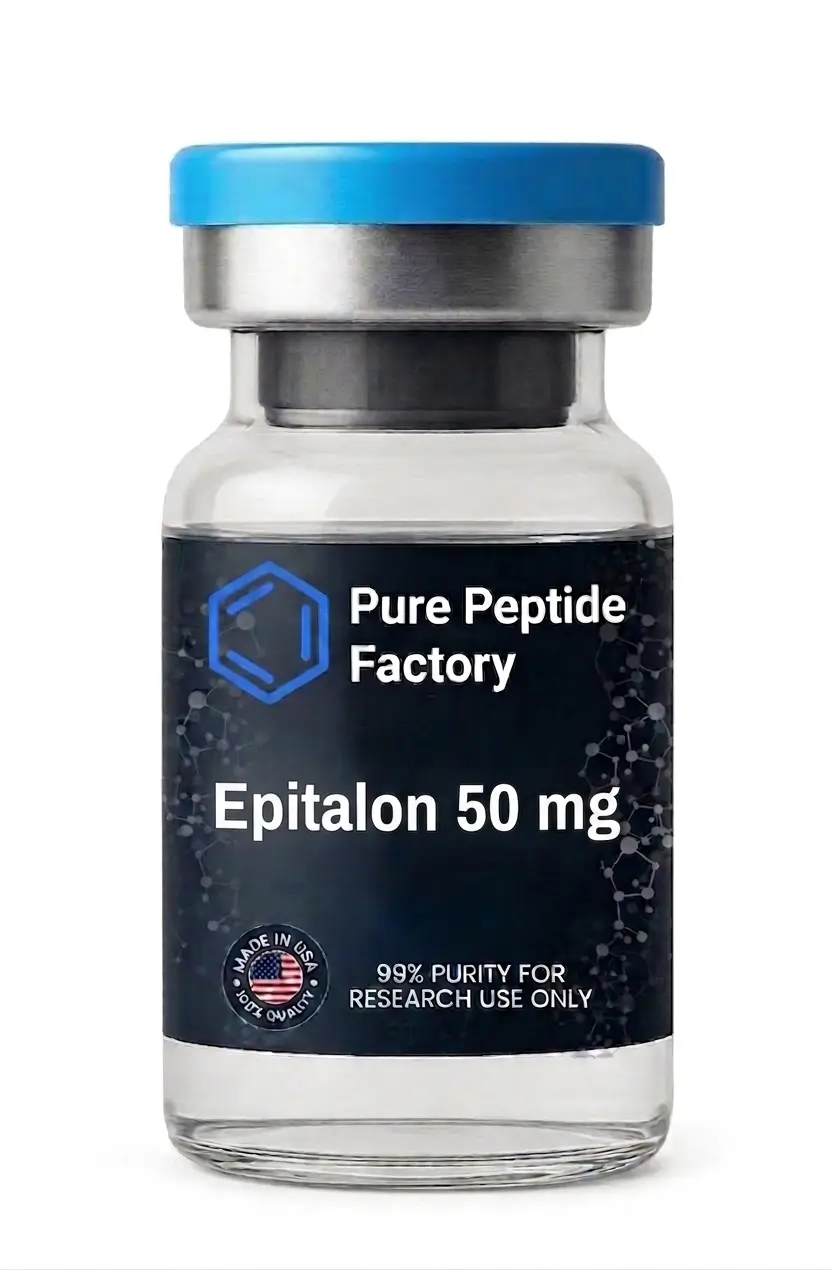
Epithalon, also known as Epitalon, is a synthetic tetrapeptide studied for epitalon peptide benefits spanning telomerase activation, gene expression regulation, melatonin modulation, and immune function. It is one of the most studied bioregulator peptides in gerontology research, primarily investigated for its ability to activate telomerase, regulate gene expression, modulate melatonin synthesis, and influence immune function. Available in 10mg and 50mg vials. HPLC verified, batch-documented, domestic cold-chain shipping. Research use only.
Epitalon Peptide Benefits: The Telomerase Research Compound with 40 Years of Published Data
Let us look into Epitalon Peptide Benefits . Epitalon is not a new discovery. Russian researcher Professor Vladimir Khavinson first isolated it from pineal gland extracts in the 1980s and spent the following four decades studying it across animal models, cell cultures, and human populations. That body of work, published across peer-reviewed journals in gerontology, oncology, and endocrinology, makes Epitalon one of the most documented short peptides in aging biology research.Pure Peptide Factory supplies research-grade Epithalon (Epitalon) in 10mg and 50mg vials for researchers studying epitalon peptide benefits across aging, oncology, and genomic biology.
The core of that research centers on telomeres, the protective end caps on chromosomes that shorten with every cell division. When telomeres become too short, cells either die or enter senescence. Both outcomes drive aging and age-related disease. Epitalon activates telomerase, the enzyme responsible for maintaining telomere length, which is why it has attracted sustained research interest in longevity, cancer biology, and genomic regulation.
Pure Peptide Factory supplies research-grade Epithalon (Epitalon) in 10mg and 50mg vials with batch-specific HPLC documentation and domestic cold-chain shipping. If you are building a longevity research program and need a reliable domestic source, this is where your search ends.
Why Researchers Buy Epitalon from Pure Peptide Factory
Two Vial Sizes to Match Any Protocol Scale
The leading competitor in this category sells only a 25mg configuration. We supply 10mg and 50mg vials. The 10mg vial suits cell culture work, dose-finding studies, and pilot protocols. The 50mg vial is built for extended animal studies, multi-cohort institutional programs, and labs running continuous longevity research. One supplier covers the full range.
Batch-Specific Documentation for a Compound Where Purity Matters
Epitalon is a four-amino-acid tetrapeptide. Short sequences are among the easiest compounds to adulterate or mislabel because degraded peptide and intact peptide look similar to an untrained eye. The research community consistently flags sourcing as a concern for this compound. Every vial we ship includes a lot-specific HPLC chromatogram and mass spectrometry report confirming the molecular weight at 390.34 g/mol and the Ala-Glu-Asp-Gly sequence identity. Download the COA for your specific lot before ordering.
Domestic Cold-Chain Preserves a Sensitive Compound
Epitalon is stable as lyophilized powder but degrades under improper storage conditions, particularly exposure to moisture and temperature fluctuation. We store at -20°C and ship with phase-change cooling. Most orders arrive within 1 to 3 business days. International sourcing cannot guarantee that reliability for a compound with this sensitivity profile.
The Longevity Research Stack
The most compelling epitalon peptide benefits documented in published research come from lifespan studies across multiple species. We stock Epitalon alongside Humanin and MOTS-C, the two other primary compounds researchers use to study mitochondrial and telomere-related longevity mechanisms. Researchers building comprehensive aging biology programs can source all three from one supplier under identical batch handling conditions. The internal link between these compounds creates a natural research stack.
Epitalon vs Epithalon: Are They the Same Compound?
Yes. Here Is Why Both Spellings Exist
This is one of the most searched questions in the research community and no competitor answers it clearly on their product page. Epitalon and Epithalon are two transliterations of the same Russian compound name into English. The peptide was developed and named in Russian. When translated, different publishers and vendors used different English spellings, creating two parallel keyword clusters that both refer to the same tetrapeptide: Ala-Glu-Asp-Gly, CAS 307297-39-8.
Other names for the same compound include Epithalone, Epithalamin (the natural pineal precursor preparation), and AEDG peptide (based on single-letter amino acid codes). When you see any of these terms in published literature or on supplier websites, they refer to the same molecule.
What Is Epitalon Peptide and Epitalon Peptide Benefits?
A Synthetic Tetrapeptide from Pineal Gland Research
Epitalon was synthesized from Epithalamin, a natural peptide preparation extracted from the pineal gland. Professor Khavinson’s research group in St. Petersburg identified the active tetrapeptide sequence within Epithalamin and synthesized it as Epitalon to enable precise, reproducible research without the variability of biological extracts.
The pineal gland connection is significant. Epithalamin was first studied because pineal gland activity correlates strongly with aging. As the pineal gland degenerates with age, melatonin production decreases and the regulatory signals it sends to the endocrine system weaken. Epitalon research examines whether the synthetic tetrapeptide can restore some of that regulatory function at the cellular and genomic level.
Molecular Profile:
- Sequence: Ala-Glu-Asp-Gly (AEDG)
- Molecular Formula: C14H22N4O9
- Molecular Weight: 390.34 g/mol
- CAS: 307297-39-8
- PubChem CID: 219042
- Also known as: Epithalon, Epithalone, Epithalamin, AEDG peptide.
How Epitalon Works at the Cellular Level
Epitalon operates through several distinct mechanisms that together explain its broad research profile across aging, oncology, and immune biology.
Telomerase activation: Epitalon increases telomerase activity in human somatic cells, promoting telomere elongation. Telomeres shorten with every cell division and eventually trigger senescence or apoptosis. By activating telomerase, Epitalon allows cells to maintain functional telomere length, extending replicative capacity.
Direct DNA interaction: Because of its small size and lack of tertiary structure, Epitalon can penetrate cell membranes without transporters and reach the nucleus directly. Once there, it interacts with histone proteins H1/6 and H1/3 at specific binding sites, influencing chromatin structure and gene expression. Research has documented Epitalon-mediated changes in the promoter regions of CD5, IL-2, MMP2, and Tram1 genes, connecting it to immune function, extracellular matrix maintenance, and cellular stress response.
Melatonin regulation: Epitalon sensitizes the hypothalamus to its natural hormonal signals and stimulates the pineal gland to produce melatonin, restoring circadian rhythm regulation that declines with age in both rodent and human models.
Antioxidant activity: The peptide demonstrates capacity to neutralize hydroxyl and peroxyl free radicals, reducing oxidative stress that drives cellular aging and degenerative disease.
Epitalon Peptide Benefits: What the Research Shows
Epitalon Peptide Benefits for Longevity: Lifespan Extension Data
The most striking findings in Epitalon research come from lifespan studies in multiple species. In normal healthy fruit flies and rats, Epitalon decreased mortality rates by approximately 52%. In mice genetically prone to both heart disease and cancer, Epitalon prolonged life by up to 27% compared to untreated controls. The Epithalamin preparation, from which Epitalon was derived, was reported to increase average lifespan in various experimental models by 11 to 31%.
These findings across multiple species and experimental designs establish a consistent pattern. Researchers studying the mechanisms of longevity extension use Epitalon to examine whether telomere maintenance, antioxidant protection, or gene expression changes are the primary drivers of the observed lifespan effects.
Epitalon Peptide Benefits for Telomere Biology and Cellular Aging
The telomere-related epitalon peptide benefits are the most mechanistically characterized in the literature. Published research by Khavinson et al. in the Bulletin of Experimental Biology and Medicine confirmed that Epitalon induces telomerase activity and telomere elongation in human somatic cells. This was demonstrated in vitro using human fetal fibroblasts and retinal pigment epithelial cells, establishing a direct mechanistic link between Epitalon administration and telomere maintenance.
Researchers studying telomere biology, chromosomal end protection, DNA replication fidelity, and cellular senescence use Epitalon to examine these mechanisms with a compound that has both in vitro cell culture data and in vivo animal model support behind it.
Epitalon Peptide Benefits in Oncology Research
Epitalon research in oncology spans several cancer models and produces a consistently protective pattern. In HER-2/neu transgenic mice predisposed to breast cancer, Epitalon suppressed spontaneous mammary tumor development and decelerated aging simultaneously. The mechanism involves both direct anti-proliferative effects and immune system modulation through CD5 and IL-2 gene expression changes.
The inhibition of MMP-9 synthesis is particularly relevant for metastasis research. MMP-9 is a matrix metalloproteinase that facilitates tumor invasion and metastasis by degrading extracellular matrix components. Epitalon’s suppression of MMP-9 alongside its enhancement of Ki-67 expression and inhibition of Caspase-3 suggests a complex multi-target action on cancer cell biology that researchers are actively characterizing.
Epitalon Peptide Benefits for Circadian Rhythm and Melatonin Regulation
Among the documented epitalon peptide benefits, melatonin restoration is one of the most consistently replicated across species. Epitalon restoration of melatonin synthesis is one of its most consistently documented effects across species. Melatonin production from the pineal gland declines with age, and this decline is linked to disrupted sleep architecture, immune dysregulation, and increased cancer risk. Epitalon increases melatonin levels in aged rodents and human subjects, restoring more youthful circadian signaling patterns.
Researchers studying circadian biology, melatonin-immune crosstalk, aging-related sleep disruption, and photoperiod effects on longevity incorporate Epitalon to examine how pineal peptide signaling connects to these downstream endpoints.
Eye and Retinal Research
In hereditary retinitis pigmentosa models, Epitalon administration preserved retinal structure and function. Pineal peptide research by Khavinson et al. published in Neuro Endocrinology Letters showed that the peptide improved eye retina condition in retinitis pigmentosa models. In vitro, Epitalon protected retinal pigment epithelial cells from oxidative damage, consistent with its antioxidant mechanism.
Immune Function and Reproductive Biology
Epitalon delays age-related decline in both immune and reproductive system function in animal models. The immune effects operate partly through IL-2 and CD5 gene regulation, supporting T-cell function that weakens with age. The reproductive effects involve restoration of hypothalamic sensitivity to hormonal feedback signals, delaying the age-related decline in gonadal function observed in murine models.
Skin and Connective Tissue Research
The MMP2 gene expression changes Epitalon produces have direct implications for skin and connective tissue research. MMP2 regulates extracellular matrix maintenance in skin, tendons, and other connective tissues. Epitalon-stimulated MMP2 expression supports extracellular matrix remodeling and skin fibroblast activity, which declines with age. Researchers studying epidermal aging, wound healing, and collagen synthesis incorporate Epitalon to examine how direct DNA-binding tetrapeptides influence structural tissue biology.
Epitalon Peptide Benefits in the Longevity Research Stack
How Epitalon Compares to Other Anti-Aging Research Peptides
Researchers building comprehensive aging biology programs use Epitalon alongside other longevity compounds. Understanding how they complement each other prevents redundant protocols and allows more complete pathway coverage:
| Compound | Primary Mechanism | Key Research Area | Relationship to Epitalon |
|---|---|---|---|
| Epitalon | Telomerase activation, gene expression, antioxidant | Telomere biology, longevity, cancer | Primary compound |
| Humanin | STAT3 signaling, Bax inhibition | Neuroprotection, IGF-1 axis longevity | Complementary mitochondrial signaling |
| MOTS-C | AMPK activation, folate cycle | Metabolic longevity, exercise mimetic | Complementary metabolic aging |
| GHK-Cu | TGF-beta/SMAD, collagen synthesis | Tissue repair, skin aging | Complementary structural aging |
Epitalon targets genomic stability and telomere length. Humanin targets the apoptosis and IGF-1 longevity axis. MOTS-C targets metabolic flexibility and mitochondrial signaling. GHK-Cu targets structural tissue maintenance. A complete aging biology research program examines all four pathways. We stock all four compounds under identical handling conditions.
Epitalon Peptide Dosage: Reference Protocols from Published Research
Animal Model Dosing
Epitalon has a more developed dosing literature than most short peptides given its 40-year research history. Published protocols include:
| Model | Dose | Route | Frequency | Duration | Endpoint |
|---|---|---|---|---|---|
| Rat lifespan studies | 0.1 mg/kg | Intraperitoneal | Daily | 5 days per month | Mortality rate, lifespan |
| Murine cancer models | 1 mcg/mouse | Intraperitoneal | Every other day | 6 months | Tumor incidence |
| Retinal cell protection | 10 to 100 nM | In vitro cell culture | Single exposure | 24 to 72 hours | Cell viability, ROS |
| Circadian/melatonin studies | 0.1 mg/kg | Subcutaneous | Daily for 5 days | Per cycle | Melatonin levels |
Human Research Data
Epitalon has been administered in human research contexts as part of Khavinson’s clinical work in Russia. Typical human protocols in published reports used 10mg total daily dose administered as subcutaneous or intravenous injection over 10 to 20 day cycles, repeated periodically. These figures appear in gerontological research publications but do not constitute clinical trial data validated to Western regulatory standards.
We do not provide human dosing recommendations. Epitalon is sold strictly for laboratory research purposes and is not approved for human use.
How to Reconstitute Epitalon
Step-by-Step Laboratory Protocol
Epitalon is highly water-soluble due to its small size and lack of tertiary structure, which makes reconstitution simpler than larger peptides.
- Sanitize the vial stopper with 70% isopropyl alcohol
- Inject bacteriostatic water slowly against the vial wall
- Allow the lyophilized powder to dissolve without agitation for 1 to 2 minutes. Epitalon dissolves readily
- Gently swirl if needed. Do not shake
- Inspect for clarity and label with date, concentration, and lot number
Concentration reference:
For 10mg vial:
| Bacteriostatic Water Added | Final Concentration |
|---|---|
| 1 mL | 10 mg/mL |
| 2 mL | 5 mg/mL |
| 5 mL | 2 mg/mL |
| 10 mL | 1 mg/mL |
For 50mg vial:
| Bacteriostatic Water Added | Final Concentration |
|---|---|
| 5 mL | 10 mg/mL |
| 10 mL | 5 mg/mL |
| 25 mL | 2 mg/mL |
| 50 mL | 1 mg/mL |
Storage Requirements
- Lyophilized powder: Stable at room temperature for up to 3 months. Recommended storage at -20°C for longer stability, up to 24 months
- Reconstituted solution: Use within 14 days at 2 to 8°C under sterile conditions. Do not freeze reconstituted solution
- Epitalon’s small size and lack of tertiary structure make it more stable in solution than larger peptides, but proper storage still applies
- Protect from light at all stages
What the Research Community Asks About Epitalon Peptide Benefits
Epitalon consistently generates community discussion across research forums and Reddit threads. The most common questions reflect genuine scientific uncertainty:
On sourcing reliability: The research community consistently identifies sourcing as the primary concern for Epitalon. Short peptides are easy to adulterate and the visible difference between degraded and intact product is minimal without testing. Our batch-specific HPLC documentation addresses this directly. Every COA is lot-specific and verifiable against published molecular data.
On the spelling: Confusion between Epitalon and Epithalon is the second most common discussion point. As addressed above, both spellings refer to the same compound. CAS 307297-39-8 is your definitive reference regardless of spelling.
On dosing protocols: Community discussion reflects the same gap in human clinical data that the published literature contains. Published animal and human research protocols are outlined in the dosage section above. We do not provide human dosing recommendations.
On the Khavinson research: The research community occasionally questions the reproducibility of Khavinson’s work given that most primary publications originate from his own institute. This is a legitimate scientific concern. Independent replication of telomere elongation in human somatic cells has been reported, and the antioxidant and gene expression findings have been independently observed in Western research contexts, though the large lifespan extension claims in animal models await full independent replication.
Regulatory Context
Research Use Status
Epitalon is not FDA approved for any therapeutic indication and is not scheduled under the Controlled Substances Act. It is available for laboratory research under research-use-only terms without prescription. You must agree to research-use-only terms at checkout. This compound is not for human consumption, veterinary use, or diagnostic application of any kind.
Product Specifications
Available Configurations
| SKU | Vial Size | Best For |
|---|---|---|
| EP10 | 10mg | Cell culture, dose-finding, short-duration studies |
| EP50 | 50mg | Extended animal studies, multi-cohort institutional research |
Quality Verification
- Purity: 99% minimum (HPLC verified)
- Sequence identity: Mass spectrometry confirmed, Ala-Glu-Asp-Gly
- Molecular Weight: 390.34 g/mol confirmed
- Endotoxin: Less than 0.1 EU/mL
- Sterility: Verified per USP 71
- Form: Lyophilized powder
- Storage: -20°C long-term, room temperature stable up to 3 months
Current Batch: #PPF-EPI-0426 Purity: 99.3% Download: HPLC Certificate | MS Report
FAQ
What are the benefits of epitalon peptide in research?
Published research documents the following epitalon peptide benefits: telomerase activation and telomere elongation in human somatic cells, lifespan extension of 11 to 52% in rodent models, melatonin restoration, immune function modulation through IL-2 and CD5 regulation, antioxidant protection, cancer-protective effects in transgenic tumor models, retinal cell preservation, and skin fibroblast stimulation.
Is epitalon the same as epithalon?
Yes. Epitalon and Epithalon are two English transliterations of the same Russian compound name. Both refer to the tetrapeptide Ala-Glu-Asp-Gly with CAS number 307297-39-8. Other names include Epithalone, Epithalamin, and AEDG peptide.
What is the epitalon peptide dosage in research?
Published animal protocols use 0.1 mg/kg intraperitoneally in lifespan studies and 1 mcg per mouse in cancer models. Human research in Russian publications used 10mg daily over 10 to 20 day cycles. All dosing should follow published protocols appropriate to your model and endpoints. We do not provide human dosing recommendations.
What are epitalon peptide side effects in research?
Published research across rodent and limited human studies reports a clean safety profile with no significant adverse effects documented at standard research doses. As a tetrapeptide with no tertiary structure, Epitalon is generally well tolerated in experimental models.
How does epitalon activate telomerase?
Epitalon penetrates cell membranes due to its small size and lack of tertiary structure, reaches the nucleus, and interacts with histone proteins to influence chromatin structure and gene accessibility. This includes activation of telomerase gene expression, which leads to increased telomerase enzyme activity and subsequent telomere elongation in dividing cells.
How does epitalon compare to Humanin and MOTS-C?
Epitalon targets genomic stability through telomere maintenance and gene expression regulation. Humanin targets apoptosis inhibition and the IGF-1 longevity axis. MOTS-C targets metabolic flexibility and AMPK-mediated energy sensing. The three compounds cover complementary aging mechanisms and are frequently used together in comprehensive longevity research programs.
What is the difference between epitalon and N-Acetyl Epithalon Amidate?
N-Acetyl Epithalon Amidate has an acetyl group at the N-terminus and an amide at the C-terminus. These modifications increase resistance to exopeptidase degradation and alter the physicochemical properties of the peptide. Some researchers prefer the modified form for in vitro studies where enzymatic stability is a concern. Standard Epitalon is the compound used in the bulk of published literature including Khavinson’s original work.
Where can I buy epitalon peptide for research?
Pure Peptide Factory stocks research-grade Epitalon in 10mg and 50mg vials with domestic cold-chain shipping. Orders placed before 2 PM EST ship same-day and arrive within 1 to 3 business days.
Order Epitalon Peptide for Research
Secure Checkout
- Credit card, cryptocurrency, or wire transfer
- Same-day dispatch for orders placed before 2 PM EST
- Cold-chain packaging with phase-change cooling
- Discreet labeling and full tracking
Institutional Accounts
Net-30 terms and purchase order acceptance available for universities and pharmaceutical companies. Contact us for bulk pricing on 50 vials or more.
Add to cart and get batch-verified Epitalon with 40 years of published research behind it and the documentation your protocol requires.
Related products
-
Humanin 10 mg
Original price was: $147.00.$100.00Current price is: $100.00. -
Thymalin 10 mg
$50.00