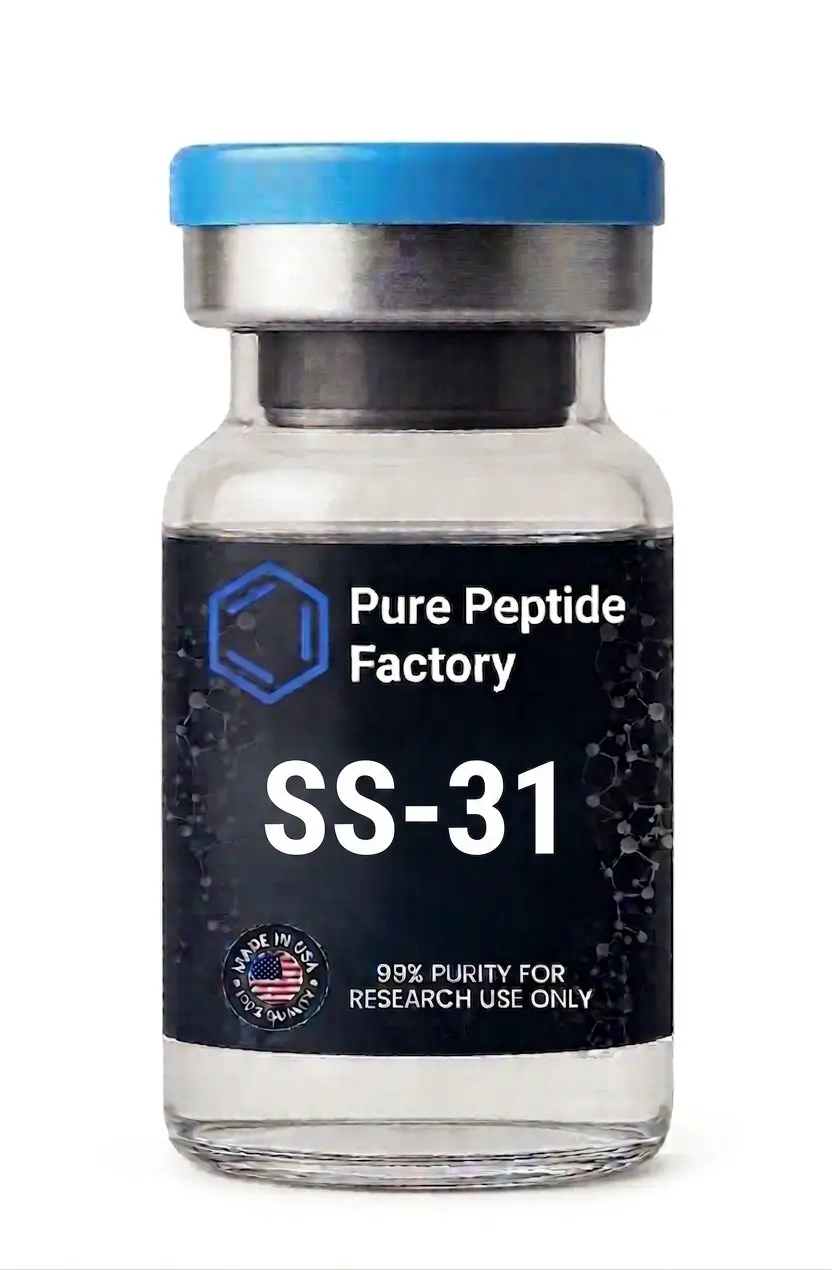
SS-31
$55.00 $70.00Price range: $55.00 through $70.00
SS-31 peptide for sale at Pure Peptide Factory. Also known as elamipretide, this mitochondria-targeted tetrapeptide (D-Arg-Tyr(2,6-diMe)-Lys-Phe-NH2) became the first FDA-approved mitochondrial-targeted therapeutic when FORZINITY received accelerated approval in September 2025 for Barth syndrome. Research-grade SS-31, HPLC verified at 98% minimum purity, batch-specific COA available before purchase. Studied in cardiolipin stabilization, sarcopenia, cardiovascular protection, and neuroprotection research. Domestic cold-chain shipping. Research use only.
SS-31 Peptide for Sale: The First FDA-Approved Mitochondria-Targeted Therapeutic
SS-31 (elamipretide) is the most clinically validated mitochondrial peptide in modern research. On September 19, 2025, the FDA granted accelerated approval to FORZINITY (elamipretide HCl) for Barth syndrome, making it the first mitochondria-targeted therapeutic ever approved in the United States. The research foundation behind that approval spans nearly two decades of work from Hazel Szeto and Peter Schiller at Cornell, documenting a tetrapeptide that concentrates more than 1,000-fold in the inner mitochondrial membrane through selective cardiolipin binding.
Pure Peptide Factory stocks research-grade SS-31 with lot-specific HPLC chromatograms, mass spectrometry confirmation, and domestic cold-chain shipping. If you are looking for SS-31 peptide for sale from a supplier that matches the seriousness of the research using it, this is the supplier.
Why Researchers Buy SS-31 from Pure Peptide Factory
Documentation Matches the Molecule
SS-31 contains an unnatural amino acid (2′,6′-dimethyl-L-tyrosine) that distinguishes the correctly synthesized peptide from cheaper substitutes using standard tyrosine. Mass spectrometry is the only reliable way to confirm that modification. Every batch we ship includes a lot-specific HPLC chromatogram and MS report verifying the 639.8 g/mol target, with Certificate of Analysis downloadable before your compound ships.
Domestic Cold-Chain Shipping
SS-31 is a guanidino-containing peptide that remains stable in lyophilized form but degrades in solution under heat and pH extremes. We ship from domestic cold-storage using phase-change cooling packs rated for 96-hour protection. Most orders reach your lab within 1 to 3 business days, which matters for a compound this technically demanding.
Three Vial Sizes for Protocol Scale
We stock SS-31 in 5mg, 10mg, and 50mg configurations. The 5mg vial serves dose-finding pilot work and small rodent studies. The 10mg vial handles most standard protocols. The 50mg vial matches large-cohort institutional research without forcing multiple vial purchases or stability-compromising pooled reconstitutions.
Synthesis Logs Archived for 24 Months
Every batch is documented and archived. If your IRB or compliance office requires chain-of-custody records, synthesis documentation, or retention samples, they are available on request.
What Is SS-31?
A Szeto-Schiller Tetrapeptide
SS-31 is a synthetic four-amino-acid peptide developed by Hazel Szeto and Peter Schiller. The SS designation refers to Szeto-Schiller, and 31 denotes its position in the original peptide series tested for mitochondrial targeting. The compound went through clinical development as MTP-131 and Bendavia before adopting the current name elamipretide. Stealth BioTherapeutics holds the intellectual property and commercializes it as FORZINITY.
The alternating aromatic-basic-aromatic-basic motif is what makes the peptide unique. This structural pattern confers cell permeability without requiring a transporter, and targets the peptide to the inner mitochondrial membrane where it binds cardiolipin with high affinity.
Molecular Profile:
- Sequence: H-D-Arg-Tyr(2,6-diMe)-Lys-Phe-NH2 (D-Arg-2′,6′-dimethylTyr-Lys-Phe-NH2)
- Molecular Formula: C32H49N9O5
- Molecular Weight: 639.8 g/mol
- CAS: 736992-21-5
- Synonyms: Elamipretide, FORZINITY, MTP-131, Bendavia, SS-31
How SS-31 Works at the Mitochondrial Level
SS-31 binds selectively to cardiolipin, a phospholipid found exclusively in the inner mitochondrial membrane where it accounts for roughly 15 to 20% of total mitochondrial phospholipid. Cardiolipin is essential for maintaining cristae architecture, organizing respiratory chain supercomplexes (Complexes I, III, and IV), and preventing cytochrome c release during apoptosis. When cardiolipin is peroxidized or structurally disrupted, the entire mitochondrial bioenergetic system fails.
SS-31 stabilizes cardiolipin by binding through electrostatic and hydrophobic interactions. This produces four documented downstream effects:
- Reduced reactive oxygen species (ROS) generation from the electron transport chain through restored respiratory supercomplex organization
- Preserved mitochondrial membrane potential and ATP synthesis capacity
- Reduced cardiolipin peroxidation, preventing the cytochrome c release that triggers apoptosis
- Improved cristae architecture, which is the physical substrate for efficient oxidative phosphorylation
Critically, SS-31 concentrates more than 1,000-fold within mitochondria relative to cytoplasmic levels. This means low plasma concentrations produce therapeutically relevant mitochondrial concentrations, a pharmacokinetic property that few peptides share.
SS-31 Research Applications
Sarcopenia and Aged Muscle Function
The Siegel et al. (Aging Cell, 2013) and Campbell et al. (Free Radical Biology and Medicine, 2019) studies established SS-31 as a leading research compound for age-related muscle decline. In 26-month-old female C57BL/6 mice (equivalent to elderly in human terms), 8 weeks of 3 mg/kg/day SS-31 delivered by osmotic pump reversed the age-related decline in maximum mitochondrial ATP production (ATPmax) and oxidative phosphorylation coupling (P/O ratio). Treadmill endurance improved. Muscle mass increased. Redox balance normalized.
Remarkably, a single SS-31 dose restored mitochondrial energetics toward youthful levels within one hour, well before any mitochondrial biogenesis could occur. This rapid action distinguishes SS-31 from compounds that require new mitochondrial protein synthesis for their effects.
Research endpoints include:
- 31P-MRS measurements of ATPmax and PCr/ATP ratios in aged skeletal muscle
- Oxidative phosphorylation coupling efficiency via optical spectroscopy
- Mitochondrial ROS production under maximal respiration
- Fatigue resistance and treadmill performance in aged cohorts
- Muscle stem cell activity and fiber type composition
Cardiovascular and Heart Failure Research
The TRIAGE-HF trial (Daubert et al., Circulation: Heart Failure, 2017) examined elamipretide in heart failure with reduced ejection fraction using 4-hour IV infusions at up to 0.25 mg/kg/hr. The trial produced mixed results at the chosen endpoints but generated extensive pharmacokinetic and tolerability data that informed subsequent dosing.
Whitson et al. (Geroscience, 2021) demonstrated that elamipretide treatment attenuated age-associated post-translational modifications of heart proteins in aged mouse models, restoring cardiac function through mechanisms tied to mitochondrial redox status. Research applications include:
- Ischemia-reperfusion injury models in rodent cardiac tissue
- Atherosclerosis plaque progression with foam cell formation endpoints
- Age-related diastolic dysfunction and proton leak measurements
- Pulmonary arterial hypertension models examining right ventricular pressure and fibrosis
Renal Protection and Diabetic Nephropathy
Hou et al. (Nephrology Dialysis Transplantation, 2018) demonstrated that SS-31 reduced oxidative stress markers, downregulated CD36, and improved renal function in diabetic nephropathy models. Saad et al. (Circulation: Cardiovascular Interventions, 2017) reported Phase 2a clinical trial data on mitochondrial protection during stent revascularization for atherosclerotic renal artery stenosis using 0.05 mg/kg/hr IV infusion, with blood-oxygen-level-dependent MRI showing preserved cortical oxygenation.
Research programs use SS-31 to examine mitochondrial contributions to acute kidney injury, chronic kidney disease progression, contrast-induced nephropathy, and the cardiorenal axis.
Neuroprotection and Retinal Research
Wu et al. (Acta Biochimica et Biophysica Sinica, 2019) documented SS-31 neuroprotection in a rat experimental glaucoma model, with preserved retinal ganglion cells and reduced oxidative stress markers. Huang et al. (Current Molecular Medicine, 2013) showed retinal protection in diabetic rats. These findings support Stealth BioTherapeutics’ ongoing development of elamipretide for dry age-related macular degeneration.
In neurodegenerative models, SS-31 has shown effects in Alzheimer’s disease research through reduction of β-amyloid pathology and restoration of mitochondrial function. Nhu et al. (Frontiers in Integrative Neuroscience, 2022) reviewed neuroprotective effects across multiple neurodegeneration models. In LPS-induced cognitive impairment, 5 mg/kg intraperitoneal SS-31 prevented memory deficits and preserved hippocampal dendritic spine density.
Barth Syndrome and Primary Mitochondrial Disease
The TAZPOWER Phase 2 clinical trial (NCT03098797) evaluated 40 mg daily subcutaneous elamipretide in Barth syndrome patients over 168 weeks of open-label extension. Knee extensor muscle strength improved by more than 45% from baseline. This result formed the basis of the FDA accelerated approval for FORZINITY on September 19, 2025 — the first FDA-approved mitochondria-targeted therapeutic.
Stealth BioTherapeutics is also advancing elamipretide through the NuPower Phase 3 trial for primary mitochondrial myopathy, which could expand access to significantly larger patient populations if positive.
For researchers, this clinical validation matters because it establishes SS-31 as more than a laboratory tool. It is the first mitochondria-targeted peptide to clear the full FDA approval pathway, which changes how research using the compound is evaluated, published, and funded.
SS-31 Peptide Dosage Chart: Published Research Protocols
Preclinical Dosing by Species and Route
The 2014 Szeto review (British Journal of Pharmacology) compiled dosing ranges across species from the published literature. Additional protocols from Siegel, Campbell, Whitson, and the Stealth clinical development program provide the framework researchers use today:
| Model | Dose Range | Route | Frequency | Typical Study Length | Reference Examples |
|---|---|---|---|---|---|
| Mice (aging/sarcopenia) | 3 mg/kg/day | Subcutaneous (osmotic pump) | Continuous | 8 weeks | Siegel 2013, Campbell 2019 |
| Mice (brain injury/cognitive) | 5 mg/kg | Intraperitoneal | Daily | Variable | LPS cognitive impairment studies |
| Mice (diabetic nephropathy) | 3 mg/kg | Subcutaneous | Daily | 12 weeks | Miyamoto 2020 |
| Mice (lung fibrosis) | 5 mg/kg | Intraperitoneal | Daily | Variable | Pulmonary research models |
| Rats (subarachnoid hemorrhage) | 2 to 10 mg/kg | Intraperitoneal | Single or repeated | Acute | Brain injury research |
| Rabbits | 0.05 to 0.1 mg/kg | Intravenous | Variable | Variable | Szeto 2014 review |
| Pigs, sheep, dogs | 0.05 mg/kg/hr | IV infusion | Continuous | Per protocol | Szeto 2014 review |
| Clinical (TAZPOWER) | 40 mg/day | Subcutaneous | Daily | 168+ weeks | Barth syndrome Phase 2 |
| Clinical (TRIAGE-HF) | 0.01 to 0.25 mg/kg/hr | IV infusion | 4-hour infusion | Variable | Heart failure Phase 2 |
| Clinical (renal artery) | 0.05 mg/kg/hr | IV infusion | Pre-procedure | Acute | Saad 2017 |
Allometric scaling between species uses body surface area rather than direct weight conversion. The standard equation (Human Equivalent Dose = Animal Dose × Animal Km ÷ Human Km, where Km is 3 for mice, 6 for rats, 37 for humans) means a 3 mg/kg mouse dose translates to approximately 0.24 mg/kg human equivalent, not a direct conversion.
Why Dose-Response Is Not Linear for SS-31
SS-31 accumulates in mitochondria through saturable cardiolipin binding. Once the cardiolipin binding sites are occupied, additional compound provides diminishing returns. This means there is a therapeutic window rather than a simple higher-is-better relationship. The 40 mg subcutaneous daily dose used in the Barth syndrome Phase 2 trials was selected to achieve cardiolipin-saturating mitochondrial concentrations sustained across the 24-hour dosing interval, based on the approximately 3 to 4 hour plasma half-life and the >1,000-fold mitochondrial partitioning ratio.
We Do Not Provide Human Dosing Recommendations
The dosing data above is synthesized from peer-reviewed publications and published FDA clinical trial records. It is provided for research protocol design context only. We do not provide human dosing guidance. SS-31 research-grade peptide is sold strictly for laboratory use.
SS-31 Reddit Discussions: What the Research Community Is Asking
The Dr. Seeds Protocol and Community Dosing
Reddit and peptide-focused community forums reference the Dr. Seeds SS-31 protocol, which extrapolates from the 40 mg subcutaneous daily dose used in TAZPOWER. These protocols are community-derived rather than institutionally validated, which is why researcher-focused sources and published clinical trial data should take precedence for protocol design.
The most commonly discussed research community questions involve:
- Timing of administration relative to exercise or metabolic stress
- Comparison of intermittent versus continuous dosing
- SS-31 stacking with other mitochondrial compounds (MOTS-C, urolithin A, NAD+ precursors)
- Subcutaneous versus intranasal administration for CNS-targeted research
Our position: work from the Szeto, Siegel, Campbell, and TAZPOWER published protocols for protocol design rather than community extrapolations. The peer-reviewed data provides quantified endpoints and validated mitochondrial readouts that community protocols do not.
SS-31 vs MOTS-C: Two Approaches to Mitochondrial Research
Different Mechanisms for Different Questions
SS-31 and MOTS-C are both studied in mitochondrial research, but they operate through fundamentally different mechanisms:
| Feature | SS-31 (Elamipretide) | MOTS-C |
|---|---|---|
| Type | Synthetic tetrapeptide | Mitochondrial-derived peptide (16 aa) |
| Origin | Designed by Szeto-Schiller | Encoded in mitochondrial 12S rRNA |
| Primary mechanism | Cardiolipin binding, respiratory chain stabilization | AMPK activation via folate cycle suppression |
| Site of action | Inner mitochondrial membrane | Cytoplasm and nucleus |
| Research focus | Cardiac, renal, neuro, sarcopenia | Metabolic, exercise, aging, bone |
| Clinical status | FDA-approved as FORZINITY (2025) | Preclinical, no approved indications |
| Dose range | 0.05 to 40 mg depending on route | 5 to 15 mg/kg in rodent models |
Researchers studying direct mitochondrial membrane protection reach for SS-31. Researchers studying whole-organism metabolic signaling and mitonuclear communication reach for MOTS-C. Studies examining both endpoints increasingly use the two compounds in combination protocols from the same supplier to control for batch variability.
How to Reconstitute SS-31
Step-by-Step Laboratory Protocol
- Sanitize the vial stopper with 70% isopropyl alcohol
- Inject bacteriostatic water or sterile saline slowly against the vial wall
- Allow the lyophilized cake to dissolve without agitation for 2 to 3 minutes
- Gently swirl until the solution is clear. Do not shake
- Inspect for clarity and label with date and concentration before use
Concentration reference:
- 5mg vial + 1mL water = 5mg/mL
- 10mg vial + 2mL water = 5mg/mL
- 50mg vial + 10mL water = 5mg/mL, or + 5mL = 10mg/mL
- Scale ratios to match your protocol target concentration
Storage Requirements
- Lyophilized powder: 24 months at -20°C, protected from light
- Reconstituted solution: 14 days at 2 to 8°C. Do not freeze reconstituted SS-31
- The guanidino group on D-arginine is pH-sensitive. Keep reconstituted solutions between pH 5.0 and 7.0 for maximum stability
- Avoid exposure to strong oxidizing conditions, as the dimethyltyrosine residue can be oxidatively modified
SS-31 Peptide for Sale: Regulatory Context
FDA Approval Status
Elamipretide received FDA accelerated approval on September 19, 2025 as FORZINITY (elamipretide HCl) for improving muscle strength in adult and pediatric Barth syndrome patients weighing at least 30 kg. This approval covers the Stealth BioTherapeutics commercial formulation distributed through specialty pharmacy channels.
Research-grade SS-31 peptide is a separate category. It is available for laboratory procurement under research-use-only terms without a prescription. This compound is not for human consumption, veterinary use, or diagnostic application. You must agree to research-use terms at checkout.
Intellectual Property and Supply Considerations
Stealth BioTherapeutics holds elamipretide intellectual property. Research-grade SS-31 is synthesized by custom peptide manufacturers for laboratory research under standard research-use provisions. Some vendors have discontinued SS-31 supply in response to IP considerations, which has tightened the market. We maintain domestic synthesis with reserved institutional inventory.
Product Specifications
Available Configurations
SS-31 is available in 5mg, 10mg, and 50mg vials. Select your configuration from the product options above.
Quality Verification
- Purity: 98% minimum (HPLC verified)
- Identity: Mass spectrometry confirmed against the 639.8 g/mol target with dimethyltyrosine verification
- Endotoxin: Less than 0.1 EU/mL
- Sterility: Verified per USP 71
- Form: Lyophilized powder
- Storage: -20°C long-term, 2 to 8°C short-term after reconstitution
Current Batch: #PPF-SS31-0426 Purity: 99.1% Download: HPLC Certificate | MS Report
FAQ
What is SS-31 peptide used for in research?
SS-31 (elamipretide) is used in mitochondrial dysfunction research spanning cardiovascular disease, heart failure, age-related sarcopenia, diabetic nephropathy, retinal and neurodegenerative conditions, ischemia-reperfusion injury, and rare mitochondrial diseases including Barth syndrome. Its selective cardiolipin binding makes it a standard research tool for examining inner mitochondrial membrane biology and respiratory chain supercomplex assembly.
Where can I buy SS-31 peptide for research?
Pure Peptide Factory stocks research-grade SS-31 (elamipretide) in 5mg, 10mg, and 50mg vials with batch-specific HPLC and mass spectrometry documentation. Domestic cold-chain shipping delivers most orders within 1 to 3 business days.
What is SS-31’s mechanism of action?
SS-31 selectively binds cardiolipin in the inner mitochondrial membrane, stabilizing respiratory chain supercomplex organization and reducing reactive oxygen species production. It concentrates more than 1,000-fold in mitochondria relative to cytoplasm, which means low plasma levels produce therapeutically meaningful mitochondrial concentrations. The stabilized membrane environment restores ATP synthesis, preserves cristae architecture, and reduces cardiolipin peroxidation.
What is the typical SS-31 dosage in research?
Published preclinical rodent protocols most commonly use 3 mg/kg/day subcutaneous (aging and sarcopenia models per Siegel 2013 and Campbell 2019) or 5 mg/kg intraperitoneal (brain injury and cognitive impairment models). Clinical Phase 2 trials in Barth syndrome used 40 mg subcutaneous daily. See the dosage chart section above for a full species-by-species breakdown with citations.
Is SS-31 the same as elamipretide?
Yes. SS-31 is the original research name (Szeto-Schiller series, compound 31). Elamipretide is the generic pharmaceutical name. MTP-131 and Bendavia were developmental names. FORZINITY is the commercial brand approved by the FDA in September 2025 for Barth syndrome. All refer to the same tetrapeptide: D-Arg-Tyr(2,6-diMe)-Lys-Phe-NH2.
What did the FDA approve elamipretide for?
On September 19, 2025, the FDA granted accelerated approval to FORZINITY (elamipretide HCl) for improving muscle strength in adult and pediatric patients with Barth syndrome weighing at least 30 kg. This made elamipretide the first FDA-approved mitochondria-targeted therapeutic. The approval was based on the TAZPOWER Phase 2 trial showing >45% improvement in knee extensor muscle strength over 168 weeks of open-label extension.
What is the Dr. Seeds SS-31 protocol?
The Dr. Seeds protocol is a community-published SS-31 protocol referenced in peptide research forums and Reddit. It extrapolates from the 40 mg subcutaneous daily dose used in the TAZPOWER Phase 2 trial for Barth syndrome. Researchers designing protocols should work from peer-reviewed publications rather than community extrapolations. We provide compound for research use only and do not endorse specific human protocols.
How is SS-31 different from MOTS-C?
SS-31 is a synthetic four-amino-acid peptide that binds cardiolipin in the inner mitochondrial membrane to stabilize respiratory chain function. MOTS-C is a 16-amino-acid peptide encoded in mitochondrial DNA that activates AMPK through folate cycle suppression. Different origins, different mechanisms, different research focus areas. See the comparison table for detail.
How should SS-31 be stored?
Lyophilized powder stores at -20°C for up to 24 months protected from light. Reconstituted solution stores at 2 to 8°C for up to 14 days. Do not freeze reconstituted solution. Keep pH between 5.0 and 7.0 for maximum stability. Avoid oxidizing conditions that can modify the dimethyltyrosine residue.
Why is research-grade SS-31 cheaper than FORZINITY?
Research peptide pricing reflects the compound itself without commercial formulation costs, orphan drug market pricing, sterile injectable preparation overhead, specialty pharmacy distribution, and the regulatory burden of maintaining an FDA-approved indication. Research-grade SS-31 is not a substitute for FORZINITY in the Barth syndrome indication.
Order SS-31 Peptide for Research
Secure Checkout
- Credit card, cryptocurrency, or wire transfer
- Same-day dispatch for orders placed before 2 PM EST
- Cold-chain packaging with phase-change cooling
- Discreet labeling with full tracking
Institutional Accounts
Net-30 terms and purchase order acceptance available for universities and pharmaceutical companies. Contact us for bulk pricing on 50 vials or more.
Add to cart and get batch-verified SS-31 elamipretide with the documentation your mitochondrial research requires.
Related products
-
Cortagen 20 mg
$80.00