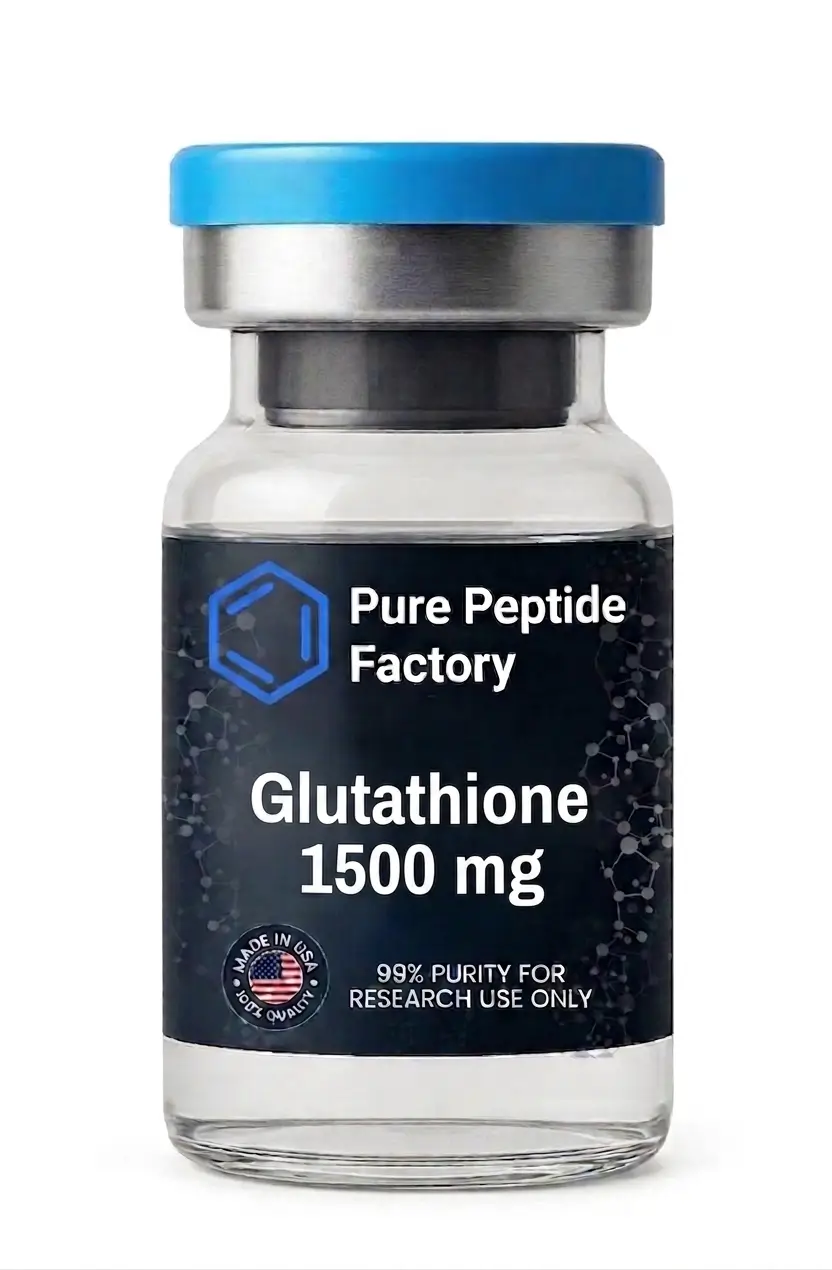
Glutathione 1500 mg
$30.00 $60.00Price range: $30.00 through $60.00
Glutathione injection for research, reduced L-glutathione (GSH) lyophilized tripeptide (γ-Glu-Cys-Gly) for oxidative stress, Keap1/Nrf2/ARE antioxidant pathway, and cellular detoxification studies. 400mg, 600mg, 1500mg vials. Domestic cold-chain shipping, HPLC verified. Research use only.
Glutathione Injection for Research: Reduced GSH Lyophilized Tripeptide
Researchers investigating oxidative stress biology, cellular redox signaling, or detoxification pathways need a reliable domestic source for reduced L-glutathione. Pure Peptide Factory supplies this research-grade lyophilized tripeptide in 400mg, 600mg, and 1500mg vials with full batch documentation and cold-chain shipping. As the most abundant intracellular non-protein thiol in mammalian cells, present at concentrations of 1 to 10 mM, glutathione (GSH) is fundamental to life itself. It sustains the redox balance that controls cellular processes while simultaneously limiting the excessive oxidative stress that causes tissue damage (1). When you source this glutathione injection-grade lyophilized powder from our domestic stock, you receive a precisely characterized tripeptide backed by decades of peer-reviewed research.
What distinguishes this tripeptide from simpler antioxidant molecules is its unusual structure. Most peptides link amino acids through standard α-peptide bonds, but glutathione contains a distinctive γ-glutamyl bond between the glutamate side chain carboxyl group and cysteine. This structural feature confers resistance to proteolytic degradation by typical peptidases, allowing GSH to accumulate inside cells at millimolar concentrations without being rapidly cleaved. Furthermore, the reactive thiol group on the cysteine residue enables reversible oxidation to glutathione disulfide (GSSG), making the GSH/GSSG ratio a widely used readout of cellular oxidative status in research models. Consequently, researchers who purchase this glutathione injection-grade material from Pure Peptide Factory gain access to a compound whose unique biochemistry makes it the reference standard for intracellular antioxidant research (1).
Why Researchers Choose Pure Peptide Factory for Glutathione Injection-Grade Material
Three SKU Configurations for Flexible Protocol Design
We stock reduced L-glutathione as lyophilized powder in 400mg, 600mg, and 1500mg vials. The 400mg configuration accommodates pilot studies, in vitro cell culture experiments where concentrations of 1 to 10 mM are standard, and small-scale dose-response designs. The 600mg format supports intermediate protocols and matches the clinical formulation size used in published cisplatin neuroprotection trials. The 1500mg configuration serves extended in vivo protocols where rodent models require bodyweight-adjusted doses for oxidative stress or detoxification studies. As a result, researchers who buy glutathione injection-grade material can match vial size to protocol scale without splitting vials or compromising reconstituted solution freshness.
Documentation for a Defined Endogenous Tripeptide
Reduced L-glutathione is a precisely structured tripeptide (γ-L-glutamyl-L-cysteinyl-glycine) with a molecular formula of C₁₀H₁₇N₃O₆S and a molecular weight of 307.32 g/mol. Every batch we ship includes lot-specific HPLC and mass spectrometry documentation verifying purity (>98%) and molecular identity. The Certificate of Analysis is downloadable before your compound ships. Consequently, researchers can trust that the material matches the published molecular specifications before beginning any protocol.
Domestic Cold-Chain Integrity
Lyophilized glutathione is hygroscopic and the reduced thiol group is susceptible to oxidation when exposed to moisture and air. We store all inventory under domestic cold-storage conditions at -20°C and ship using phase-change cooling rated for 96-hour protection. Most orders arrive within 1 to 3 business days, protecting the peptide from degradation before it reaches your laboratory bench.
Compare Against Complementary Antioxidant Research Compounds
Many research protocols compare reduced glutathione against other antioxidant compounds such as N-acetylcysteine (NAC), ascorbic acid, or Coenzyme Q10. Furthermore, studies examining the glutathione synthesis pathway often pair GSH with its biosynthetic precursor NAC. Because we stock the full antioxidant compound panel under identical cold-storage conditions, researchers who purchase this glutathione injection-grade material alongside these complementary compounds eliminate supplier variability from their comparison data.
Synthesis Logs Archived for 24 Months
Should your IRB or compliance office request chain-of-custody records, we provide them without delay.
What Is Glutathione (GSH)?
A Tripeptide with an Unusual Structure That Defines Its Function
Glutathione is a tripeptide composed of three amino acids (glutamic acid, cysteine, and glycine) linked in an unconventional order. Unlike standard peptides that use α-peptide bonds exclusively, GSH contains a γ-glutamyl linkage: the γ-carboxyl group of glutamate forms a peptide bond with the amino group of cysteine, and cysteine is then linked to glycine via a standard α-peptide bond. This γ-peptide bond is structurally important because it resists cleavage by most cellular peptidases, enabling GSH to accumulate at millimolar concentrations (1 to 10 mM) inside cells without being rapidly degraded (1).
The cysteine residue is the functional core of the molecule. Its free thiol (sulfhydryl, SH) group is the reactive moiety that enables GSH to donate electrons, neutralize reactive oxygen species (ROS), and conjugate to xenobiotics for detoxification. When two molecules of reduced GSH are oxidized, they form glutathione disulfide (GSSG) through a disulfide bond. In healthy cells, more than 98% of total glutathione exists in the reduced GSH form, and the GSH/GSSG ratio serves as a sensitive indicator of cellular oxidative stress. A declining GSH/GSSG ratio is one of the earliest measurable indicators of oxidative damage in research models spanning neurodegeneration, cardiovascular disease, and aging (1).
Molecular Profile:
- Sequence: γ-L-Glutamyl-L-cysteinyl-glycine (γ-Glu-Cys-Gly)
- Molecular Formula: C₁₀H₁₇N₃O₆S
- Molecular Weight: 307.32 g/mol
- CAS Number: 70-18-8
- Classification: Endogenous linear tripeptide (γ-peptide)
- Synonyms: Reduced L-Glutathione, GSH, γ-L-Glutamyl-L-cysteinyl-glycine
- Intracellular concentration: 1 to 10 mM (the most abundant non-protein thiol in mammalian cells)
- Redox pair: GSH (reduced) and GSSG (oxidized); >98% exists as GSH in healthy cells
How Glutathione Works: The Keap1/Nrf2/ARE Redox Regulatory Pathway
The mechanism that governs glutathione’s antioxidant activity is one of the most extensively characterized regulatory systems in cell biology. Under basal conditions, the transcription factor Nrf2 (nuclear factor erythroid 2-related factor 2) is sequestered in the cytoplasm by Keap1 (Kelch-like ECH-associated protein 1), which targets Nrf2 for ubiquitination and proteasomal degradation. When oxidative stress increases and ROS accumulate, critical cysteine residues on Keap1 are oxidized, causing a conformational change that releases Nrf2. The liberated Nrf2 translocates to the nucleus, where it binds to antioxidant response elements (ARE) in the promoter regions of over 200 cytoprotective genes (1).
The genes activated by Nrf2 include the two subunits of glutamate cysteine ligase (GCL), the rate-limiting enzyme in glutathione biosynthesis, as well as glutathione reductase, glutathione S-transferases, and glutathione peroxidase. This creates a self-reinforcing loop: oxidative stress activates Nrf2, Nrf2 upregulates glutathione synthesis and recycling enzymes, and the resulting increase in GSH levels restores redox balance. Furthermore, GSH serves as a co-factor for glutathione peroxidase, which directly reduces hydrogen peroxide and lipid hydroperoxides to water and lipid alcohols, respectively. Through glutathione S-transferases, GSH also conjugates to electrophilic xenobiotics, tagging them for excretion and enabling the detoxification of a vast range of potentially harmful compounds (1).
A 2016 study by Telorack and colleagues demonstrated the tissue-specific importance of this system. Using mice with keratinocyte-specific deficiency in glutamate cysteine ligase, they showed that glutathione deficiency led to increased cell death through apoptosis, ferroptosis, and necroptosis, with elevated reactive oxygen and nitrogen species causing DNA and mitochondrial damage. However, the skin was partially protected by compensatory upregulation of the cysteine/cystine and thioredoxin systems, highlighting both the essential nature of GSH and the remarkable antioxidant capacity of epidermal tissue (2).
Glutathione Injection Research Applications
Oxidative Stress and Cellular Redox Biology
The primary research application for this glutathione injection-grade lyophilized powder is the study of oxidative stress and redox signaling. Researchers use GSH to probe how cells maintain thiol-disulfide balance, to quantify the GSH/GSSG ratio as a readout of oxidative damage, and to investigate how glutathione depletion contributes to diseases involving chronic inflammation and oxidative stress. A 2022 comprehensive review by Labarrere and colleagues emphasized that GSH depletion may play a central role in inflammatory diseases including chronic obstructive pulmonary disease, atherosclerosis, ischemic heart disease, and COVID-19 pathophysiology, where host immune response and disease severity correlate with glutathione status (1).
Chemotherapy-Induced Peripheral Neuropathy
One of the most clinically characterized applications of intravenous glutathione is the prevention of chemotherapy-induced peripheral neuropathy (CIPN). Multiple randomized controlled trials have demonstrated that intravenous GSH administered prior to cisplatin or oxaliplatin chemotherapy reduces the incidence and severity of neurotoxicity without compromising anti-tumor efficacy. A 1993 study by Cavaletti and colleagues established that GSH prevents cisplatin-induced neuropathy in rat models, and subsequent clinical trials confirmed these findings. A 2014 Cochrane review examined interventions for preventing cisplatin-related neuropathy and found that glutathione showed modest but promising results favoring its ability to reduce neurotoxicity as measured by the NCI-CTC neuropathy grading scale (3). Researchers studying CIPN models use GSH at doses of 1.5 to 3 g/m² administered intravenously over 15 to 20 minutes prior to chemotherapy, and our lyophilized format provides the flexibility to prepare solutions at these concentrations.
Skin Biology and Wound Healing
Glutathione plays a critical role in keratinocyte survival and efficient wound repair, as demonstrated by the glutathione-Nrf2-thioredoxin cross-talk study published in PLoS Genetics (2). Research using skin models examines how glutathione depletion affects re-epithelialization, how the Nrf2 pathway compensates for GSH deficiency in epidermal tissue, and whether topical or systemic GSH repletion can accelerate wound closure.
Detoxification and Xenobiotic Metabolism
Glutathione S-transferases (GSTs) use GSH to conjugate electrophilic compounds, marking them for elimination and enabling the detoxification of drugs, environmental toxins, and endogenous metabolic byproducts. Researchers studying phase II metabolism, drug resistance mechanisms in cancer cells, or environmental toxicology use glutathione lyophilized powder to prepare the substrate for GST activity assays and to model the cellular detoxification capacity under various experimental conditions.
Mitochondrial Function and Cellular Protection
Mitochondria are both a major source of ROS and a primary target of oxidative damage. GSH is present in the mitochondrial matrix where it protects mitochondrial DNA, iron-sulfur cluster proteins, and electron transport chain components from oxidative inactivation. Research protocols examining mitochondrial dysfunction in models of neurodegeneration, metabolic disease, and aging incorporate glutathione to study whether restoring cellular GSH levels preserves mitochondrial respiratory capacity and reduces apoptosis.
Glutathione vs NAC: Understanding the Research Distinction
Researchers who purchase this glutathione injection-grade lyophilized powder often compare it against N-acetylcysteine (NAC), the most widely used glutathione precursor. The distinction is important for protocol design:
| Feature | Glutathione (GSH, Reduced) | N-Acetylcysteine (NAC) |
|---|---|---|
| Type | Endogenous tripeptide (γ-Glu-Cys-Gly) | Synthetic N-acetylated amino acid |
| Role | Direct antioxidant; the functional molecule itself | Precursor; must be converted to cysteine, then incorporated into GSH |
| Mechanism | Direct ROS scavenging, GST-mediated conjugation, GPx co-factor, redox signaling via thiol-disulfide exchange | Indirect; rate-limited by GCL enzyme activity and cysteine availability |
| Bioavailability (research context) | Limited oral bioavailability due to intestinal γ-glutamyltranspeptidase cleavage; IV or IP administration bypasses this | Good oral bioavailability; rapidly deacetylated to cysteine in vivo |
| Onset of action | Immediate upon reaching target tissue | Delayed; depends on cellular GSH synthesis rate |
| Clinical evidence | Multiple RCTs for CIPN prevention; approved as pharmaceutical in several countries | FDA-approved for acetaminophen overdose; extensive clinical use for mucolytic and nephroprotective indications |
| Best for studying | Direct antioxidant mechanisms, GSH/GSSG ratio dynamics, GST substrate studies, rapid redox intervention models | GSH biosynthesis pathway, cysteine supplementation models, chronic repletion studies where sustained precursor supply is the experimental variable |
| Key limitation | Unstable in solution; requires cold-chain handling and pH-controlled reconstitution | Cannot substitute for GSH in studies requiring the functional tripeptide itself |
Choose reduced glutathione when your protocol requires the active tripeptide itself for direct antioxidant assays, GST enzymatic studies, or models where immediate redox buffering is the experimental endpoint. Choose NAC when studying the glutathione biosynthesis pathway or when sustained cysteine delivery for chronic GSH repletion is the experimental variable. Both compounds are stocked in our facility under identical conditions.
Glutathione Injection Dosage Reference for Preclinical Research
For laboratory protocols only. We do not provide human dosing recommendations.
| Research Model | Typical Dose | Route | Frequency | Key Finding |
|---|---|---|---|---|
| Rat cisplatin neuropathy prevention | 1500 mg/m² | Intraperitoneal | Prior to each cisplatin dose | Significant reduction in neurotoxicity without compromising anti-tumor effect |
| Mouse oxidative stress model | 100-500 mg/kg | Intraperitoneal | Single dose or daily | Restored hepatic GSH levels within 2-4 hours post-administration |
| In vitro cell culture (standard) | 1-10 mM (reduced GSH) | Cell culture medium | Continuous exposure or pulse | Concentration range matching physiological intracellular GSH levels (1-10 mM) |
| Human CIPN clinical trials (reference) | 1.5-3 g/m² IV over 15-20 min | Intravenous | Prior to each chemotherapy cycle | Reduced incidence of clinically significant neuropathy; Cochrane review 2014 |
| Skin wound healing (mouse) | Topical or systemic GSH repletion | Topical or IP | Daily | Nrf2-thioredoxin cross-talk compensates for GSH deficiency in epidermis |
For researchers designing protocols, the published preclinical and clinical literature provides validated dose ranges across multiple species and endpoints. Importantly, GSH solutions for injection should be prepared immediately before use and protected from light and air exposure, as the reduced thiol group oxidizes rapidly when dissolved.
How to Reconstitute Glutathione Injection-Grade Lyophilized Powder
Step-by-Step Laboratory Protocol
- Sanitize the vial stopper with 70% isopropyl alcohol.
- Inject sterile bacteriostatic water or sterile saline slowly against the vial wall. Avoid directing the stream at the lyophilized powder to minimize foaming and oxidation.
- Allow the powder to dissolve without agitation for 1 to 2 minutes. The tripeptide is highly soluble in aqueous solution.
- Gently swirl until the solution is completely clear and colorless. Do not shake vigorously; mechanical agitation can accelerate oxidation of the thiol group.
- Verify a clear, colorless solution. Discard if any turbidity, discoloration, or particulate matter is present. A yellow or brown tint indicates oxidation of the thiol group.
- Label with date and concentration. Use immediately after reconstitution for best results, as GSH in solution oxidizes over time.
Concentration Reference:
- 400mg vial + 4 mL bacteriostatic water = 100 mg/mL; + 8 mL = 50 mg/mL; + 20 mL = 20 mg/mL
- 600mg vial + 4 mL bacteriostatic water = 150 mg/mL; + 6 mL = 100 mg/mL; + 12 mL = 50 mg/mL
- 1500mg vial + 10 mL bacteriostatic water = 150 mg/mL; + 15 mL = 100 mg/mL; + 30 mL = 50 mg/mL
Storage Requirements:
- Lyophilized powder: 24 months at -20°C, protected from light and moisture. The powder is hygroscopic; keep the vial sealed until use.
- Reconstituted solution: Use immediately after preparation. If storage is necessary, keep at 2 to 8°C and use within 2 hours. GSH in solution oxidizes to GSSG over time, especially at neutral to alkaline pH.
- The reduced thiol group is sensitive to oxidation by air. For studies requiring precise GSH/GSSG ratios, prepare solutions in deoxygenated buffer and verify the redox state analytically before use.
Glutathione Injection for Research: Regulatory and Research Context
Research Use Only
This lyophilized reduced glutathione powder is sold strictly as a research-grade compound for in vitro and controlled laboratory animal studies. It is not the pharmaceutical formulation approved in certain countries for chemotherapy-induced neuropathy prevention or any other clinical indication. This product is not for human consumption, veterinary use, or diagnostic application. You must agree to research-use-only terms at checkout.
International Regulatory Context
Glutathione is approved as a pharmaceutical product for specific indications in several countries, most notably for the prevention of cisplatin and oxaliplatin-induced peripheral neuropathy. It is also widely studied as an intravenous intervention for various conditions involving oxidative stress. However, regulatory authorities including the FDA have not approved injectable glutathione for cosmetic indications such as skin lightening, and multiple public health agencies have issued warnings about the safety risks of unregulated glutathione injections marketed for aesthetic purposes. Researchers should note that the clinical safety data for intravenous glutathione come primarily from controlled oncology trials involving defined patient populations and standardized dosing protocols. Research-grade glutathione should be handled with appropriate institutional biosafety oversight for any in vivo work.
Product Specifications
Available Configurations
Reduced L-glutathione (GSH) is available in 400mg, 600mg, and 1500mg lyophilized powder vials. Select your configuration from the product options above.
Quality Verification
- Purity: >98% (HPLC verified)
- Identity: Mass spectrometry confirmed against the 307.32 g/mol molecular weight target with sequence verification
- Endotoxin: Less than 0.1 EU/mL
- Sterility: Verified per USP 71
- Form: White to off-white lyophilized powder
- Storage: -20°C long-term, protected from light and moisture; use reconstituted solution immediately
- CAS Number: 70-18-8
Current Batch: #PPF-GSH-0526
Purity: 98.8%
Download: HPLC Certificate | MS Report
Frequently Asked Questions
What is glutathione injection used for in research?
Researchers use this glutathione injection-grade lyophilized powder to study oxidative stress and cellular redox biology (GSH/GSSG ratio dynamics), chemotherapy-induced peripheral neuropathy prevention, Keap1/Nrf2/ARE pathway activation, glutathione S-transferase-mediated detoxification, keratinocyte survival and wound healing, and mitochondrial protection from oxidative damage.
Where can I buy glutathione injection-grade material for research?
Pure Peptide Factory supplies research-grade reduced L-glutathione domestically in 400mg, 600mg, and 1500mg vials. Orders ship same-day with cold-chain packaging and full HPLC/MS documentation. Most arrive within 1 to 3 business days.
What is the difference between reduced GSH and oxidized GSSG?
Reduced glutathione (GSH) is the biologically active form, containing a free thiol group on the cysteine residue that enables antioxidant activity. When GSH donates electrons to neutralize reactive oxygen species, two molecules form glutathione disulfide (GSSG) through a disulfide bond. In healthy cells, more than 98% of total glutathione exists as GSH. Our product is the reduced form, verified by HPLC.
What is the glutathione injection dosage for preclinical research?
Rodent oxidative stress models use 100-500 mg/kg intraperitoneally. Rat cisplatin neuropathy studies use 1500 mg/m² IP prior to chemotherapy. Cell culture work uses 1-10 mM concentrations. Refer to the dosage reference table above. We do not provide human dosing recommendations.
How does glutathione compare to NAC for research?
Glutathione is the active tripeptide that directly scavenges ROS and serves as a GST co-factor. NAC is a precursor that must be converted to cysteine and incorporated into GSH before becoming active. GSH provides immediate redox buffering; NAC provides sustained substrate for GSH biosynthesis. See the full comparison table above.
Is glutathione FDA approved?
Glutathione injection is approved as a pharmaceutical in several countries for specific indications, including chemotherapy-induced neuropathy prevention. However, the FDA has not approved it for cosmetic or skin-lightening indications. Our product is a research-grade lyophilized powder for laboratory use only.
How should I reconstitute glutathione for my research?
Reconstitute with bacteriostatic water or sterile saline immediately before use. The lyophilized powder dissolves quickly. Use the solution immediately; GSH in neutral or alkaline solution oxidizes to GSSG over time. For precise redox studies, prepare in deoxygenated buffer and verify the GSH/GSSG ratio analytically.
How should I store glutathione lyophilized powder?
Store at -20°C for up to 24 months, protected from light and moisture. The powder is hygroscopic; keep the vial sealed until use. After reconstitution, use immediately or within 2 hours if refrigerated at 2 to 8°C.
What is the significance of the γ-glutamyl bond in glutathione?
The γ-peptide bond between glutamate and cysteine protects the tripeptide from cleavage by most cellular peptidases. This structural resistance to proteolysis allows GSH to accumulate intracellularly at millimolar concentrations (1-10 mM), making it the most abundant non-protein thiol in mammalian cells and the reference standard for intracellular antioxidant research.
Can glutathione be combined with other antioxidant compounds in research?
Yes. Many researchers compare GSH against NAC, ascorbic acid, Coenzyme Q10, or thioredoxin system activators. Studies examining the glutathione biosynthesis pathway often pair GSH with NAC. Pure Peptide Factory stocks the full antioxidant compound panel under identical conditions for clean comparison data.
Buy Glutathione Injection-Grade Material for Your Research
Secure Checkout
- Credit card, cryptocurrency, or wire transfer
- Same-day dispatch for orders placed before 2 PM EST
- Cold-chain packaging with phase-change cooling
- Discreet labeling with full tracking
Institutional Accounts
Net-30 terms and purchase order acceptance available for universities and research institutions. Contact us for bulk pricing on 50 vials or more, including matched orders alongside NAC, ascorbic acid, Coenzyme Q10, and other antioxidant research compounds.
Add to cart and secure the most extensively characterized intracellular antioxidant tripeptide for your oxidative stress, redox signaling, or detoxification research program.
Related products
-
ACTH 1-39 5 mg
$40.00 -
FST 344 1 mg
$120.00