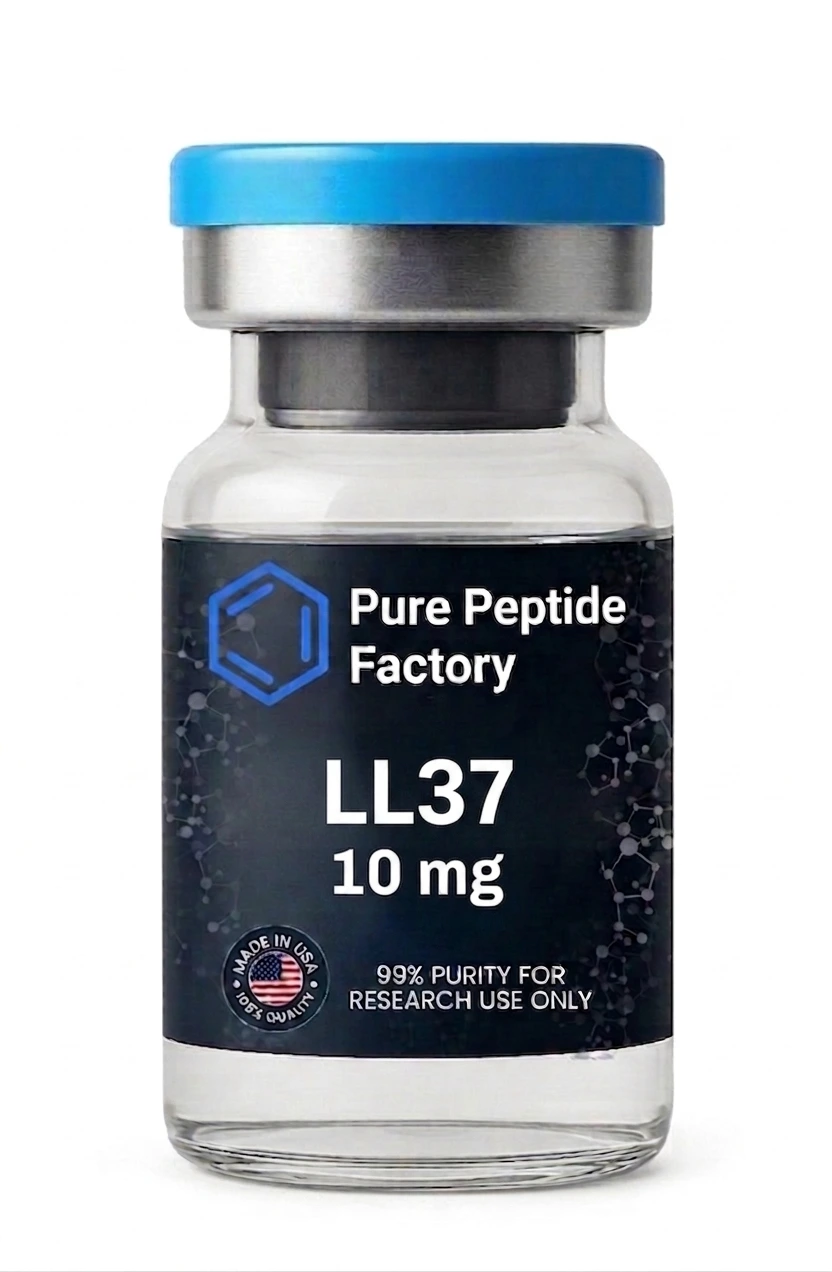
LL37 10 mg
$70.00
LL-37 peptide benefits studied in research include antimicrobial activity, immune modulation, wound healing acceleration, skin repair, anti-inflammatory signaling, and cGAS pathway regulation. LL-37 is the only known human cathelicidin, produced primarily by neutrophils, epithelial cells, and keratinocytes as a first-line defense against pathogens. Available in 10mg vials, the widest single-vial configuration offered by any domestic supplier. HPLC verified, batch-documented, domestic cold-chain shipping. Research use only.
LL-37 Peptide Benefits: The Human Cathelicidin Research Compound
LL-37 peptide benefits span a broader mechanistic range than almost any other research compound in the immune and recovery category. Specifically, this 37-amino-acid cationic antimicrobial peptide functions simultaneously as a direct antimicrobial agent, an immune signaling modulator, a wound healing promoter, and a regulator of innate immune DNA sensing through the cGAS pathway. Consequently, researchers studying infection biology, dermatology, immunology, and tissue regeneration all use LL-37 as a central mechanistic probe rather than a single-endpoint research tool.
Furthermore, LL-37 is the only human cathelicidin identified to date. Unlike defensins and other antimicrobial peptides expressed in multiple species, LL-37 is uniquely human in its expression pattern and receptor interactions, making it particularly relevant for translational research that requires human-specific host defense data. As a result, laboratories studying human innate immunity, wound physiology, and skin biology consistently return to LL-37 as an irreplaceable reference compound.
Pure Peptide Factory stocks research-grade ll 37 peptide benefits compound in 10mg vials, which is the largest single-vial configuration available from any domestic supplier. Core Peptides and Limitless Biotech both supply 5mg only. Additionally, every vial includes a lot-specific HPLC chromatogram and mass spectrometry report confirming the molecular weight at 4493.33 g/mol and sequence identity before your protocol begins.
Why Researchers Buy LL-37 Peptide from Pure Peptide Factory
10mg Vials When Every Competitor Carries 5mg
Because LL-37 research protocols frequently require extended administration timelines across multiple animal cohorts, the 5mg vial size forces researchers to either split compound between cohorts or place multiple reorders that interrupt ongoing studies. Our 10mg vial eliminates both problems. Specifically, a standard 4-week rodent wound healing study using 50 mcg/kg daily in 250g rats requires approximately 3.5mg per animal. Consequently, the 10mg vial covers two animals through a complete study cycle with margin for dose-finding and pilot runs, which the 5mg vial cannot achieve without splitting.
Batch-Specific Documentation for a Sequence-Sensitive Compound
LL-37 peptide benefits in research depend entirely on the intact amphipathic alpha-helical structure that gives the peptide its membrane-disrupting and receptor-binding activity. Because truncated or degraded sequences lose this structural character without obvious visual change, mass spectrometry confirmation of the complete 37-amino-acid sequence is non-negotiable for research integrity. Every vial we ship includes lot-specific HPLC and mass spectrometry data confirming both the molecular weight and sequence integrity of the LLGDFFRKSKEKIGKEFKRIVQRIKDFLRNLVPRTES sequence. Furthermore, synthesis logs are archived for 24 months for chain-of-custody documentation.
Domestic Cold-Chain for an Amphipathic Peptide
LL-37’s amphipathic helical structure makes it prone to aggregation and surface adsorption under improper storage conditions, particularly at elevated temperatures. Consequently, maintaining cold-chain integrity from synthesis through delivery is critical for preserving the compound’s amphipathic character. We store at -20°C and ship with phase-change cooling that maintains compound integrity for 96 hours in transit. Most orders arrive within 1 to 3 business days.
The Immune and Healing Research Stack
We stock LL-37 alongside GHK-Cu for wound healing comparison studies, and BPC-157 for gastrointestinal and tissue repair protocols. Because these three compounds address overlapping but mechanistically distinct aspects of tissue repair and immune modulation, researchers running comprehensive healing biology programs can source all three from one supplier under identical batch handling conditions.
What Is LL-37 and Why Do LL-37 Peptide Benefits Matter for Research?
The Only Human Cathelicidin
LL-37 is a 37-amino-acid cationic antimicrobial peptide derived from the C-terminal end of the human cathelicidin precursor protein hCAP18. Neutrophils, mast cells, monocytes, keratinocytes, and epithelial cells at mucosal surfaces all produce and store hCAP18, cleaving it to the active LL-37 fragment upon activation by inflammatory stimuli. Because it is the only cathelicidin the human genome encodes, ll 37 peptide benefits cannot be attributed to a redundant family member, making this compound uniquely important to human innate immunity research.
Furthermore, the “LL” prefix reflects the two N-terminal leucine residues that follow the propeptide cleavage site, and “37” refers to the total amino acid count. This naming convention also explains the alternate designation CAP-18 (cationic antimicrobial protein of 18 kDa), which refers to the intact hCAP18 precursor rather than the active peptide fragment.
Molecular Profile:
- Sequence: LLGDFFRKSKEKIGKEFKRIVQRIKDFLRNLVPRTES
- Molecular Formula: C205H340N60O53S
- Molecular Weight: 4493.33 g/mol
- CAS: 154947-66-7
- Also known as: CAP-18, cathelicidin LL-37, human cathelicidin antimicrobial peptide
How LL-37 Produces Its Research Effects
LL-37 achieves its diverse research profile through at least four distinct mechanistic routes. Understanding these routes helps researchers select the right assay system to study each ll 37 peptide benefits endpoint independently.
First, the peptide adopts an amphipathic alpha-helical conformation in membrane-mimicking environments. Consequently, it inserts into bacterial membranes through electrostatic attraction to anionic lipid surfaces, followed by lateral diffusion, self-assembly, and membrane disruption through pore formation and membrane destabilization. This mechanism produces broad-spectrum antimicrobial activity that does not select for resistant mutants because it targets the physical membrane rather than a specific enzymatic target.
Second, LL-37 binds multiple pattern recognition receptors on immune cells, including FPR2 (formyl peptide receptor 2), EGFR (epidermal growth factor receptor), and purinergic receptors. As a result, it modulates innate immune signaling in ways that extend well beyond direct microbial killing, influencing dendritic cell maturation, T-cell differentiation, and mast cell degranulation.
Third, LL-37 binds extracellular nucleic acids released during cell death and forms complexes that activate intracellular DNA sensors including cGAS. Consequently, this mechanism connects LL-37 to sterile inflammation, autoimmune signaling, and interferon production pathways that are independent of any microbial stimulus.
Fourth, LL-37 activates growth factor receptors directly on epithelial and endothelial cells, stimulating migration, proliferation, and angiogenesis that accelerate wound closure in tissue repair models.
LL-37 Peptide Benefits: Research Applications
LL-37 Peptide Benefits for Antimicrobial Research
The most documented ll 37 peptide benefits in published literature relate to broad-spectrum antimicrobial activity. Specifically, Agerberth et al. first characterized LL-37’s antimicrobial spectrum in the Proceedings of the National Academy of Sciences, demonstrating activity against gram-positive bacteria, gram-negative bacteria, fungi, and enveloped viruses (1). Furthermore, subsequent studies confirmed that LL-37 retains activity against antibiotic-resistant strains including MRSA and drug-resistant Pseudomonas aeruginosa.
Because LL-37’s mechanism targets the physical membrane rather than specific metabolic enzymes, pathogens cannot develop classical resistance through mutation of the target site. As a result, researchers studying antimicrobial resistance mechanisms, novel antimicrobial strategies, and host defense peptide pharmacology use LL-37 as a benchmark compound for comparing membrane-targeting activity against conventional antibiotics.
LL-37 Peptide Benefits for Wound Healing Research
LL-37 wound healing research represents one of the most practically significant areas of cathelicidin biology. Specifically, LL-37 accelerates wound closure through multiple converging mechanisms. It promotes keratinocyte migration and proliferation through EGFR activation. Additionally, it stimulates angiogenesis through VEGF upregulation in endothelial cells. Furthermore, it recruits neutrophils and macrophages to the wound site through FPR2-mediated chemotaxis, coordinating the inflammatory phase of wound healing.
Heilborn et al. demonstrated that LL-37 deficiency in human skin wounds significantly impaired re-epithelialization, establishing a direct causal role for endogenous cathelicidin in wound closure (2). Consequently, researchers use exogenous LL-37 in wound healing models to study the dose-response relationship between cathelicidin concentration and wound closure rate, and to examine whether LL-37 supplementation corrects the impaired wound healing observed in diabetic skin models.
LL-37 Peptide Benefits for Skin Research
LL-37 peptide benefits for skin are among the most actively researched in dermatology. Specifically, keratinocytes both produce LL-37 and respond to it through EGFR activation, creating an autocrine signaling loop that regulates epithelial barrier function, inflammation, and repair. Furthermore, disruption of this loop occurs in multiple common skin conditions, making LL-37 a mechanistically relevant research tool for psoriasis, rosacea, atopic dermatitis, and chronic wound biology.
In psoriasis models, LL-37 forms complexes with self-DNA and self-RNA released from damaged keratinocytes. These complexes bypass the normal requirement for cell entry and activate intracellular nucleic acid sensors, triggering an interferon response that drives the inflammatory cycle characteristic of psoriatic disease. As a result, researchers studying psoriasis pathogenesis use LL-37 to model the sterile inflammation mechanism and to examine how therapeutic interruption of this pathway affects inflammatory cytokine production.
LL-37 Peptide Benefits for Immune Modulation Research
LL-37 immune modulation represents a second major research pillar beyond its direct antimicrobial activity. Notably, LL-37 exerts both pro-inflammatory and anti-inflammatory effects depending on the cellular context and concentration, which makes it a genuinely context-dependent immunomodulator rather than a simple activator or suppressor.
At sites of active infection, LL-37 amplifies the inflammatory response by stimulating dendritic cell maturation, promoting Th1 cytokine production, and facilitating antigen presentation. However, in the resolution phase of inflammation, LL-37 shifts macrophage polarization toward anti-inflammatory phenotypes and suppresses LPS-induced TNF-alpha production. Consequently, researchers studying inflammatory resolution, immune checkpoint mechanisms, and the transition from innate to adaptive immunity incorporate LL-37 to examine cathelicidin-mediated regulation of these transitions.
Furthermore, Kahlenberg and Kaplan established LL-37’s role in autoimmune disease, specifically demonstrating that LL-37-DNA complexes activate plasmacytoid dendritic cells to produce type I interferons in systemic lupus erythematosus models (3). As a result, LL-37 has become central to autoimmune research programs examining how host defense peptides contribute to sterile inflammation and self-directed immune responses.
LL-37 Peptide Benefits for cGAS Pathway Research
Because LL-37 forms complexes with extracellular nucleic acids and delivers them to intracellular DNA sensors, it provides researchers with a physiologically relevant tool for studying the cGAS-STING pathway outside the context of viral infection. Specifically, LL-37-mediated cGAS activation produces STING-dependent type I interferon responses that researchers use to characterize innate immune DNA sensing in sterile inflammation, cellular senescence, and cancer immunosurveillance models.
This cGAS connection makes LL-37 relevant for research programs studying STING agonism as an immunotherapeutic strategy, examining how senescent cells activate innate immunity through self-DNA release, and characterizing the contribution of cathelicidin to lupus nephritis and other interferonopathies. Consequently, ll 37 peptide benefits extend into oncology research through the same mechanism that produces its inflammatory effects in autoimmune contexts.
LL-37 Peptide Benefits for Apoptosis and Cancer Research
LL-37 exerts dual effects on cancer cell biology that researchers study to understand the context-dependent role of cathelicidins in tumor biology. Specifically, at nanomolar concentrations, LL-37 promotes cancer cell survival through EGFR and ERK pathway activation in certain epithelial tumor models. However, at micromolar concentrations, LL-37 induces apoptosis through membrane disruption and mitochondrial pathway activation across multiple cancer cell lines.
Furthermore, LL-37 modulates the tumor microenvironment through its immune regulatory effects, influencing tumor-associated macrophage polarization and dendritic cell recruitment. As a result, researchers examining cathelicidin contributions to cancer immunology, tumor immune evasion, and innate immune cancer surveillance incorporate LL-37 at concentration ranges that reflect the distinct mechanistic regimes its dose-response profile produces.
LL-37 Peptide Benefits vs Other Healing Research Compounds
How LL-37 Compares Mechanistically to GHK-Cu and BPC-157
Researchers selecting compounds for healing and immune biology protocols frequently compare LL-37 against GHK-Cu and BPC-157. Because these compounds address wound healing through completely different pathways, understanding where each sits prevents redundant protocol design and enables more targeted mechanistic studies:
| Feature | LL-37 | GHK-Cu | BPC-157 |
|---|---|---|---|
| Primary mechanism | Cathelicidin antimicrobial, cGAS activation, EGFR/FPR2 signaling | Copper chelation, TGF-beta/SMAD, collagen synthesis | Growth hormone receptor signaling, angiogenesis, NO pathway |
| Antimicrobial activity | Yes, broad-spectrum membrane disruption | Indirect through antioxidant effects | None documented |
| Wound healing | Re-epithelialization, keratinocyte migration, angiogenesis | Collagen remodeling, extracellular matrix maintenance | Angiogenesis, tendon and ligament repair, gut healing |
| Immune modulation | Strong, context-dependent pro- and anti-inflammatory | Anti-inflammatory through NF-kappaB suppression | Anti-inflammatory through PGE2 and cytokine modulation |
| Best for studying | Innate immunity, antimicrobial resistance, cGAS pathway, skin biology | Collagen biology, skin aging, bone metabolism | Gut integrity, musculoskeletal repair, systemic healing |
Consequently, researchers studying complete wound healing biology often incorporate all three compounds to examine antimicrobial, structural, and systemic repair dimensions simultaneously. We stock all three for combination order fulfillment under identical batch handling conditions.
LL-37 Dosage: Published Research Protocols
Reference Dosing from Peer-Reviewed Literature
Researchers searching for LL-37 dosage data find a reasonably well-developed literature base given the compound’s established role in innate immunity research. The following protocols come directly from published peer-reviewed studies. We do not provide human dosing recommendations. LL-37 is sold strictly for laboratory research purposes and is not approved for human therapeutic use.
| Model | Dose | Route | Duration | Endpoint |
|---|---|---|---|---|
| Murine wound healing | 25 to 100 mcg per wound site | Topical or intradermal | Daily for 7 to 14 days | Wound closure rate, re-epithelialization |
| Antimicrobial assays | 0.1 to 10 micromolar | In vitro | Single exposure, 18 to 24 hours | Minimum inhibitory concentration, bacterial viability |
| Immune modulation | 1 to 100 nanomolar | Cell culture | Per protocol, 4 to 24 hours | Cytokine production, dendritic cell maturation |
| Murine systemic immune | 50 to 200 mcg/kg | Subcutaneous or IP | Per protocol | Interferon levels, immune cell trafficking |
| Skin inflammation models | 10 to 50 micromolar | Topical application | Daily for 5 to 7 days | Inflammatory cytokines, barrier function |
| cGAS-STING pathway | 1 to 10 micromolar | In vitro, with nucleic acid complex | Single exposure, 4 to 24 hours | Type I interferon production, STING activation |
LL-37 Dosage Chart: Concentration Calculations for the 10mg Vial
Because the 10mg vial gives researchers considerably more working volume than the 5mg configurations competitors offer, the following dosage chart covers the full range of working concentrations used in published protocols:
| Water Added to 10mg Vial | Final Concentration | Volume for 25mcg dose | Volume for 100mcg dose |
|---|---|---|---|
| 1 mL | 10 mg/mL | 2.5 mcL | 10 mcL |
| 2 mL | 5 mg/mL | 5 mcL | 20 mcL |
| 5 mL | 2 mg/mL | 12.5 mcL | 50 mcL |
| 10 mL | 1 mg/mL | 25 mcL | 100 mcL |
LL-37 Reconstitution: Step-by-Step Laboratory Protocol
Why Correct LL-37 Reconstitution Protects Amphipathic Structure
LL-37 reconstitution requires specific attention to buffer choice and mixing technique because the peptide’s amphipathic character makes it prone to aggregation when reconstituted improperly. Specifically, LL-37 self-assembles at higher concentrations, which reduces soluble monomer availability and confounds dose-response relationships in cell-based assays. Consequently, following this protocol protects compound integrity across the full concentration range.
- Allow the LL-37 vial to reach room temperature before reconstitution, preventing thermal differentials that promote aggregation at the solution interface.
- Sanitize the vial stopper with 70% isopropyl alcohol and allow 30 seconds to dry.
- For aqueous reconstitution, use bacteriostatic water for multi-draw protocols. For assay-specific reconstitution, use sterile phosphate-buffered saline at physiological pH, as LL-37 aggregates more readily in acidic vehicles than in neutral pH buffers.
- Inject the chosen vehicle slowly against the vial wall. Do not direct the stream at the lyophilized cake.
- Allow the lyophilized powder to dissolve without agitation for 2 to 3 minutes. LL-37 dissolves readily at concentrations below 2 mg/mL.
- Gently swirl until fully clear. Avoid vigorous shaking, which promotes surface adsorption and foaming that reduces effective peptide concentration.
- For concentrations above 2 mg/mL, brief bath sonication at room temperature for 30 seconds disperses any self-assembled aggregates without denaturing the peptide.
- Inspect for clarity and label with reconstitution date, vehicle, concentration, and lot number before storage.
Storage Requirements After LL-37 Reconstitution
- Lyophilized powder: 24 months at -20°C, protected from light and moisture
- Reconstituted in bacteriostatic water: 14 days at 2 to 8°C under sterile conditions. Do not freeze reconstituted solution
- Reconstituted in PBS for immediate assay use: Use within 24 hours at 4°C to prevent aggregation from ionic strength effects over time
- Furthermore, because LL-37 adsorbs to polypropylene and glass surfaces at low concentrations, researchers should pre-coat tubes with bovine serum albumin or use polypropylene-free labware for assays below 100 nanomolar working concentration
LL-37 Side Effects: Published Research Safety Profile
Concentration-Dependent Cytotoxicity in Research Models
LL-37 side effects in research models are primarily concentration-dependent. Specifically, at the nanomolar concentrations used for immune signaling studies, LL-37 shows selective activity against target cell populations without significant cytotoxicity to bystander cells. However, at micromolar concentrations required for antimicrobial assays, LL-37 exhibits cytotoxicity to both bacterial and mammalian cells through the same membrane disruption mechanism.
Consequently, researchers must calibrate concentration ranges carefully based on the intended endpoint. Antimicrobial protocols at micromolar concentrations require cytotoxicity controls to distinguish specific antimicrobial activity from non-specific cell death. Immune modulation protocols at nanomolar concentrations require viability assays to confirm that observed signaling effects are not confounded by early apoptotic changes.
Key Research Considerations for LL-37 Side Effects Monitoring
- Hemolytic activity: LL-37 disrupts red blood cell membranes at micromolar concentrations. Include hemolysis assays as cytotoxicity controls in antimicrobial research
- Serum protein binding: LL-37 binds albumin and other serum proteins, reducing free peptide concentration in serum-containing assay systems. Consequently, effective concentrations in cell culture with serum are higher than in serum-free systems
- Protease sensitivity: Despite greater stability than many antimicrobial peptides, LL-37 undergoes partial proteolytic degradation by neutrophil elastase and other serine proteases at wound sites. Researchers should account for this in extended incubation assays
- Self-aggregation: At concentrations above 2 to 5 mg/mL in physiological buffers, LL-37 self-assembles into supramolecular structures. As a result, actual free monomer concentration may be lower than nominal concentration at high working concentrations
LL-37 Peptide Protocol: Research Design Considerations
Designing Your LL-37 Peptide Protocol for Specific Endpoints
Because ll 37 peptide benefits span multiple mechanistic pathways, protocol design must match the compound’s concentration range to the specific endpoint being studied. Specifically, the four primary research applications require different concentration regimes, vehicles, and measurement windows:
| Research Endpoint | Concentration Range | Vehicle | Key Controls |
|---|---|---|---|
| Antimicrobial activity (MIC assay) | 0.1 to 100 micromolar | Sterile PBS or LB broth (bacteria-specific) | Hemolysis control, scrambled peptide negative control |
| Immune cell signaling | 1 to 1,000 nanomolar | RPMI or DMEM with reduced serum | FPR2 antagonist control, viability assay |
| Wound healing (in vitro scratch) | 100 to 500 nanomolar | Serum-free DMEM | EGFR inhibitor control, time-lapse imaging |
| cGAS-STING pathway activation | 1 to 10 micromolar plus nucleic acid | Serum-free medium, transfection-quality conditions | STING knockout cells, nucleic acid alone control |
Regulatory Context and Research Use
LL-37 Regulatory Status
LL-37 is not FDA approved for any therapeutic indication and has not completed clinical trials for any indication. Additionally, it is not scheduled under the Controlled Substances Act. Consequently, it is available for laboratory research procurement under research-use-only terms without a prescription. You must agree to research-use-only terms at checkout. This compound is not for human consumption, veterinary use, or diagnostic application of any kind.
Product Specifications
LL-37 10mg Vial Specifications
| SKU | Configuration | Best For |
|---|---|---|
| LL37-10 | 10mg per vial, 10 vials per kit | Extended wound healing studies, multi-cohort antimicrobial protocols, immune modulation research, cGAS pathway studies |
Quality Verification
- Purity: 99% minimum (HPLC verified)
- Sequence identity: Mass spectrometry confirmed, LLGDFFRKSKEKIGKEFKRIVQRIKDFLRNLVPRTES
- Molecular Weight: 4493.33 g/mol confirmed
- Endotoxin: Less than 0.1 EU/mL
- Sterility: Verified per USP 71
- Form: Lyophilized powder
- Storage: -20°C long-term, 2 to 8°C short-term
Current Batch: #PPF-LL37-0426
Purity: 99.2%
Download: HPLC Certificate | MS Report
Frequently Asked Questions About LL-37 Peptide Benefits
What are the LL-37 peptide benefits studied in research?
LL-37 peptide benefits documented in published research include broad-spectrum antimicrobial activity through membrane disruption, wound healing acceleration through EGFR-mediated keratinocyte migration and angiogenesis, immune modulation through FPR2 and pattern recognition receptor signaling, cGAS-STING pathway activation through nucleic acid complex formation, skin barrier regulation in psoriasis and rosacea models, and apoptosis induction in cancer cell lines at micromolar concentrations.
What is the LL-37 dosage in animal wound healing studies?
Published murine wound healing protocols use 25 to 100 mcg per wound site administered topically or intradermally daily for 7 to 14 days. Systemic immune modulation protocols use 50 to 200 mcg/kg subcutaneously or intraperitoneally. All dosing should follow published protocols appropriate to your specific model and endpoints. We do not provide human dosing recommendations.
What are the LL-37 side effects in research models?
LL-37 exhibits concentration-dependent cytotoxicity, with nanomolar concentrations showing selective immune signaling and micromolar concentrations producing non-selective membrane disruption in both bacterial and mammalian cells. Additionally, hemolytic activity, serum protein binding, protease sensitivity, and self-aggregation above 2 mg/mL are key considerations for assay design and result interpretation.
Why does LL-37 reconstitution matter for research accuracy?
Because LL-37 self-assembles at high concentrations and adsorbs to polypropylene surfaces at low concentrations, improper reconstitution produces actual free peptide concentrations that differ significantly from nominal concentrations. Consequently, reconstitution in neutral pH buffers, pre-coating of labware at low concentrations, and brief sonication for high-concentration stocks are essential for reproducible dose-response data.
How does LL-37 differ from other antimicrobial peptides?
LL-37 is the only human cathelicidin, which distinguishes it from defensins and bacteriocins that are expressed across multiple species. Furthermore, its receptor-mediated immune signaling through FPR2 and EGFR gives it an immunomodulatory profile that purely membrane-active antimicrobial peptides lack, making it a uniquely multifunctional research tool rather than a simple antimicrobial probe.
What is the LL-37 peptide protocol for cGAS pathway research?
cGAS activation protocols use 1 to 10 micromolar LL-37 combined with exogenous nucleic acids (self-DNA or cGAMP) in serum-free cell culture conditions. Plasmacytoid dendritic cells, macrophages, and keratinocytes are the primary cell types used. Additionally, STING knockout cell lines serve as essential negative controls to confirm pathway specificity rather than non-specific inflammatory activation.
Why choose 10mg LL-37 over the 5mg configurations competitors sell?
The 10mg vial covers two complete 4-week rodent wound healing cohorts from a single lot, maintaining batch consistency across the entire study. The 5mg vial covers only one cohort, requiring a second order that introduces batch variability between cohorts. Consequently, the 10mg vial is the more scientifically rigorous choice for any multi-cohort or extended protocol.
How do LL-37 peptide benefits compare to GHK-Cu for wound healing research?
LL-37 accelerates wound healing through antimicrobial protection, keratinocyte EGFR activation, and immune cell recruitment. GHK-Cu promotes wound healing through collagen synthesis, TGF-beta/SMAD pathway activation, and extracellular matrix remodeling. Because these mechanisms address different phases and components of wound repair, researchers studying complete wound biology incorporate both compounds rather than substituting one for the other. We stock both for combination order fulfillment.
Where can I buy LL-37 peptide for research?
Pure Peptide Factory maintains active domestic LL-37 inventory in 10mg vials with same-day dispatch for orders placed before 2 PM EST. Furthermore, we provide batch-specific HPLC and mass spectrometry documentation including sequence confirmation, which is essential for distinguishing intact active peptide from degraded fragments that retain partial antimicrobial activity.
Is LL-37 the same as CAP-18?
No, though the terms are related. CAP-18 refers to the intact 18 kDa hCAP18 precursor protein stored in neutrophil granules. LL-37 refers specifically to the 37-amino-acid active cathelicidin fragment cleaved from the C-terminus of hCAP18 by proteinase 3 upon neutrophil activation. Consequently, research using CAP-18 as a precursor and research using LL-37 as the active fragment address different aspects of cathelicidin biology and produce different experimental results.
What internal controls should I include with LL-37 peptide protocols?
Standard controls for LL-37 research include a scrambled sequence negative control to distinguish sequence-specific effects from non-specific cationic peptide effects, an FPR2 antagonist (WRW4) to confirm receptor-mediated signaling, an EGFR inhibitor to confirm growth factor receptor contributions to wound healing endpoints, and a hemolysis assay to characterize cytotoxic concentration boundaries. Additionally, viability assays at every concentration tested ensure that observed effects on signaling reflect specific peptide activity rather than early cytotoxic changes.
Order LL-37 Peptide for Research
Secure Checkout
- Credit card, cryptocurrency, or wire transfer
- Same-day dispatch for orders placed before 2 PM EST
- Cold-chain packaging with phase-change cooling, 96-hour protection
- Discreet labeling and full tracking
Institutional Accounts
Net-30 terms and purchase order acceptance are available for universities and pharmaceutical companies. Furthermore, researchers transferring LL-37 supply from other suppliers receive priority onboarding with batch documentation support. Contact our research team to discuss multi-year supply agreements for ongoing cathelicidin research programs.
Add to cart and get the only 10mg domestic LL-37 configuration available, with sequence-confirmed batch documentation and same-day cold-chain delivery.
Related products
-
FST 344 1 mg
$120.00