ARA290 (Cibinetide)
$50.00 $75.00Price range: $50.00 through $75.00
Buy ARA 290 peptide at Pure Peptide Factory in research-grade 5mg and 10mg configurations. Specifically, Michael Brines and Anthony Cerami at Araim Pharmaceuticals engineered this 11-amino-acid synthetic peptide (also called Cibinetide) from the helix-B surface domain of erythropoietin. Furthermore, the FDA granted Orphan Drug Designation for sarcoidosis-associated small fiber neuropathy. ARA-290 selectively activates the Innate Repair Receptor without stimulating red blood cell production, eliminating the cardiovascular risks associated with EPO. HPLC verified at 98% minimum purity, batch-specific COA. 5mg and 10mg vials. Research use only.
Buy ARA 290 Peptide: Cibinetide, the EPO-Derived Tissue Protector with FDA Orphan Drug Status
In 2008, Michael Brines and Anthony Cerami at Araim Pharmaceuticals (Tarrytown, NY) made a discovery that reshaped tissue-protective pharmacology. Specifically, they isolated the helix-B surface domain of erythropoietin and demonstrated that this 11-amino-acid fragment retained the anti-inflammatory and tissue-protective effects of full EPO without stimulating red blood cell production. Furthermore, this discovery solved the central problem that limited erythropoietin’s therapeutic use: the cardiovascular risks (stroke, myocardial infarction, venous thromboembolism) associated with elevated hematocrit.
The resulting peptide, ARA-290 (also called Cibinetide or pyroglutamate helix B surface peptide, pHBSP), now holds FDA Orphan Drug Designation for sarcoidosis-associated small fiber neuropathy. By contrast with full EPO, ARA-290 selectively activates the Innate Repair Receptor (IRR), a heterodimeric complex of the EPO receptor (EPOR) and the β-common receptor (CD131) that drives tissue-protective signaling without engaging the classical EPOR homodimer responsible for erythropoiesis.
For researchers studying neuropathy, nerve regeneration, IRR receptor pharmacology, or the next generation of EPO-derived therapeutics, ARA-290 is the foundational research tool. Pure Peptide Factory stocks research-grade ARA 290 in 5mg and 10mg configurations with domestic cold-chain shipping and batch-specific HPLC documentation.
Why Researchers Buy ARA 290 from Pure Peptide Factory
Documentation for an Oxidation-Sensitive Peptide
ARA-290 contains methionine residues at positions 2 and 8 of its 11-amino-acid sequence. Specifically, these methionine residues oxidize to methionine sulfoxide under standard storage conditions if not properly handled, and oxidized ARA-290 shows reduced IRR receptor binding affinity. As a result, batch verification matters more for ARA-290 than for many other research peptides. Therefore, every batch we ship includes a lot-specific HPLC chromatogram and mass spectrometry report verifying the 1257 Da molecular weight target with methionine oxidation state confirmation. The Certificate of Analysis is downloadable before your compound ships.
Domestic Cold-Chain Shipping
Because ARA-290’s oxidation sensitivity matters significantly for research reproducibility, temperature-controlled handling becomes a research data integrity issue rather than a convenience question. We ship from domestic cold-storage using phase-change cooling rated for 96-hour protection. Consequently, most orders reach your lab within 1 to 3 business days.
Two Configurations for Research Protocol Flexibility
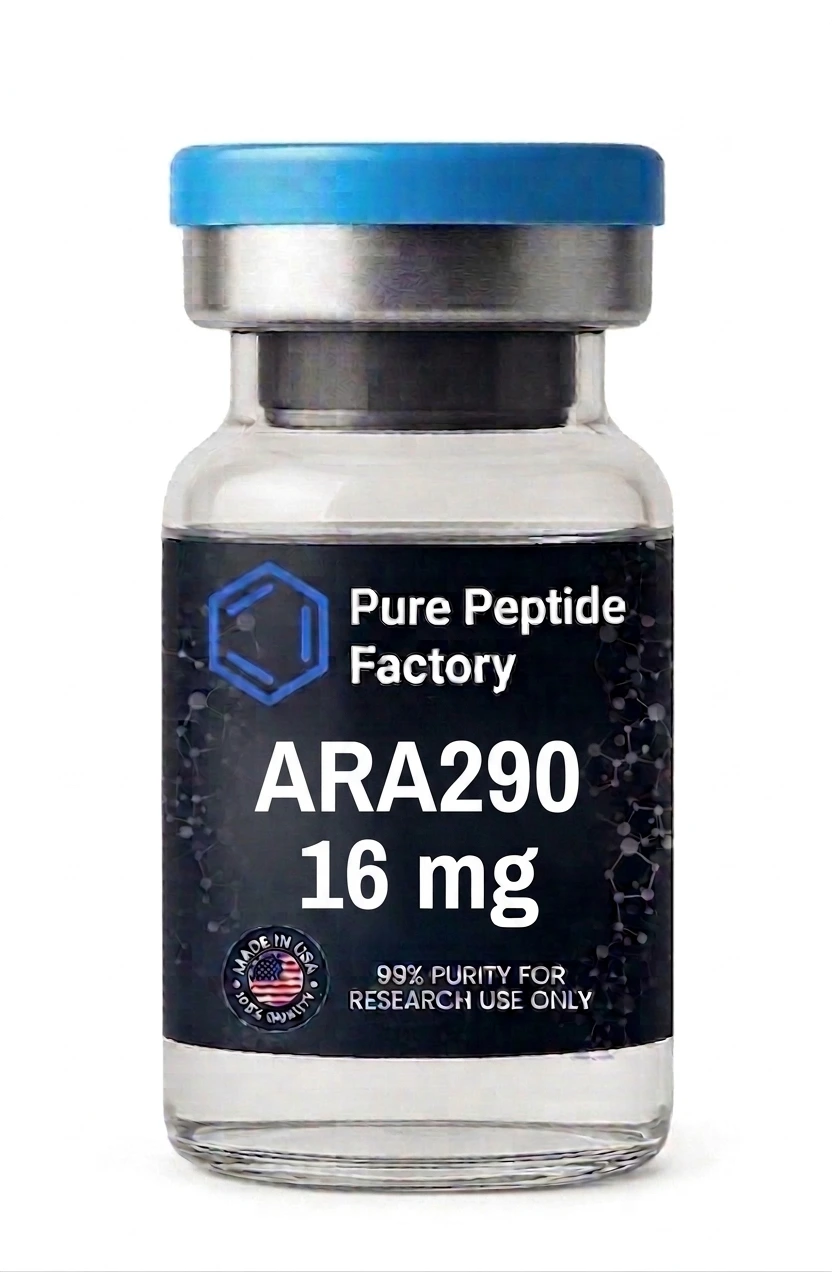
We stock ARA 290 in 5mg and 16mg vials. Specifically, the 5mg configuration accommodates pilot studies and the published 4mg SC daily protocols used in the Dahan IOVS 2017 Phase 2b sarcoidosis trial, while the 16mg vial supports extended dosing protocols and the higher-dose research arms (1-8mg range explored in published clinical work). Therefore, researchers can match vial size to protocol scale without splitting vials or compromising reconstituted solution freshness.
Synthesis Logs Archived for 24 Months
We document and archive every batch. Therefore, if your IRB or compliance office requests chain-of-custody records or synthesis documentation, we can provide them on demand.
What Is ARA 290 (Cibinetide)?
An 11-Amino-Acid EPO Helix-B Surface Peptide
ARA-290 is a synthetic 11-amino-acid linear peptide engineered from the helix-B surface domain of erythropoietin. Specifically, the sequence is pyroglutamate-EELERALNSS, with a molecular weight of 1257 Da. Brines and Cerami’s research at Araim Pharmaceuticals identified this specific three-dimensional region of EPO as responsible for tissue-protective and anti-inflammatory signaling, distinct from the regions that drive hematopoiesis.
The compound’s name reflects its origin: “ARA” references Araim Pharmaceuticals (the developer), and “290” identifies the specific peptide variant in their development pipeline. By contrast, “Cibinetide” is the formal generic pharmaceutical name used in clinical trial documentation and FDA correspondence. Furthermore, “pHBSP” (pyroglutamate helix B surface peptide) appears in some academic literature as a structural descriptor of the same compound.
Molecular Profile:
- Sequence: Pyr-Glu-Glu-Leu-Glu-Arg-Ala-Leu-Asn-Ser-Ser (pyroglutamate-EELERALNSS)
- Length: 11 amino acids
- Molecular Weight: 1257 Da
- CAS: 1208243-50-8
- Receptor target: Innate Repair Receptor (IRR), heterodimer of EPOR and CD131 (β-common receptor)
- Synonyms: Cibinetide, ARA290, pHBSP, pyroglutamate helix B surface peptide
- Developer: Araim Pharmaceuticals (Brines and Cerami)
- Discovery reference: Brines et al., 2008 PNAS
How ARA 290 Works at the Innate Repair Receptor
The mechanistic innovation of ARA-290 is selective activation of the Innate Repair Receptor (IRR) without engaging the classical EPOR homodimer. Native EPO interacts with two distinct receptor systems: the homodimeric EPO receptor (EPOR/EPOR) on bone marrow erythroid progenitors that drives red blood cell production, and the heterodimeric IRR (composed of EPOR + CD131) expressed on injured or inflamed tissue that drives anti-inflammatory and cytoprotective signaling. By contrast, ARA-290 selectively binds the IRR with high affinity but does not engage the EPOR homodimer.
The IRR is selectively upregulated in injured or inflamed tissue and is largely absent in healthy, uninjured cells. Therefore, ARA-290 produces tissue-specific protective effects in damaged tissue while sparing healthy tissue from off-target signaling. Once bound to the IRR, ARA-290 activates downstream signaling cascades including:
PI3K-Akt pathway. Phosphoinositide 3-kinase activation leads to Akt phosphorylation, which inhibits apoptotic signaling through Bad phosphorylation and FoxO transcription factor regulation. As a result, cells exposed to ARA-290 show reduced apoptosis under stress conditions including hypoxia, oxidative challenge, and inflammatory cytokine exposure.
MAPK pathway. Mitogen-activated protein kinase activation modulates inflammatory cytokine production. Specifically, in preclinical neuropathic pain models published in Molecular Medicine, ARA-290 administration reduced inflammatory markers IL-6 and TNF-alpha by 40-60% compared to vehicle controls while preserving nerve fiber density in dorsal root ganglia.
JAK2 signaling. The 2017 Nature Scientific Reports cibinetide colitis paper demonstrated JAK2-dependent effects in lysozyme M positive cells, with conditional Jak2 deletion eliminating ARA-290’s protective effects in DSS-induced colitis models. This established JAK2 as a critical downstream signaling node for ARA-290’s anti-inflammatory action.
Because the IRR is upregulated in injury contexts, ARA-290’s effects are concentrated where they matter pharmacologically. Furthermore, the absence of erythropoietic stimulation eliminates the thrombotic and cardiovascular risks (stroke, myocardial infarction, venous thromboembolism) associated with EPO and erythropoiesis-stimulating agents.
ARA 290 Nerve Regeneration Research
The “ARA 290 nerve regeneration” keyword captures one of the most important research applications. Specifically, the Dahan/Brines/Niesters/Cerami group’s 2017 Investigative Ophthalmology & Visual Science (IOVS) Phase 2b trial provided the clearest quantified evidence of ARA-290’s nerve regeneration effects in humans.
The 2017 Dahan IOVS Phase 2b Sarcoidosis Trial
The trial enrolled 64 subjects with sarcoidosis-associated small fiber neuropathy. Specifically, participants received 1mg, 4mg, or 8mg ARA-290 subcutaneously daily for 28 days, or matching placebo. The researchers measured corneal small nerve fiber density (a validated marker for peripheral nerve regeneration) using corneal confocal microscopy.
Quantified outcomes:
- 23% increase in corneal nerve fiber area at the 4mg dose versus placebo
- Significantly increased corneal small nerve fiber abundance at 4mg and 8mg doses
- Increased skin nerve fiber density at biopsy sites
- Sustained effects measured 4 weeks after the 28-day dosing period ended
- Favorable safety profile with mild, transient injection site reactions and headaches at low frequency
- No serious adverse events and no anti-cibinetide antibodies detected
The 2017 Heij Molecular Medicine paper added complementary data showing reduced neuropathic pain in sarcoidosis patients receiving ARA-290.
Why Nerve Regeneration Research Matters
Most analgesic compounds mask pain symptoms without addressing the underlying nerve damage. By contrast, ARA-290 produces measurable changes in nerve fiber morphology, suggesting genuine regenerative effects rather than symptomatic suppression. Therefore, the research framework has shifted from pain reduction toward disease-modifying nerve regeneration in conditions including:
- Sarcoidosis-associated small fiber neuropathy (the Orphan Drug-designated indication)
- Diabetic peripheral neuropathy
- Chemotherapy-induced peripheral neuropathy
- Post-herpetic neuralgia
- Traumatic peripheral nerve injury
- HIV-associated sensory neuropathy
Research applications using our compound include corneal nerve fiber density quantification by confocal microscopy, dorsal root ganglion neuron survival under inflammatory challenge, sciatic nerve regeneration following crush injury, intraepidermal nerve fiber density assessment in skin biopsies, and pERK1/2 and PI3K-Akt signaling profiling under IRR activation.
ARA 290 Research Applications Beyond Neuropathy
Type 2 Diabetes and Metabolic Research
The 2014 Brines/Dunne/Cerami Phase 2 trial published in Molecular Medicine (PMC4365069) examined ARA-290 in patients with type 2 diabetes and neuropathic symptoms. Specifically, the trial used 4mg SC daily for 28 days and measured both metabolic and neuropathic endpoints. Quantified outcomes included:
- Improvement in HbA1c sustained 4 weeks after dosing ended
- Improved lipid profiles (total cholesterol, LDL reduction)
- Significant improvement in neuropathic symptoms via Norfolk QOL-DN questionnaire
- Increased corneal nerve fiber density measured by confocal microscopy
- Favorable safety profile with no anti-cibinetide antibodies
Research using ARA-290 in metabolic models examines glucose homeostasis and insulin sensitivity in diabetic neuropathy, lipid metabolism modulation through IRR-mediated mechanisms, vascular endothelial function in diabetes models, and combined metabolic and neuropathic endpoint protocols.
Inflammatory Bowel Disease Research
The 2017 Nature Scientific Reports paper “Cibinetide dampens innate immune cell functions thus ameliorating the course of experimental colitis” demonstrated ARA-290’s mechanism in DSS-induced colitis mouse models. Specifically, conditional Jak2 deletion in lysozyme M positive cells eliminated cibinetide’s protective effects, establishing JAK2-dependent innate immune cell modulation as the mechanistic basis. CD131-knockout mice also showed loss of cibinetide protection, confirming the IRR receptor requirement.
Research applications include DSS and TNBS colitis models, innate immune cell function profiling (monocytes, macrophages, neutrophils), cytokine cascade modulation (IL-6, TNF-α, IL-1β), and barrier integrity assessment under inflammatory challenge.
Cardiovascular and Ischemia-Reperfusion Research
ARA-290 demonstrates protective effects in ischemia-reperfusion injury models. Specifically, studies have shown reduced infarct size and preserved mitochondrial membrane potential in cardiac myocytes treated with cibinetide within the first 90 minutes post-injury. As a result, research applications include myocardial ischemia-reperfusion protocols, cardiac aging models examining functional preservation, stroke neuroprotection research, and microvascular dysfunction studies.
Diabetic Macular Edema Phase 2 Research
A separate Phase 2 clinical trial examined ARA-290 for diabetic macular edema. Although the primary endpoint did not reach significance for the broader population, no serious adverse events occurred and no anti-cibinetide antibodies were detected. Therefore, the trial contributed important safety data while leaving open questions about ophthalmologic applications that subsequent research continues to investigate.
Neuroinflammation and Alzheimer’s Disease Research
Preclinical models examining ARA-290 in Alzheimer’s disease research have documented modulation of monocyte behavior, increased patrolling monocyte subsets, and prevention of Alzheimer-like progression in animal models. Specifically, the dampening of innate immune cell activation that defines cibinetide’s mechanism in colitis also applies to neuroinflammatory contexts. Therefore, researchers studying early neuroinflammatory phases of Alzheimer’s disease and related neurodegenerative disorders have begun examining ARA-290 as a research tool.
Wound Healing and Tissue Repair
ARA-290 promotes epithelialization and angiogenesis through VEGF upregulation in wound healing research models. Furthermore, the IRR is upregulated in injured tissue, which means ARA-290’s effects concentrate at wound sites without producing systemic off-target effects. Research applications include diabetic wound healing protocols, corneal epithelial wound research, and ischemia-induced microvascular damage models.
ARA 290 vs EPO: Why Cibinetide Was Developed
Researchers entering ARA-290 biology need to understand why the compound was developed and how it differs from full erythropoietin:
| Feature | ARA-290 (Cibinetide) | EPO (Erythropoietin) |
|---|---|---|
| Structure | 11-amino-acid synthetic peptide | 165-amino-acid glycosylated protein |
| Molecular weight | 1257 Da | ~30,400 Da |
| Receptor target | IRR (EPOR + CD131 heterodimer) only | Both EPOR homodimer AND IRR |
| Erythropoiesis | None | Strong (primary clinical effect) |
| Hematocrit elevation | None | Yes (intended for anemia) |
| Cardiovascular risk | Minimal | Stroke, MI, VTE risks documented |
| Tissue protection | Selective, IRR-mediated | Present but obscured by erythropoietic effects |
| Clinical history | Phase 2 complete; FDA Orphan Drug for sarcoidosis SFN | FDA approved for anemia (multiple indications) |
| Synthesis | Standard SPPS, cost-effective | Recombinant production required |
| Best for studying | Tissue-protective IRR pharmacology in isolation | Erythropoiesis or combined dual-receptor effects |
The key research insight: ARA-290 isolates the tissue-protective IRR mechanism from the hematopoietic effects that drive EPO’s clinical risk profile. As a result, researchers studying long-term tissue protection without cardiovascular complications use ARA-290 as the cleaner pharmacological tool than full EPO.
ARA 290 vs Other Tissue-Protective Peptides
Researchers compare ARA-290 to other anti-inflammatory and tissue-protective compounds in protocol design. Specifically, the IRR mechanism positions ARA-290 distinctly among tissue-protective peptides:
| Feature | ARA-290 | BPC-157 | KPV | Thymosin Alpha-1 |
|---|---|---|---|---|
| Type | EPO-derived 11-aa peptide | Gastric pentadecapeptide (15-aa) | α-MSH C-terminal tripeptide (3-aa) | Thymic 28-aa peptide |
| Origin | Helix-B of erythropoietin | Gastric juice protective protein | α-MSH fragment | Thymic prohormone |
| Primary mechanism | IRR (EPOR/CD131) activation | VEGFR2-Akt-eNOS angiogenesis | NF-κB inhibition | TLR9 activation, T-cell maturation |
| Tissue selectivity | High (IRR upregulated in injury only) | Broad (multiple tissues) | Inflammation-specific | Immune cell selective |
| Clinical status | Phase 2 complete, FDA Orphan Drug (sarcoidosis SFN) | FDA bulk substance restriction (2024) | Not FDA approved | FDA approved in 35+ countries |
| Best for studying | Nerve regeneration, IRR pharmacology | Tendon/GI/CNS repair | Direct anti-inflammatory | Hepatitis, T-cell biology |
For multi-pathway tissue protection research protocols, our facility stocks ARA-290 alongside KPV (in our KLOW blend and individually) and BPC-157 under identical handling conditions for direct comparison studies. The “kpv ara 290” community search query reflects researcher interest in combination protocols pairing IRR activation with NF-κB inhibition, although peer-reviewed comparative data is limited.
ARA 290 Peptide Dosage Chart: Published Research Protocols
Published clinical and preclinical research provides the dosing reference framework for
ARA-290 protocol design:
| Research Context | Dose | Route | Frequency | Duration | Reference |
|---|---|---|---|---|---|
| Sarcoidosis SFN Phase 2b | 1 mg | Subcutaneous | Daily | 28 days | Dahan IOVS 2017 |
| Sarcoidosis SFN Phase 2b | 4 mg | Subcutaneous | Daily | 28 days | Dahan IOVS 2017 |
| Sarcoidosis SFN Phase 2b | 8 mg | Subcutaneous | Daily | 28 days | Dahan IOVS 2017 |
| Type 2 diabetes neuropathy | 4 mg | Subcutaneous | Daily | 28 days | Brines Mol Med 2014 |
| Diabetic macular edema | Per protocol | Subcutaneous | Daily | Variable | Multiple Phase 2 |
| Sarcoidosis SFN pilot (2012) | 2 mg | Subcutaneous | Daily | 28 days | Heij Mol Med 2017 |
| Mouse colitis (DSS model) | Per protocol | Intraperitoneal | Daily | 7-14 days | Nature Sci Rep 2017 |
| Rodent neuropathic pain | Variable | Subcutaneous | Per study design | Variable | Multiple |
Why the 4mg Dose Has Become Reference Standard
The 4mg subcutaneous daily dose for 28 days represents the most extensively studied protocol in published clinical research. Specifically, this dose produced the 23% corneal nerve fiber area increase in the Dahan 2017 trial and the metabolic improvements in the Brines 2014 T2DM trial. Furthermore, the dose-response curve in the Dahan trial showed minimal additional benefit at 8mg compared to 4mg, suggesting receptor saturation at the 4mg level. Therefore, research protocols designed around clinical reference data typically anchor on the 4mg SC daily framework.
We do not provide human dosing recommendations. The dosing references above synthesize peer-reviewed clinical and preclinical research and serve only as laboratory research design context. ARA-290 has not received full FDA approval for any indication.
ARA 290 Reddit Community Discussions
Reddit and peptide research forum discussions of ARA 290 focus on several recurring research-community questions:
- The reconstitution question appears constantly. Specifically, researchers report that ARA-290 sometimes turns “glue-like” or gels in bacteriostatic water due to peptide self-association in low-salt diluents. By contrast, 1× phosphate-buffered saline (PBS) at pH 7.4 maintains stable ionic strength and reduces self-association, producing more reliable dissolution.
- Methionine oxidation sensitivity matters for protocol design. Specifically, oxidized ARA-290 shows reduced IRR receptor binding affinity, which means storage handling affects research data integrity.
- Half-life timing is a frequent topic. Specifically, ARA-290’s circulation half-life of approximately 4-6 hours requires precise timing relative to injury or inflammatory events under study.
- Combination with KPV appears in community discussions for multi-pathway anti-inflammatory protocols. Although peer-reviewed comparative data is limited, the rationale (IRR activation alongside NF-κB inhibition) has mechanistic plausibility.
- The peptide’s safety profile generates favorable discussion. Specifically, no serious adverse events occurred across multiple Phase 2 trials, and no anti-cibinetide antibodies developed in any reported clinical research.
We do not provide human protocols. Research protocol design should reference peer-reviewed Brines/Dahan/Heij publications rather than community forum extrapolations.
How to Reconstitute ARA 290
PBS vs Bacteriostatic Water — A Critical Detail
ARA-290 reconstitution requires specific attention because the peptide can self-associate in low-salt diluents, producing aggregation and reduced bioavailability. Specifically, researchers report “glue-like” or gelatinous behavior when ARA-290 is reconstituted in bacteriostatic water alone. By contrast, 1× phosphate-buffered saline (PBS) at pH 7.4 maintains stable ionic strength and pH, which prevents the self-association problem and produces consistent dissolution.
Therefore, for laboratory research applications, PBS (pH 7.4) is the preferred reconstitution diluent. Bacteriostatic water can be used for short-term reconstitution but produces less reliable dissolution.
Step-by-Step Laboratory Protocol
- Sanitize the vial stopper with 70% isopropyl alcohol
- Inject sterile 1× PBS (pH 7.4) slowly against the vial wall (preferred). If using bacteriostatic water, expect potential gelling and adjust handling
- Allow the lyophilized powder to dissolve without agitation for 2 to 3 minutes
- Gently swirl until the solution clears. Do not shake (vigorous agitation can promote self-association)
- Inspect for clarity. Cloudy or gelled solutions indicate dissolution problems requiring fresh reconstitution
- Label with date, concentration, and diluent before use
Concentration reference for 5mg vial:
- 5mg vial + 1mL PBS = 5mg/mL
- 5mg vial + 2mL PBS = 2.5mg/mL
- 5mg vial + 5mL PBS = 1mg/mL
Concentration reference for 16mg vial:
- 16mg vial + 1mL PBS = 10mg/mL
- 16mg vial + 2mL PBS = 5mg/mL
- 16mg vial + 5mL PBS = 2mg/mL
- 16mg vial + 10mL PBS = 1mg/mL
Storage Requirements
- Lyophilized powder: 24 months at -20°C, protected from light. The methionine residues at positions 2 and 8 oxidize under light exposure, so light protection is critical
- Reconstituted solution: Use immediately or refrigerate at 2-8°C for up to 24 hours. Some research protocols allow up to 7 days refrigerated under sterile conditions, although the 24-hour window provides best research data integrity
- Do not freeze reconstituted ARA-290 because freeze-thaw cycles promote methionine oxidation and aggregation
- Keep working dilutions away from light during preparation and use
Buy ARA 290 Peptide: Regulatory Context
FDA Orphan Drug Designation
The FDA granted Orphan Drug Designation to ARA-290 (cibinetide) for the treatment of neuropathic pain associated with sarcoidosis. Specifically, this designation provides regulatory benefits including 7 years of marketing exclusivity if approved, FDA application fee waivers, and tax credits for clinical development costs. Therefore, ARA-290’s Orphan Drug status represents real regulatory authority signaling that distinguishes it from compounds without FDA recognition.
However, full FDA approval has not been granted. ARA-290 remains in clinical development, with completed Phase 2 trials in sarcoidosis SFN, type 2 diabetes neuropathy, and diabetic macular edema. Phase 3 trials have not begun as of this writing. Therefore, ARA-290 is investigational rather than approved.
Research Use Only
Research-grade ARA-290 is available for laboratory procurement under research-use-only terms without a prescription. This compound is not for human consumption, veterinary use, or diagnostic application. You must agree to research-use-only terms at checkout.
Why Sourcing Quality Matters for ARA 290
ARA-290’s oxidation sensitivity at methionine positions 2 and 8 means that vendor synthesis quality, storage handling, and shipping protocols directly affect research data integrity. Specifically, researchers using ARA-290 from vendors without proper batch verification may receive partially oxidized compound that produces null or attenuated results, which would be incorrectly attributed to the IRR mechanism rather than the source material. Our batch-specific HPLC and mass spectrometry documentation addresses this directly. Every COA is downloadable before purchase, and we verify methionine oxidation state in synthesis QC.
Product Specifications
Available Configurations
ARA 290 is available in 5mg and 16mg vials. Select your configuration from the product options above based on protocol scale.
Quality Verification
- Purity: 98% minimum (HPLC verified)
- Identity: Mass spectrometry confirmed against the 1257 Da target
- Sequence: Pyr-EELERALNSS verified
- Methionine oxidation state: Verified intact (positions 2 and 8)
- Endotoxin: Less than 0.1 EU/mL
- Sterility: Verified per USP 71
- Form: Lyophilized powder
- Storage: -20°C long-term, 2 to 8°C short-term after reconstitution
Current Batch: #PPF-ARA-0426 Purity: 98.6% Download: HPLC Certificate | MS Report
Frequently Asked Questions
What does ARA 290 do?
ARA-290 selectively activates the Innate Repair Receptor (IRR), a heterodimer of the EPO receptor (EPOR) and the β-common receptor (CD131). Specifically, the IRR is upregulated in injured or inflamed tissue and drives anti-apoptotic, anti-inflammatory, and tissue-protective signaling through PI3K-Akt and MAPK pathways. As a result, ARA-290 produces tissue protection and nerve regeneration without stimulating red blood cell production, eliminating the cardiovascular risks associated with full erythropoietin.
Where can I buy ARA 290 peptide for research?
Pure Peptide Factory stocks research-grade ARA 290 in 5mg and 10mg vials with batch-specific HPLC and mass spectrometry documentation. Furthermore, domestic cold-chain shipping delivers most orders within 1 to 3 business days.
What are ARA 290 benefits in research models?
Published research documents nerve regeneration (23% corneal nerve fiber area increase at 4mg in the Dahan IOVS 2017 trial), reduced inflammatory markers (IL-6 and TNF-α reduced 40-60% in Molecular Medicine preclinical research), metabolic improvements (HbA1c reduction sustained 4 weeks post-dosing in the Brines T2DM trial), reduced neuropathic pain in sarcoidosis SFN patients, and ischemia-reperfusion protection in cardiac models.
What is the typical ARA 290 dosage in research?
Published clinical research has used 1mg, 4mg, and 8mg subcutaneously daily for 28 days. Specifically, the 4mg dose has become the reference standard based on the Dahan 2017 IOVS Phase 2b trial showing 23% corneal nerve fiber area increase and the Brines 2014 T2DM trial showing sustained metabolic improvements. We do not provide human dosing recommendations. See the dosage chart section above for full clinical and preclinical references.
How does ARA 290 differ from EPO?
ARA-290 is an 11-amino-acid synthetic peptide derived from EPO’s helix-B surface domain. By contrast, native EPO is a 165-amino-acid glycosylated protein. Specifically, ARA-290 selectively activates the Innate Repair Receptor (IRR) without engaging the EPOR homodimer that drives erythropoiesis. As a result, ARA-290 produces tissue protection without raising hematocrit, eliminating the cardiovascular risks (stroke, MI, VTE) associated with EPO and erythropoiesis-stimulating agents.
Is ARA 290 FDA approved?
ARA-290 has FDA Orphan Drug Designation for sarcoidosis-associated small fiber neuropathy but has not received full FDA approval for any indication. Phase 2 trials have completed in multiple indications. Phase 3 trials have not begun. Therefore, ARA-290 is investigational rather than approved. Research-grade ARA-290 is legally available for laboratory procurement under research-use-only provisions.
How should ARA 290 be reconstituted?
For research applications, 1× phosphate-buffered saline (PBS, pH 7.4) is the preferred reconstitution diluent. Specifically, ARA-290 can self-associate in low-salt diluents like bacteriostatic water, producing “glue-like” or gelatinous behavior that affects bioavailability. By contrast, PBS maintains stable ionic strength and pH, preventing self-association. See the reconstitution section above for the full step-by-step protocol.
What is the ARA 290 nerve regeneration mechanism?
ARA-290 activates the IRR on injured peripheral neurons and surrounding support cells, triggering PI3K-Akt anti-apoptotic signaling and MAPK pathway modulation that reduces local inflammatory cytokines. Specifically, the Dahan 2017 IOVS Phase 2b trial documented 23% increased corneal nerve fiber area at 4mg SC daily for 28 days, with sustained effects 4 weeks after dosing ended. Furthermore, the regenerative effect represents disease-modifying nerve repair rather than symptomatic pain suppression.
Are there ARA 290 peptide side effects?
Published clinical research documents a favorable safety profile. Specifically, the most common adverse events were mild, transient injection site reactions and headaches at low frequency. No serious adverse events occurred across multiple Phase 2 trials, and no anti-cibinetide antibodies developed in any reported research. As a research compound, appropriate institutional oversight applies to in vivo work.
How does ARA 290 work in sarcoidosis?
ARA-290 reduces neuropathic pain and increases peripheral nerve fiber density in sarcoidosis-associated small fiber neuropathy. Specifically, the FDA granted Orphan Drug Designation for this indication based on Phase 2 efficacy. The mechanism involves IRR activation on peripheral neurons, which drives PI3K-Akt anti-apoptotic signaling and MAPK pathway modulation that reduces local inflammation while supporting nerve regeneration.
Can ARA 290 be combined with other peptides?
Research community discussions reference combinations with KPV (anti-inflammatory α-MSH fragment) and BPC-157 (gastric pentadecapeptide) for multi-pathway tissue protection research. Although peer-reviewed comparative data is limited, the mechanistic rationale (IRR activation alongside NF-κB inhibition or VEGFR2 angiogenesis) has plausibility. We stock all three compounds under identical handling conditions for comparative research protocols.
How should ARA 290 be stored?
Lyophilized powder stores at -20°C for up to 24 months protected from light. Specifically, the methionine residues at positions 2 and 8 oxidize under light exposure, which reduces IRR receptor binding affinity. Reconstituted solution stores at 2-8°C for up to 24 hours under sterile conditions. Do not freeze reconstituted ARA-290 because freeze-thaw cycles promote methionine oxidation and aggregation.
Order ARA 290 for Research
Secure Checkout
- Credit card, cryptocurrency, or wire transfer
- Same-day dispatch for orders placed before 2 PM EST
- Cold-chain packaging with phase-change cooling
- Discreet labeling with full tracking
Institutional Accounts
Net-30 terms and purchase order acceptance available for universities and pharmaceutical companies. Furthermore, contact us for bulk pricing on 50 vials or more, including matched bulk orders for ARA 290 alongside KPV and BPC-157 for comparative tissue-protective peptide research protocols.
Add to cart and get research-grade ARA 290 delivered with the documentation your nerve regeneration, IRR pharmacology, or tissue protection research requires.
Related products
-
FST 344 1 mg
$120.00