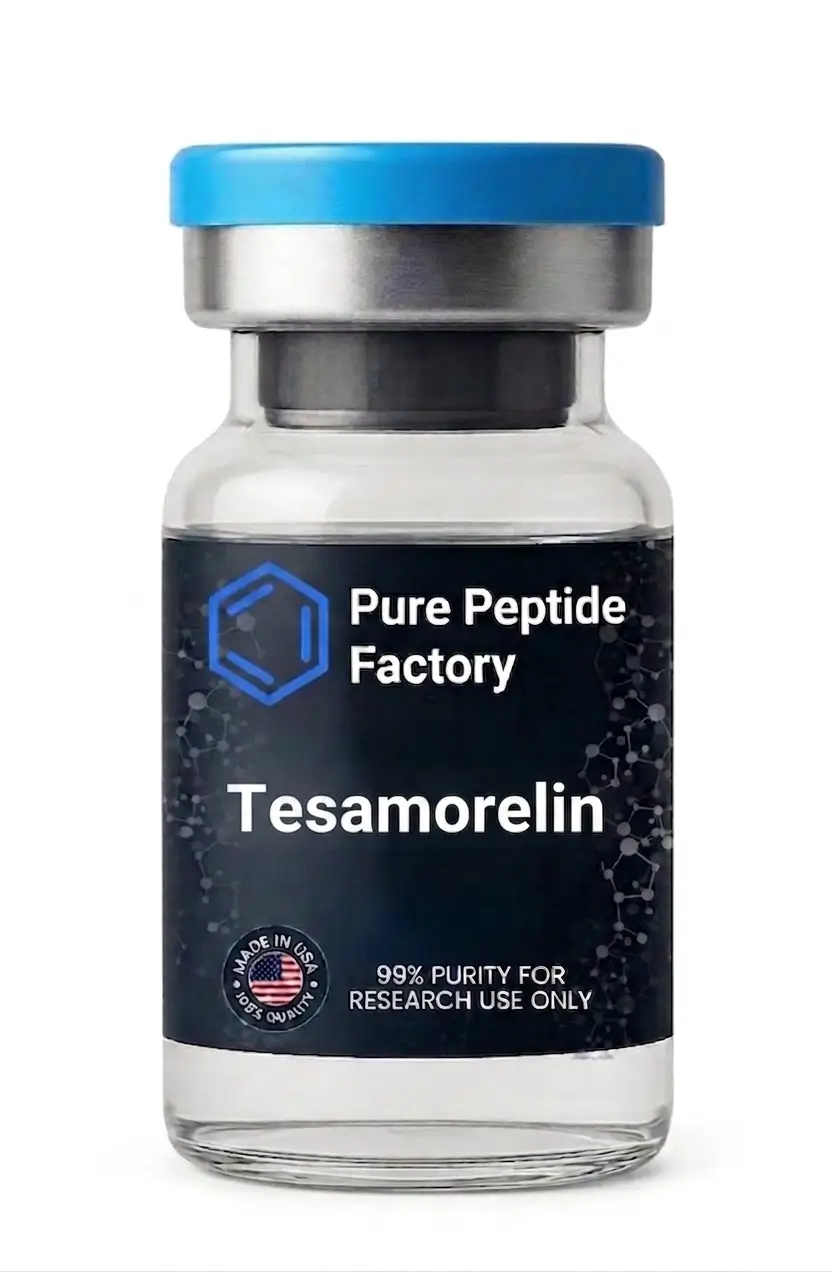
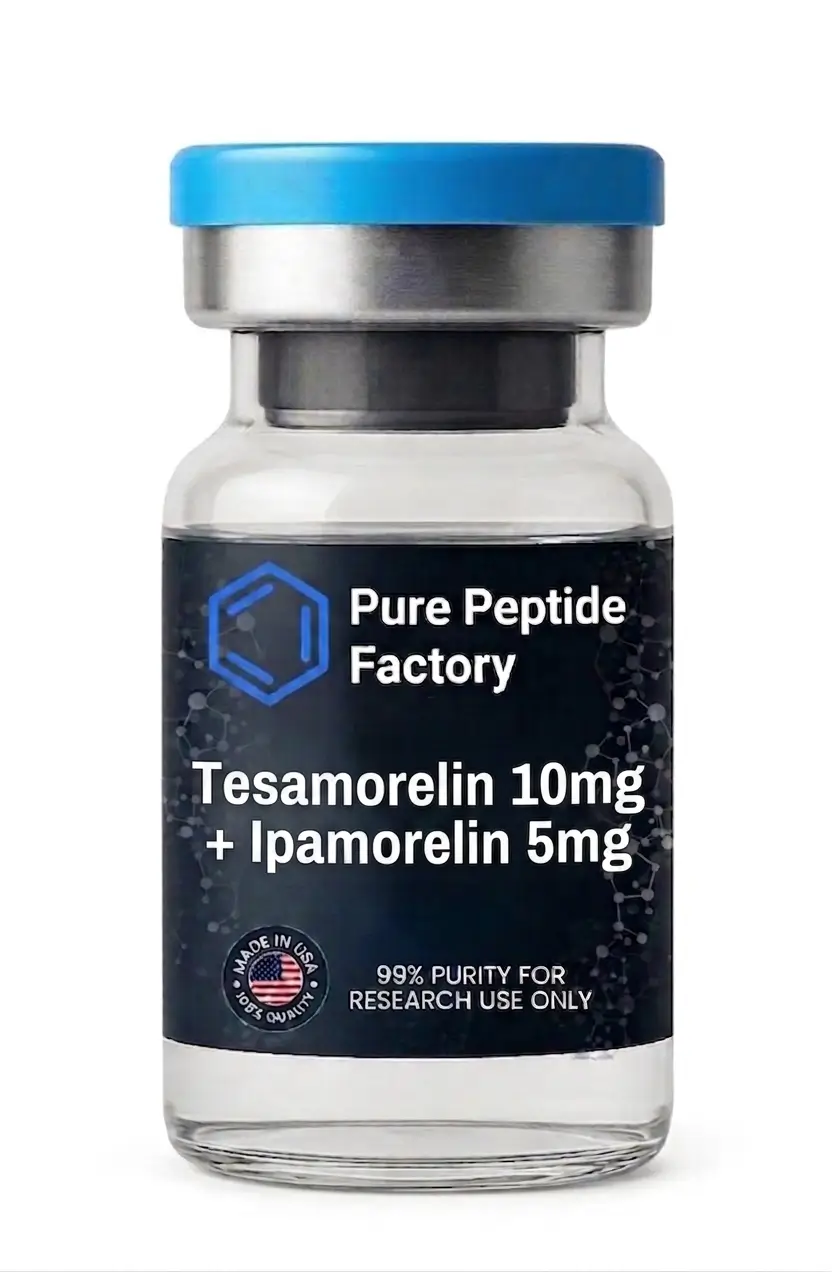
Tesamorelin Ipamorelin Blend (Tesamorelin 10mg + Ipamorelin 5mg)
$60.00
Tesamorelin 10mg + Ipamorelin 5mg, 10 vials/kit | For research use only.
Tesamorelin Ipamorelin Blend: The Dual-Pathway GH Axis Research Combo
The growth hormone axis has two primary input points. GHRH stimulates the pituitary to produce GH. Ghrelin receptor agonists amplify that signal and add their own independent GH-releasing pulse. Using either compound alone engages one pathway. Using the tesamorelin ipamorelin blend engages both simultaneously, producing synergistic GH release that neither compound achieves in isolation.
This is not a stack built on marketing logic. It reflects the actual physiology of the GH axis. Pure Peptide Factory supplies this combination as 10mg Tesamorelin and 5mg Ipamorelin per kit, with batch-specific HPLC verification and domestic cold-chain shipping. Researchers designing GH axis studies, visceral fat metabolism protocols, or body composition research have both compounds verified to the same quality standard in a single order.
Why Researchers Buy the Tesamorelin Ipamorelin Blend from Pure Peptide Factory
Higher Dosage Configuration Than the Competition
The leading competitor in this category supplies an 8mg blend. Our kit provides 10mg Tesamorelin and 5mg Ipamorelin. More compound per vial means more flexibility in protocol design, more cohorts from a single order, and better value per milligram for institutional research programs.
Batch-Matched Documentation for Combination Studies
Both compounds in our kit come from the same synthesis cycle with matching lot numbers on the Certificate of Analysis. When you are running a dual-compound protocol and need to demonstrate consistent compound quality across both agents for publication or IRB review, batch-matched documentation from a single supplier is not a luxury. It is a methodological requirement.
Domestic Cold-Chain for Both Compounds
Temperature-sensitive GH axis peptides degrade under improper shipping conditions. Both Tesamorelin and Ipamorelin ship from our domestic cold-storage facility in phase-change cooled packaging. Most orders arrive within 1 to 3 business days. International sourcing cannot offer that timeline or that temperature reliability for compounds this sensitive.
Individual Compounds Also Available
Researchers who need Tesamorelin or Ipamorelin independently for comparison arms or single-compound protocols can source both individually from our catalog. All three configurations, Tesamorelin alone, Ipamorelin alone, and the combo kit, are manufactured in the same facility under identical quality controls.
Understanding the Tesamorelin Ipamorelin Blend: Two Compounds, One Axis
How the GH Axis Works
The hypothalamic-pituitary GH axis operates through two primary regulatory signals. Growth hormone releasing hormone (GHRH), produced in the hypothalamus, travels to the anterior pituitary and stimulates somatotroph cells to synthesize and release GH. Separately, ghrelin, produced primarily in the stomach and hypothalamus, binds ghrelin receptors on pituitary somatotrophs and amplifies GH release through a distinct intracellular pathway.
These two pathways are additive. When both are activated together, GH output exceeds what either signal produces alone. The tesamorelin ipamorelin blend is built on this biology.
What Tesamorelin Does
Tesamorelin is a 44-amino-acid synthetic analog of human GHRH, with a trans-3-hexenoic acid group added at the N-terminal end. This modification stabilizes the molecule against dipeptidyl peptidase IV degradation while preserving full GHRH receptor activity. Tesamorelin was developed under the brand name Egrifta and received FDA approval for reducing excess visceral fat in HIV-associated lipodystrophy, making it one of the few GHRH analogs with both clinical trial data and regulatory approval behind it.
In research models, Tesamorelin stimulates pulsatile GH release from the anterior pituitary with a duration of action extending beyond native GHRH due to its structural modifications. IGF-1 levels rise downstream, and visceral adipose tissue decreases in studies ranging from short-term rodent protocols to 52-week human trials.
Tesamorelin Molecular Profile:
- Molecular Formula: C221H366N72O67S
- Molecular Weight: 5135.77 g/mol
- CAS: 218949-48-5
- Also known as: Egrifta, TH9507
What Ipamorelin Does
Ipamorelin is a selective pentapeptide ghrelin receptor agonist with the sequence Aib-His-D-2-Nal-D-Phe-Lys-NH2. It was the first GH secretagogue developed with high selectivity for GH release without significant cortisol, prolactin, or aldosterone elevation. In research models it produces pulsatile GH release through GHS-R1a receptor activation, with a short half-life that makes it suitable for protocols requiring controlled, time-limited GH pulses.
Ipamorelin Molecular Profile:
- Molecular Formula: C38H49N9O5
- Molecular Weight: 711.86 g/mol
- CAS: 170851-70-4
Why the Combination Works Better Than Either Alone
Tesamorelin activates the GHRH receptor pathway. Ipamorelin activates the ghrelin receptor pathway. Both converge on the pituitary somatotroph but through distinct intracellular mechanisms. GHRH increases cAMP through Gs protein activation. Ghrelin receptor agonism activates phospholipase C through Gq signaling, raising intracellular calcium and activating protein kinase C.
Because the two pathways use different second messenger systems, combining them produces greater GH output than saturating either receptor alone. Researchers studying the GH axis use this synergy to examine maximum pituitary GH secretory capacity, somatotroph reserve, and IGF-1 response dynamics in a way that single-compound protocols cannot replicate.
Research Applications of the Tesamorelin Ipamorelin Blend
Visceral Fat and Body Composition Research
Tesamorelin has the strongest visceral fat reduction data of any GHRH analog in the research literature. The pivotal trials leading to FDA approval demonstrated reductions in visceral adipose tissue of approximately 15 to 20% over 26 weeks in HIV lipodystrophy patients, with continued reduction at 52 weeks. This visceral fat specificity, rather than subcutaneous fat reduction, is mechanistically linked to GH’s preferential lipolytic effects on visceral adipocytes.
Adding Ipamorelin to the protocol amplifies GH output, which researchers hypothesize produces proportionally greater lipolytic stimulation in visceral adipose tissue. The tesamorelin ipamorelin blend is used in research to study:
- Visceral versus subcutaneous fat differential reduction
- GH-mediated lipolysis mechanisms in adipocyte models
- Dose-response relationships for IGF-1 elevation
- Body composition changes in aging and metabolic disease models
H3: Growth Hormone Axis Stimulation Studies
For researchers studying pituitary somatotroph function, GH secretory reserve, or the pharmacology of the GH axis, the combination provides a maximal physiological stimulus through two distinct receptor pathways. Protocols examining GH deficiency models, age-related GH decline, and hypothalamic-pituitary axis integrity use both GHRH and ghrelin receptor agonism together to characterize the full secretory capacity of the pituitary.
Published research on GHRH and ghrelin receptor synergy shows that combined stimulation produces GH peaks significantly higher than either agent alone, with the ratio of combined to single-agent response ranging from 1.5x to 2.5x depending on the model and dose used.
IGF-1 and Anabolic Pathway Research
GH released by the tesamorelin ipamorelin blend stimulates hepatic IGF-1 synthesis. IGF-1 mediates many of GH’s anabolic effects, including protein synthesis stimulation, nitrogen retention, and collagen production. Researchers studying the GH/IGF-1 axis for applications in muscle metabolism, bone density, connective tissue repair, and aging use this combination to achieve robust, sustained IGF-1 elevation in research models.
Sleep Architecture and Nocturnal GH Research
GH secretion is highest during slow-wave sleep. Researchers studying the relationship between GH pulsatility and sleep architecture use GHRH analogs and GH secretagogues to stimulate GH release in controlled timing windows and examine downstream effects on sleep quality markers, cognitive function, and recovery. The combination protocol allows researchers to replicate the magnitude of nocturnal GH secretion that declines with age.
Metabolic Disease and Lipodystrophy Models
Tesamorelin’s FDA-approved indication for HIV lipodystrophy provides a well-characterized research foundation. Researchers working in metabolic disease, lipodystrophy, and HIV-related complications use the compound to model visceral fat accumulation reversal and examine the relationship between GH axis activity and metabolic dysregulation.
Tesamorelin Ipamorelin Blend vs Other GH Research Combinations
How This Stack Compares to Common Alternatives
Researchers designing GH axis studies often compare multiple compound combinations. The tesamorelin ipamorelin blend occupies a specific position in that landscape:
| Combination | GHRH Component | GHS Component | GH Selectivity | Key Advantage |
|---|---|---|---|---|
| Tesamorelin + Ipamorelin | Tesamorelin (GHRH analog) | Ipamorelin (selective GHS) | High | FDA-approved GHRH analog, clinical data available |
| CJC-1295 + Ipamorelin | CJC-1295 (long-acting GHRH) | Ipamorelin | High | Extended half-life for less frequent dosing |
| Tesamorelin + CJC-1295 | Both GHRH analogs | None | N/A | Pure GHRH pathway saturation study |
| GHRP-2 + GHRH | Any GHRH | GHRP-2 (less selective) | Low | Older protocol, cortisol/prolactin confounders |
Use the Tesamorelin Ipamorelin blend when your protocol requires a GHRH analog with established clinical data, selective GH release without cortisol confounders, and the dual-pathway synergy that characterizes physiological GH secretion. Use CJC-1295 combinations when extended half-life and less frequent dosing administration suits the protocol better.
Tesamorelin Ipamorelin Blend Dosage: Published Research Protocols
Animal Model Reference Dosing
Researchers searching for tesamorelin ipamorelin blend dosage data should reference the underlying single-compound literature as the starting point:
Tesamorelin reference doses:
- Visceral fat studies in rodent models: 100 to 200 mcg/kg subcutaneous injection, once daily
- GH stimulation studies: 1 to 2 mg/kg in rodent models, adjusted by species
- Human clinical trials (Egrifta): 2mg daily subcutaneous injection
Ipamorelin reference doses:
- Rodent GH pulse studies: 200 to 500 mcg/kg subcutaneous or intraperitoneal injection
- Bone density studies: 200 mcg/kg once to three times daily in rat models
Combination protocol considerations: When combining both compounds, researchers typically administer simultaneously or within a 10-minute window to capture synergistic GH release during the same pituitary stimulation event. Sequencing and timing both affect the magnitude of GH response.
Dosage Chart for Common Research Concentrations
Tesamorelin 10mg vial reconstitution:
| Bacteriostatic Water Added | Final Concentration |
|---|---|
| 1 mL | 10 mg/mL |
| 2 mL | 5 mg/mL |
| 5 mL | 2 mg/mL |
Ipamorelin 5mg vial reconstitution:
| Bacteriostatic Water Added | Final Concentration |
|---|---|
| 0.5 mL | 10 mg/mL |
| 1 mL | 5 mg/mL |
| 2.5 mL | 2 mg/mL |
We do not provide human dosing recommendations. Both compounds are sold strictly for research purposes.
How to Reconstitute the Tesamorelin Ipamorelin Blend
Step-by-Step Laboratory Protocol
Reconstitute each vial separately to maintain accurate concentration control for each compound.
For Tesamorelin 10mg:
- Sanitize vial stopper with 70% isopropyl alcohol
- Inject bacteriostatic water slowly against the vial wall
- Allow lyophilized cake to dissolve without agitation for 3 to 5 minutes
- Gently swirl until fully clear. Do not shake
- Label with reconstitution date, compound name, and concentration
For Ipamorelin 5mg:
- Sanitize vial stopper with 70% isopropyl alcohol
- Inject bacteriostatic water slowly against the vial wall
- Allow lyophilized cake to dissolve without agitation for 1 to 2 minutes
- Gently swirl until fully clear. Do not shake
- Label with reconstitution date, compound name, and concentration
Storage After Reconstitution
- Both lyophilized powders: 24 months at -20°C, protected from light
- Reconstituted Tesamorelin: 14 days at 2 to 8°C under sterile conditions
- Reconstituted Ipamorelin: 14 days at 2 to 8°C under sterile conditions
- Do not freeze reconstituted solutions
- Do not mix reconstituted compounds in the same vial unless your protocol requires pre-mixed administration and you have verified stability
Regulatory Context
Tesamorelin Regulatory Status
Tesamorelin is FDA approved as Egrifta for HIV-associated lipodystrophy. Research-grade Tesamorelin peptide is a separate category, available for laboratory research under research-use-only terms without prescription. The FDA approval means this compound has an established clinical safety profile and peer-reviewed dosing data that most research peptides lack. That data strengthens the research foundation your protocols build on.
Ipamorelin Regulatory Status
Ipamorelin is not FDA approved for any indication. It is not scheduled under the Controlled Substances Act. It is available for laboratory research under research-use-only terms.
Research Use Only
Both compounds in this kit are sold exclusively for in vitro and controlled in vivo research. Not for human consumption, veterinary use, or diagnostic application. You must agree to research-use-only terms at checkout.
Product Specifications
Kit Contents
- Tesamorelin: 10mg per vial, lyophilized powder
- Ipamorelin: 5mg per vial, lyophilized powder
- Both vials supplied per kit with matching batch documentation
Quality Verification
- Purity: 98% minimum for both compounds (HPLC verified)
- Identity: Mass spectrometry confirmed for both compounds
- Endotoxin: Less than 0.1 EU/mL
- Sterility: Verified per USP 71
- Storage: -20°C long-term, 2 to 8°C short-term
Current Batch: #PPF-TIP-0426 Tesamorelin Purity: 98.3% Ipamorelin Purity: 99.1% Download: HPLC Certificate | MS Report
FAQ
What is the tesamorelin ipamorelin blend used for in research?
This combination is used to study dual-pathway GH axis stimulation, visceral fat metabolism, IGF-1 dynamics, body composition changes, and pituitary somatotroph secretory capacity. Tesamorelin activates the GHRH receptor; Ipamorelin activates the ghrelin receptor. Together they produce synergistic GH output neither achieves alone.
What is the tesamorelin ipamorelin blend dosage for animal research?
Published single-compound protocols use 100 to 200 mcg/kg for Tesamorelin and 200 to 500 mcg/kg for Ipamorelin in rodent models. Combination dosing should be derived from published protocols appropriate to your species, model, and endpoints. We do not provide human dosing recommendations.
Is tesamorelin FDA approved?
Yes. Tesamorelin is FDA approved as Egrifta for HIV-associated lipodystrophy and as Egrifta SV in an updated formulation. Research-grade Tesamorelin peptide is available separately from the approved pharmaceutical product for laboratory use.
How does tesamorelin help with weight loss research?
Tesamorelin stimulates GH release through GHRH receptor activation. GH promotes lipolysis, particularly in visceral adipose tissue, which is metabolically distinct from subcutaneous fat in its sensitivity to GH-driven lipolysis. Research using Tesamorelin for weight loss models examines visceral fat reduction mechanisms rather than appetite suppression or gastric emptying effects.
What is the difference between this and CJC-1295 Ipamorelin?
Tesamorelin is a direct GHRH analog with FDA-approved clinical data behind it. CJC-1295 has a Drug Affinity Complex (DAC) modification that dramatically extends its half-life by binding albumin. Tesamorelin more closely replicates native GHRH pulsatility. Use Tesamorelin when clinical relevance and established dosing data matter to your protocol. Use CJC-1295 when extended half-life and reduced dosing frequency are the priority.
Why combine tesamorelin and ipamorelin instead of using one alone?
Tesamorelin activates the GHRH pathway using cAMP as a second messenger. Ipamorelin activates the ghrelin pathway using calcium and protein kinase C. Because the two pathways use different intracellular mechanisms, combining them produces additive to synergistic GH release that saturating either receptor alone cannot achieve.
How do you reconstitute the tesamorelin ipamorelin combo kit?
Reconstitute each vial separately with bacteriostatic water. See the full step-by-step protocol in the reconstitution section above. Do not mix both compounds into the same vial unless your protocol specifically requires pre-mixed administration.
Where can I buy the tesamorelin ipamorelin blend?
Pure Peptide Factory stocks this combination kit with domestic cold-chain shipping and batch-specific documentation for both compounds. Orders placed before 2 PM EST ship same-day.
Order the Tesamorelin Ipamorelin Blend for Research
Secure Checkout
- Credit card, cryptocurrency, or wire transfer
- Same-day dispatch for orders before 2 PM EST
- Cold-chain packaging with phase-change cooling for both compounds
- Discreet labeling and full tracking
Institutional Accounts
Net-30 terms and purchase order acceptance available for universities and pharmaceutical companies. Contact us for bulk pricing on 50 kits or more.
Add to cart and get both compounds verified, batch-matched, and delivered to your lab ready to run.
Related products
-
Cagrisema 5 mg
$50.00