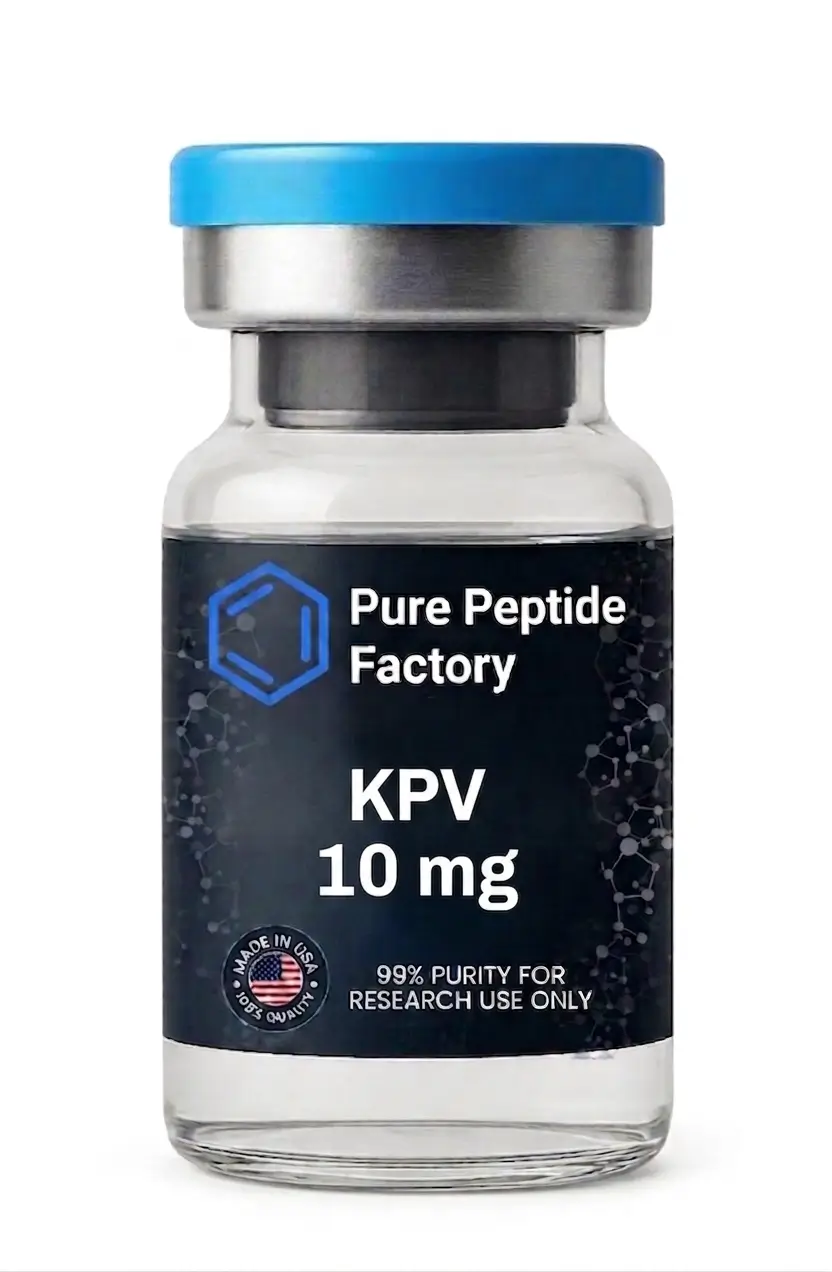
KPV 10 mg
$30.00 $50.00Price range: $30.00 through $50.00
KPV peptide for sale at Pure Peptide Factory in research-grade 5mg and 10mg vials. Specifically, KPV is the C-terminal tripeptide of α-melanocyte stimulating hormone (α-MSH), composed of Lysine-Proline-Valine. Furthermore, JM Lipton’s group at UT Southwestern and Anna Catania’s group at the University of Milan established KPV’s anti-inflammatory mechanism through NF-κB pathway inhibition over 20+ years of published research. The 2008 Dalmasso paper in Gut documented KPV nanoparticle delivery for ulcerative colitis research. HPLC verified at 98% minimum purity, batch-specific COA. 5mg and 10mg vials. Research use only.
KPV Peptide for Sale: The α-MSH C-Terminal Tripeptide Anti-Inflammatory Research Tool
KPV peptide for sale at Pure Peptide Factory delivers the 3-amino-acid C-terminal tripeptide (Lysine-Proline-Valine) of α-melanocyte stimulating hormone (α-MSH) that JM Lipton’s group at UT Southwestern Medical Center identified as the active anti-inflammatory fragment in the 1990s. Specifically, Lipton demonstrated that the C-terminal tripeptide of α-MSH retains the anti-inflammatory activity of the parent hormone while eliminating the melanogenic effects associated with full-length α-MSH. Furthermore, the Anna Catania research group at the University of Milan has produced over 20 years of peer-reviewed publications establishing KPV’s mechanism through NF-κB pathway inhibition and cytokine cascade modulation.
For researchers studying inflammatory bowel disease (IBD), ulcerative colitis, atopic dermatitis, asthma research, allergic inflammation, or NF-κB pathway pharmacology, KPV peptide is the foundational research compound that anchors the modern anti-inflammatory tripeptide literature. Pure Peptide Factory stocks research-grade KPV peptide for sale in 5mg and 10mg configurations with domestic cold-chain shipping and batch-specific HPLC documentation. When researchers buy KPV peptide for laboratory work, the C-terminal amidation and specific tripeptide structure (Lys-Pro-Val-NH2) require sophisticated synthesis verification that not all vendors provide.
Why Researchers Choose KPV Peptide for Sale from Pure Peptide Factory
Documentation for the α-MSH C-Terminal Tripeptide
When you buy KPV peptide for sale at our facility, you’re working with the shortest biologically active anti-inflammatory tripeptide derived from α-MSH. Specifically, the Lys-Pro-Val sequence represents the C-terminal residues 11-13 of α-MSH and retains anti-inflammatory activity through MC1R-mediated and MC1R-independent mechanisms. Furthermore, the C-terminal amidation is critical for biological activity, and improperly synthesized peptide lacking this modification shows reduced effects. Therefore, every batch of KPV peptide for sale ships with a lot-specific HPLC chromatogram and mass spectrometry report verifying the 342.4 g/mol molecular weight target with C-terminal amidation confirmation. The Certificate of Analysis is downloadable before your compound ships.
Domestic Cold-Chain Shipping for KPV Peptide Research
Researchers ordering KPV peptide for sale typically pair it with bacteriostatic water for reconstitution. Specifically, KPV peptide’s small tripeptide structure and high water solubility make reconstitution straightforward, but cold-chain handling matters for research data integrity across protocol duration. We ship from domestic cold-storage using phase-change cooling rated for 96-hour protection. Consequently, most orders for KPV peptide for sale reach your lab within 1 to 3 business days.
Two Configurations for Research Protocol Flexibility
We stock KPV peptide for sale in 5mg and 10mg vials. Specifically, the 5mg configuration accommodates pilot studies and single-protocol research, while the 10mg vial supports extended dosing protocols and bulk research applications including the published 100-500 mcg/kg rodent dosing ranges from the Catania group. Therefore, researchers can match vial size to protocol scale without splitting vials or compromising reconstituted solution freshness when they buy KPV peptide for sale.
Synthesis Logs Archived for 24 Months
We document and archive every batch. Therefore, if your IRB or compliance office requests chain-of-custody records or synthesis documentation, we can provide them on demand.
What Is KPV Peptide?
The C-Terminal Tripeptide of α-Melanocyte Stimulating Hormone
KPV is a synthetic tripeptide consisting of L-Lysine, L-Proline, and L-Valine in sequence (Lys-Pro-Val, often written as KPV using single-letter amino acid code). Specifically, the tripeptide corresponds to the C-terminal residues 11-13 of α-melanocyte stimulating hormone (α-MSH), the 13-amino-acid POMC-derived hormone that regulates melanogenesis, appetite, and immune function. Furthermore, the C-terminal amidation (Val-NH2) is critical for the compound’s anti-inflammatory activity and matches the C-terminal modification of the parent α-MSH.
The compound was first identified as the active anti-inflammatory fragment of α-MSH by JM Lipton and colleagues at UT Southwestern Medical Center in the 1990s. Specifically, Lipton’s group demonstrated that the C-terminal tripeptide retains the anti-inflammatory effects of full-length α-MSH while eliminating the melanogenic activity at MC1R that produces skin pigmentation. By contrast with melanotan-class compounds, which activate the full MC1-MC5 receptor family at supraphysiological levels, KPV provides selective anti-inflammatory signaling through both MC1R-dependent and MC1R-independent pathways without driving melanogenesis.
Molecular Profile of KPV Peptide
- Type: Synthetic tripeptide (3 amino acids)
- Sequence: Lys-Pro-Val-NH2
- Single-letter code: KPV-NH2
- Origin: α-MSH C-terminal residues 11-13
- Molecular Formula: C16H31N5O3
- Molecular Weight: 342.45 g/mol
- CAS: 67727-97-3
- Receptor target: MC1R (selective) plus MC1R-independent pathways
- C-terminal modification: Valine amidation
- Synonyms: α-MSH (11-13), Lys-Pro-Val, ACTH/α-MSH C-terminal tripeptide
- Discovery framework: JM Lipton, UT Southwestern Medical Center (1990s)
- Primary research group: Anna Catania, University of Milan (1995-present)
How KPV Peptide Works: NF-κB Inhibition and Cytokine Modulation
The mechanistic innovation of KPV peptide is selective anti-inflammatory signaling through multiple converging pathways. Specifically, the compound operates through three documented mechanisms that work in concert to suppress inflammatory responses:
MC1R-mediated cAMP signaling. KPV binds the melanocortin 1 receptor (MC1R) on immune cells including macrophages, dendritic cells, and lymphocytes. Specifically, MC1R activation produces a Gs-coupled cAMP response that inhibits inflammatory gene transcription. Furthermore, this mechanism is dose-dependent and selective for MC1R, distinguishing KPV from MT-2-class compounds that activate the broader MC1-MC5 receptor family.
NF-κB pathway inhibition. The Anna Catania group at the University of Milan has established that KPV inhibits NF-κB nuclear translocation in inflammatory cells. Specifically, KPV prevents IκB-α phosphorylation and degradation, which keeps NF-κB sequestered in the cytoplasm and prevents transcription of pro-inflammatory genes including TNF-α, IL-1β, IL-6, and IL-8. As a result, the downstream inflammatory cascade is suppressed at the transcriptional level rather than blocking individual cytokines.
PepT1 transporter-mediated cellular uptake. The 2008 Dalmasso paper in Gut demonstrated that KPV is transported into colonic epithelial cells via the PepT1 di/tripeptide transporter. Specifically, this transport mechanism enables KPV to reach intracellular targets in gut tissue, which has driven the substantial KPV literature in ulcerative colitis and inflammatory bowel disease research. Therefore, KPV produces direct intracellular anti-inflammatory effects in tissues expressing PepT1, including intestinal epithelium.
The combination of these three pathways produces broad-spectrum anti-inflammatory effects without the side effect profile that limits non-selective immunosuppressive compounds. By contrast with corticosteroids (which produce broad metabolic effects) and TNF-α inhibitors (which target a single cytokine), KPV peptide produces selective transcriptional anti-inflammatory effects with documented favorable safety profile across published research.
KPV Peptide Research Applications
Inflammatory Bowel Disease and Ulcerative Colitis Research
The primary research application driving demand for KPV peptide for sale is inflammatory bowel disease (IBD) research. Specifically, the 2008 Dalmasso, Charrier-Hisamuddin, Nguyen, Yan, Sitaraman, and Merlin paper in Gut (57:1259-1263) demonstrated that orally administered KPV produced significant therapeutic effects in mouse models of dextran sulfate sodium (DSS)-induced colitis. Furthermore, the researchers documented that KPV is transported into colonic epithelial cells via PepT1, providing a direct mechanistic basis for the anti-inflammatory effects in gut tissue.
The Kannengiesser 2008 IBD paper extended this work using nanoparticle delivery of KPV for ulcerative colitis research. As a result, the modern KPV literature in IBD research includes both free peptide and nanoparticle-formulated approaches, providing researchers with multiple protocol options.
Research applications include:
- DSS-induced colitis mouse models with histological and biochemical endpoints
- TNBS-induced colitis protocols
- IL-10 knockout spontaneous colitis models
- Ulcerative colitis biomarker research (TNF-α, IL-6, calprotectin)
- Crohn’s disease pathology investigations
- PepT1 transporter biology in inflamed vs healthy intestinal epithelium
- Comparative research with BPC-157 and KLOW blend
Skin Inflammation and Atopic Dermatitis Research
KPV peptide research extends substantially into dermatology applications. Specifically, atopic dermatitis, psoriasis, and contact dermatitis research models all leverage KPV’s anti-inflammatory mechanism through topical application. Furthermore, the MC1R expression in keratinocytes and Langerhans cells supports direct skin-level signaling. As a result, research applications include:
- Atopic dermatitis murine models with skin barrier and inflammation endpoints
- Contact hypersensitivity reaction research
- Psoriasis-like skin inflammation protocols
- Wound healing research with anti-inflammatory components
- UV-induced skin inflammation models
- Topical formulation development for dermatological applications
Asthma and Allergic Inflammation Research
KPV peptide serves as a research tool for allergic and asthmatic inflammation studies. Specifically, the compound has been documented to reduce airway inflammation, IL-13 production, and eosinophil infiltration in murine asthma models. Therefore, research applications include OVA-induced asthma models, house dust mite-induced airway inflammation protocols, Th2-mediated inflammation studies, and eosinophil-driven inflammation research.
MC1R Receptor Pharmacology Research
Beyond clinical inflammation applications, KPV peptide functions as a selective MC1R research tool. Specifically, MC1R is expressed on melanocytes, immune cells, keratinocytes, and various peripheral tissues. By contrast with non-selective melanocortin agonists, KPV provides selective MC1R activation suitable for receptor-specific signaling studies. As a result, research applications include MC1R binding studies in transfected cell lines, signaling cascade characterization (cAMP, ERK, calcium), comparative melanocortin pharmacology, and MC1R polymorphism functional studies.
Mast Cell Activation Syndrome (MCAS) Research
An emerging research application for KPV peptide involves mast cell activation syndrome (MCAS), where dysregulated mast cell mediator release produces multi-system symptoms. Specifically, KPV’s mast cell stabilizing properties documented in preclinical research position it as a research tool for examining MCAS pathophysiology and intervention strategies. Research applications include mast cell degranulation assays, histamine release modulation studies, and tryptase expression profiling.
KPV Peptide vs BPC-157: Comparing Two Anti-Inflammatory Research Compounds
The KPV peptide vs BPC-157 comparison is one of the most-asked questions in anti-inflammatory peptide research. Both compounds serve overlapping research applications but operate through fundamentally different mechanisms:
| Feature | KPV Peptide | BPC-157 |
|---|---|---|
| Type | Tripeptide (3 amino acids) | Pentadecapeptide (15 amino acids) |
| Origin | α-MSH C-terminal residues 11-13 | Stable gastric pentadecapeptide fragment |
| Primary mechanism | NF-κB inhibition, MC1R signaling | VEGFR2-Akt-eNOS angiogenesis pathway |
| Primary research focus | Anti-inflammatory, IBD, dermatology | Tissue repair, tendon/ligament, GI healing |
| Mechanism class | Direct anti-inflammatory transcription suppression | Angiogenesis-mediated tissue repair |
| Oral bioavailability | Yes (PepT1 transport in gut) | Yes (gastric protective resistance) |
| FDA status | Research only | Research only (FDA bulk substance restriction 2024) |
| Best for studying | NF-κB pathway, IBD, skin inflammation | Tissue regeneration, GI repair, tendon healing |
When to choose KPV peptide: NF-κB pathway research, inflammatory bowel disease and ulcerative colitis models, dermatology and skin inflammation studies, asthma and allergic inflammation protocols, MC1R receptor pharmacology, mast cell research.
When to choose BPC-157: Tissue repair and regeneration research, tendon and ligament healing protocols, gastrointestinal ulcer and damage repair, angiogenesis research, comparative VEGFR2 pathway studies.
Researchers running combined anti-inflammatory and tissue repair protocols sometimes use both compounds to engage complementary mechanisms. Furthermore, the KLOW blend we manufacture combines KPV with BPC-157, TB-500, and GHK-Cu specifically because these four peptides target distinct but complementary pathways. Therefore, researchers studying multi-pathway tissue protection can use the KLOW blend or order the individual components separately for mechanism-specific research.
KPV Peptide vs ARA-290: Comparing Anti-Inflammatory Research Tools
Researchers comparing KPV peptide to other anti-inflammatory research compounds in protocol design need to understand the mechanistic landscape. Specifically, both KPV and ARA-290 (cibinetide) target inflammation through distinct but complementary pathways:
| Feature | KPV Peptide | ARA-290 (Cibinetide) |
|---|---|---|
| Type | 3-aa α-MSH C-terminal tripeptide | 11-aa EPO helix-B fragment |
| Receptor target | MC1R + MC1R-independent | Innate Repair Receptor (EPOR + CD131) |
| Primary mechanism | NF-κB inhibition | IRR activation, PI3K-Akt anti-apoptotic |
| Primary research focus | IBD, dermatology, mast cell research | Sarcoidosis SFN, nerve regeneration |
| FDA status | Research only | FDA Orphan Drug (sarcoidosis SFN) |
| Best for studying | Transcriptional inflammation suppression | Tissue protection in injured/inflamed cells |
The mechanistic distinction matters for research design. Specifically, KPV peptide targets the transcriptional control of inflammation through NF-κB pathway inhibition, while ARA-290 targets cellular protection in injured tissue through the IRR. Therefore, researchers studying inflammatory cascade modulation choose KPV, while researchers studying tissue protection and nerve regeneration choose ARA-290. For comparative protocols examining both mechanisms simultaneously, both compounds are available from our facility.
KPV Peptide Dosage Framework
Published preclinical research dosing across major studies:
| Research Context | Dose Range | Route | Frequency | Reference |
|---|---|---|---|---|
| DSS colitis (mouse oral) | 100 μg per mouse | Oral gavage | Daily | Dalmasso Gut 2008 |
| Nanoparticle delivery (colitis) | Per protocol | Oral nanoparticle | Daily | Kannengiesser 2008 |
| Rodent inflammation (general) | 100 to 500 mcg/kg | IP or SC | Daily | Catania group, multiple |
| Atopic dermatitis (topical) | Per topical formulation | Topical | Daily | Multiple dermatology |
| Asthma airway inflammation | Per protocol | Intranasal or SC | Per study | Multiple |
| Cell culture NF-κB studies | 1 to 10 μM | In vitro | Per assay | Multiple |
| MC1R binding studies | Nanomolar concentrations | Cell culture | Per assay | Multiple |
We do not provide human dosing recommendations. The dosing references above synthesize peer-reviewed research and serve only as laboratory research design context. KPV peptide is not FDA approved for any indication.
How to Reconstitute KPV Peptide
Step-by-Step Laboratory Protocol
- Sanitize the vial stopper with 70% isopropyl alcohol
- Inject bacteriostatic water or sterile saline slowly against the vial wall
- Allow the lyophilized powder to dissolve without agitation for 1 to 2 minutes. Specifically, tripeptides dissolve quickly due to their small size
- Gently swirl until the solution clears. Do not shake (vigorous agitation can affect peptide stability)
- Inspect for clarity and label with date and concentration before use
Concentration Reference for 5mg Vial
- 5mg vial + 1mL water = 5mg/mL
- 5mg vial + 2mL water = 2.5mg/mL
- 5mg vial + 5mL water = 1mg/mL
Concentration Reference for 10mg Vial
- 10mg vial + 1mL water = 10mg/mL
- 10mg vial + 2mL water = 5mg/mL
- 10mg vial + 5mL water = 2mg/mL
- 10mg vial + 10mL water = 1mg/mL
- For micromolar NF-κB cell culture work, prepare extensive serial dilutions from concentrated stock
Storage Requirements
- Lyophilized powder: 24 months at -20°C, protected from light and moisture
- Reconstituted solution: 14 days at 2 to 8°C. Do not freeze reconstituted KPV peptide
- The small tripeptide structure is stable but absorbs moisture readily in lyophilized form. Therefore, keep vials sealed and desiccated during storage
- Avoid repeated freeze-thaw cycles on stock solutions
KPV Peptide Reddit Community Discussions
Reddit and peptide research forum discussions of KPV peptide focus on several recurring research-community questions:
- The KPV vs BPC-157 comparison appears constantly. Specifically, the relevant distinction is mechanism: KPV targets transcriptional inflammation suppression through NF-κB inhibition, while BPC-157 targets tissue repair through VEGFR2 angiogenesis. Both compounds have legitimate research applications but answer different research questions.
- Oral administration questions generate substantial discussion. Specifically, KPV’s PepT1-mediated transport in gut tissue makes it one of the few peptides with documented oral bioavailability for gut-targeted research applications. Furthermore, the 2008 Dalmasso Gut paper specifically demonstrated oral efficacy in colitis models.
- The KLOW blend context appears frequently because KPV is one of the four components in our KLOW blend alongside BPC-157, TB-500, and GHK-Cu. Researchers often ask about KPV monotherapy versus the combination blend, with the answer depending on whether mechanism specificity or multi-pathway coverage is the research priority.
- Topical formulations generate technical discussion because KPV’s small molecular size and stability support topical delivery for dermatology research. By contrast with larger peptides, KPV can penetrate skin through standard cream and serum formulations.
- The 1990s Lipton discovery context appears in technical discussions establishing KPV’s research authority. Specifically, JM Lipton’s identification of the C-terminal tripeptide as the anti-inflammatory active fragment of α-MSH provides the historical foundation for modern KPV research.
We do not provide human protocols. Research protocol design should reference peer-reviewed Lipton and Catania group publications rather than community forum extrapolations.
KPV Peptide for Sale: Regulatory and Research Context
Research Status
KPV peptide is not FDA approved for any indication. The compound remains in preclinical research with active investigation by the Anna Catania group at the University of Milan and collaborating laboratories. Specifically, KPV has not progressed through Phase 1 human clinical trials, although the related α-MSH fragment afamelanotide has reached clinical use for erythropoietic protoporphyria. Therefore, KPV peptide is investigational rather than approved.
Research Use Only
Research-grade KPV peptide for sale is available for laboratory procurement under research-use-only terms without a prescription. This compound is not for human consumption, veterinary use, or diagnostic application. You must agree to research-use-only terms at checkout when you buy KPV peptide for sale from Pure Peptide Factory.
Product Specifications
Available Configurations
KPV peptide for sale is available in 5mg and 10mg vials. Select your configuration from the product options above based on protocol scale.
Quality Verification
- Purity: 98% minimum (HPLC verified)
- Identity: Mass spectrometry confirmed against the 342.45 g/mol target
- Sequence: Lys-Pro-Val-NH2 verified
- C-terminal amidation: Confirmed
- Endotoxin: Less than 0.1 EU/mL
- Sterility: Verified per USP 71
- Form: Lyophilized powder
- Storage: -20°C long-term, 2 to 8°C short-term after reconstitution
Current Batch: #PPF-KPV-0426
Purity: 98.6%
Download: HPLC Certificate | MS Report
KPV Peptide Frequently Asked Questions
What is KPV peptide used for in research?
Researchers use KPV peptide for sale in inflammatory bowel disease and ulcerative colitis studies (per the 2008 Dalmasso Gut paper), atopic dermatitis and skin inflammation research, asthma and allergic inflammation protocols, MC1R receptor pharmacology investigations, NF-κB pathway research, mast cell activation syndrome (MCAS) studies, and combined anti-inflammatory protocols alongside BPC-157 and other research peptides.
Where can I buy KPV peptide for research?
Pure Peptide Factory stocks research-grade KPV peptide for sale in 5mg and 10mg vials with batch-specific HPLC and mass spectrometry documentation. Furthermore, domestic cold-chain shipping delivers most orders for KPV peptide for sale within 1 to 3 business days.
What are KPV peptide benefits in research models?
Published research documents anti-inflammatory effects through NF-κB pathway inhibition, reduced cytokine production (TNF-α, IL-1β, IL-6, IL-8), favorable outcomes in DSS-induced colitis mouse models (Dalmasso 2008), reduced atopic dermatitis-like skin inflammation in murine models, asthmatic airway inflammation reduction, mast cell stabilization effects, and selective MC1R signaling without melanogenic effects.
How does KPV peptide work mechanistically?
KPV operates through three documented mechanisms. First, the compound binds the melanocortin 1 receptor (MC1R) on immune cells, producing Gs-coupled cAMP signaling that suppresses inflammatory gene transcription. Second, KPV inhibits NF-κB nuclear translocation by preventing IκB-α phosphorylation, which blocks transcription of pro-inflammatory genes. Third, KPV is transported into colonic epithelial cells via the PepT1 di/tripeptide transporter, enabling direct intracellular effects in gut tissue (per Dalmasso 2008).
What is the typical KPV peptide dosage in research?
Published rodent research uses 100 to 500 mcg/kg intraperitoneally or subcutaneously daily. The Dalmasso 2008 colitis study used 100 μg per mouse orally. Cell culture work uses 1 to 10 μM concentrations for NF-κB studies and nanomolar concentrations for MC1R binding assays. We do not provide human dosing recommendations.
How does KPV compare to BPC-157?
KPV peptide is a 3-amino-acid α-MSH C-terminal tripeptide targeting NF-κB-mediated anti-inflammatory signaling. By contrast, BPC-157 is a 15-amino-acid pentadecapeptide targeting VEGFR2-mediated tissue repair. Specifically, KPV research focuses on inflammatory bowel disease, dermatology, and asthma, while BPC-157 research focuses on tissue regeneration, tendon healing, and gastrointestinal repair. See the comparison table above for full details.
Can KPV peptide be taken orally?
Yes, KPV is one of the few research peptides with documented oral bioavailability. Specifically, the 2008 Dalmasso paper in Gut demonstrated that KPV is transported into colonic epithelial cells via the PepT1 di/tripeptide transporter, providing direct intracellular delivery to gut tissue. As a result, oral KPV produces measurable anti-inflammatory effects in colitis research models without injection requirements.
What are KPV peptide side effects?
Published preclinical research documents a generally favorable safety profile across the dose ranges used in animal models. Specifically, no significant adverse effects emerged in cell culture or rodent protocols. Furthermore, KPV does not produce melanogenic effects unlike full α-MSH or MT-2-class compounds because the C-terminal tripeptide does not strongly activate the MC1-MC5 receptor family at supraphysiological levels. However, long-term safety data in humans is unavailable because clinical trials have not been completed.
What is the difference between KPV and α-MSH?
KPV peptide is the C-terminal 3 amino acids (Lys-Pro-Val) of full-length α-MSH, which is a 13-amino-acid hormone. Specifically, JM Lipton’s group identified KPV as the anti-inflammatory active fragment of α-MSH while demonstrating that the tripeptide eliminates the melanogenic effects produced by full α-MSH. Therefore, KPV provides selective anti-inflammatory signaling without the skin pigmentation effects that limit therapeutic use of full α-MSH or MT-2-class melanocortin agonists.
Is KPV peptide FDA approved?
No. KPV peptide is not FDA approved for any indication and remains in preclinical research. By contrast, the related α-MSH analog afamelanotide has reached FDA approval for erythropoietic protoporphyria. However, research-grade KPV peptide for sale is legally available for laboratory procurement under research-use-only provisions.
Can KPV peptide be combined with other research peptides?
Combination protocols pairing KPV with BPC-157, TB-500, and GHK-Cu appear in tissue repair research, which is why our KLOW blend combines all four compounds. Specifically, the rationale combines KPV’s NF-κB anti-inflammatory mechanism with BPC-157’s angiogenesis, TB-500’s actin polymerization, and GHK-Cu’s collagen synthesis. Furthermore, researchers studying single-mechanism effects use KPV monotherapy.
How should KPV peptide be stored?
Lyophilized powder stores at -20°C for up to 24 months protected from light and moisture. Reconstituted solution stores at 2 to 8°C for up to 14 days. Do not freeze reconstituted KPV peptide. The small tripeptide structure absorbs moisture readily in lyophilized form, so vials should remain sealed and desiccated.
Order KPV Peptide for Sale Online
Researchers buy KPV peptide for sale from Pure Peptide Factory through the same secure checkout process as all our research peptide products.
Secure Checkout
- Credit card, cryptocurrency, or wire transfer
- Same-day dispatch for orders placed before 2 PM EST
- Cold-chain packaging with phase-change cooling
- Discreet labeling with full tracking
Institutional Accounts
Net-30 terms and purchase order acceptance available for universities and pharmaceutical companies. Furthermore, contact us for bulk pricing on 50 vials or more, including matched bulk orders for KPV peptide for sale alongside BPC-157 and the KLOW blend for comparative anti-inflammatory and tissue repair research protocols.
Verify KPV Peptide Research Literature
For additional KPV peptide research literature, see the PubMed KPV publication index for the Anna Catania group’s published research and the foundational JM Lipton α-MSH research. Furthermore, the Gut journal hosts the seminal 2008 Dalmasso colitis paper.
Add to cart and buy KPV peptide for sale with the documentation your inflammatory bowel disease, NF-κB pathway, dermatology, or MC1R receptor pharmacology research requires.
Related products
-
FST 344 1 mg
$120.00