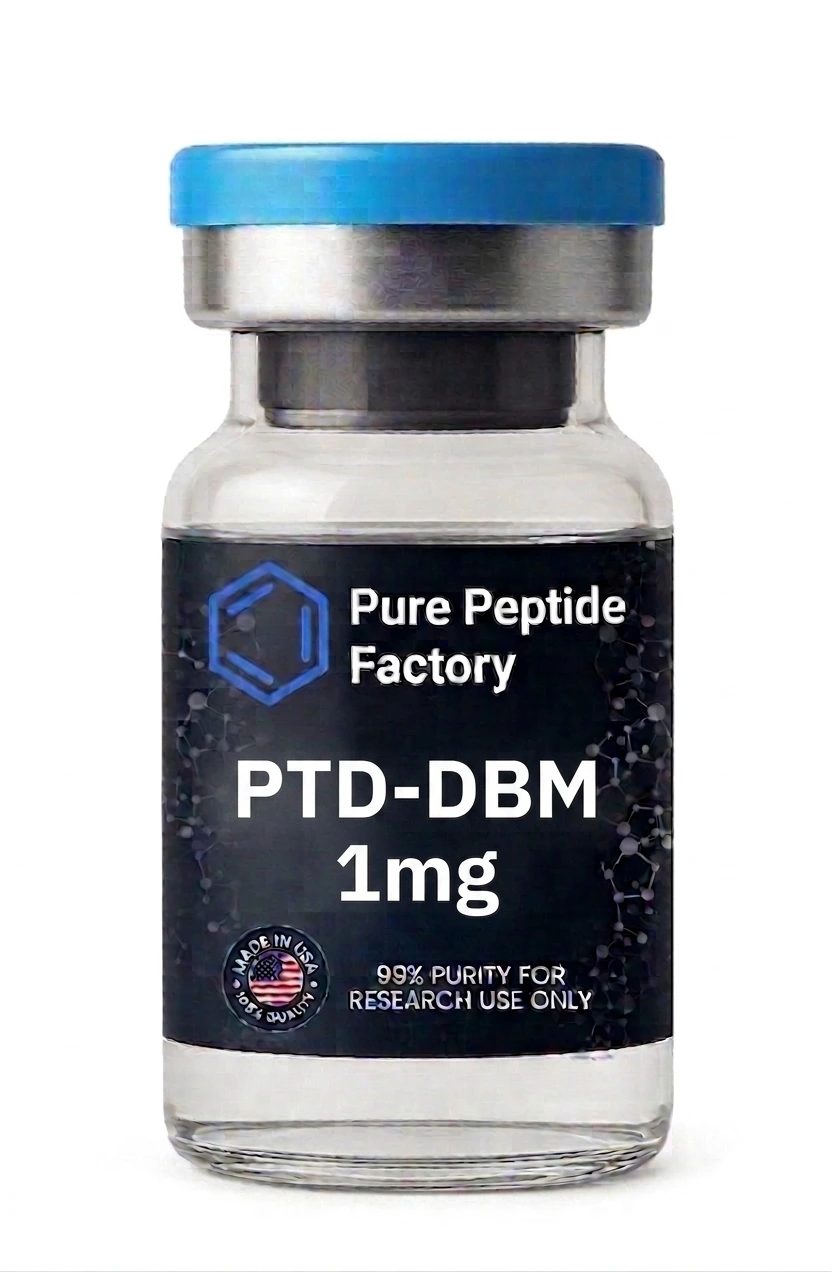
PTD-DBM 1 mg
$50.00
PTD-DBM for sale at Pure Peptide Factory. Professor Kang-Yell Choi at Yonsei University in South Korea developed this peptide as a Wnt/β-catenin pathway activator that blocks the CXXC5-Dishevelled protein interaction. In published research, PTD-DBM outperformed minoxidil for hair regrowth in mouse models, and combination protocols with valproic acid produce additional synergy through dual Wnt pathway activation. HPLC verified at 98% minimum purity, batch-specific COA. 1mg vials. Research use only.
PTD-DBM for Sale: The Wnt Pathway Activator That Outperformed Minoxidil
In 2017, Professor Kang-Yell Choi and his team at Yonsei University in South Korea published a landmark paper in the Journal of Investigative Dermatology demonstrating that PTD-DBM produced more hair regrowth in mouse models than minoxidil, the FDA-approved gold standard. Furthermore, the peptide worked through a completely different mechanism. Rather than acting on DHT pathways like finasteride or vasodilation like minoxidil, PTD-DBM targets CXXC5, a negative feedback regulator of the Wnt/β-catenin pathway that becomes overexpressed in the bald scalps of androgenetic alopecia patients.
For researchers studying hair follicle biology, Wnt signaling, dermal papilla cell function, or wound-induced hair neogenesis, PTD-DBM is the compound that opened a new mechanistic angle on hair loss research. Pure Peptide Factory stocks research-grade PTD-DBM with domestic cold-chain shipping and batch-specific HPLC documentation. When you buy PTD-DBM for laboratory research, source matters because the peptide’s complex two-domain structure requires sophisticated synthesis and verification.
Why Researchers Choose Pure Peptide Factory for PTD-DBM
Documentation for a Two-Domain Fusion Peptide
PTD-DBM is structurally unusual. The compound combines a Protein Transduction Domain (PTD), which is a cell-penetrating peptide tag that allows membrane crossing without a transporter, fused to a Dishevelled Binding Motif (DBM) derived from the CXXC5 protein. Synthesizing this fusion correctly requires careful sequence verification because either domain failing in synthesis renders the compound inactive. Therefore, every batch we ship includes a lot-specific HPLC chromatogram and mass spectrometry report verifying both the PTD and DBM regions.
Domestic Cold-Chain Shipping for a Topical Research Compound
Most PTD-DBM research uses topical application, which means reconstituted solution stability matters more than for injection-based protocols. We ship from domestic cold-storage using phase-change cooling rated for 96-hour protection. Consequently, most orders reach your lab within 1 to 3 business days.
1mg Configuration for Topical Dilution Protocols
Our 1mg vial configuration matches the standard research configuration for topical PTD-DBM protocols. Because the published Choi research uses low-concentration topical formulations, a single 1mg vial accommodates extensive dilution and dose-response work without compromising reconstituted solution freshness. Researchers running combination protocols with valproic acid or microneedling work with vial sizes that match published study designs.
Synthesis Logs Archived for 24 Months
We document and archive every batch. Therefore, if your IRB or compliance office requests chain-of-custody records or synthesis documentation, we can provide them on demand.
What Is PTD-DBM?
A Fusion Peptide Targeting the CXXC5-Dishevelled Interaction
PTD-DBM is a synthetic fusion peptide engineered to disrupt a specific protein-protein interaction inside hair follicle cells. The compound’s name describes its two functional regions:
PTD (Protein Transduction Domain) is a cell-penetrating peptide sequence that allows the molecule to cross plasma membranes without requiring a specific transporter. PTD sequences enable peptides too large for passive diffusion to enter cells through endocytosis-like mechanisms.
DBM (Dishevelled Binding Motif) is derived from the CXXC5 protein, specifically the region of CXXC5 that binds to the PDZ domain of Dishevelled (Dvl). By presenting this binding motif separately from the rest of CXXC5, PTD-DBM acts as a competitive decoy that occupies the Dvl PDZ domain and blocks endogenous CXXC5 from binding.
Together, these two domains produce a peptide that enters cells freely (PTD function) and then blocks the CXXC5-Dvl interaction once inside (DBM function). The result is sustained Wnt/β-catenin pathway activation, which drives hair follicle stem cell proliferation and follicle neogenesis.
Molecular Profile:
- Type: Synthetic fusion peptide (PTD + DVL-binding motif)
- Function: Competitive inhibitor of CXXC5-Dishevelled protein-protein interaction
- Mechanism: Wnt/β-catenin pathway activator (upstream level)
- Origin: Developed by Kang-Yell Choi laboratory, Yonsei University, South Korea
- Foundational reference: Lee SH et al., J Invest Dermatol. 2017;137(11):2260-2269
- Commercial development: CK Regeon (formerly CK Biotech)
- Synonyms: PTD-DBM peptide, CXXC5-targeting peptide, Dvl-binding decoy peptide
How PTD-DBM Works: The Wnt Pathway Mechanism
The Wnt/β-catenin pathway is one of the most important signaling cascades in hair follicle biology. When Wnt ligands bind their receptors at the cell surface, the pathway activates transcription of genes responsible for hair follicle stem cell proliferation, dermal papilla cell function, and follicle morphogenesis. However, the body has built-in negative regulators that prevent excessive Wnt activation, and one of these is CXXC5.
CXXC5 binds the PDZ domain of Dishevelled (Dvl), an upstream component of the Wnt pathway. When CXXC5 occupies this domain, Dvl cannot transmit Wnt signals downstream effectively. As a result, β-catenin remains in its degraded state, target gene transcription stays minimal, and hair follicle stem cells fail to activate properly. This is the molecular bottleneck Choi’s team identified as a contributor to androgenetic alopecia.
PTD-DBM functions as a molecular decoy. The peptide carries the DBM region of CXXC5 attached to a cell-penetrating PTD tag. Once inside the cell, PTD-DBM occupies the PDZ domain of Dvl, which prevents endogenous CXXC5 from binding. Consequently, Wnt signals transmit normally, β-catenin accumulates, target genes activate, and hair follicle regeneration proceeds. Notably, this mechanism operates upstream of where finasteride (DHT inhibition) and minoxidil (vasodilation) act, which positions PTD-DBM as a complementary research tool rather than a substitute for existing approaches.
Why CXXC5 Overexpression Matters Clinically
In Choi’s foundational research, the team observed that CXXC5 expression is significantly elevated in the bald scalps of androgenetic alopecia patients compared to non-balding scalp regions in the same individuals. This finding is mechanistically important because it suggests that progressive hair loss may involve increasing CXXC5-mediated Wnt suppression at affected follicles. Therefore, blocking CXXC5 with PTD-DBM addresses an upstream cause rather than a downstream symptom.
PTD-DBM Hair Growth Research Applications
The Foundational Lee/Choi 2017 JID Publication
The Lee SH, Seo SH, Lee DH, Pi LQ, Lee WS, Choi KY paper “Targeting of CXXC5 by a Competing Peptide Stimulates Hair Re-growth and Wound-Induced Hair Neogenesis” (Journal of Investigative Dermatology, November 2017, 137(11):2260-2269) established the research framework for PTD-DBM. In mouse models, topical PTD-DBM application produced:
- Significantly more hair regrowth than minoxidil 5% (the FDA-approved comparator)
- Enhanced wound-induced hair neogenesis (WIHN) when combined with topical valproic acid
- Increased β-catenin nuclear localization in hair follicle dermal papilla cells
- Elevated Fgf9 expression, which is a growth factor specifically involved in WIHN
The paper also documented that PTD-DBM effects persisted after treatment discontinuation, which contrasts with minoxidil where hair regrowth typically reverses upon stopping treatment. This persistence may reflect the upstream pathway activation mechanism, as Wnt-driven stem cell activation produces structural changes that outlast the active drug presence.
Wound-Induced Hair Neogenesis (WIHN) Research
WIHN is a phenomenon where skin wounding creates conditions favorable for new hair follicle formation, mimicking aspects of fetal follicle development. The Choi research demonstrated that PTD-DBM dramatically enhances WIHN, particularly when combined with valproic acid. This finding has driven research on combination protocols pairing PTD-DBM with controlled wounding (microneedling, dermaroller protocols) to maximize follicle regeneration.
Research applications include:
- Mouse dorsal skin wounding models with quantified follicle neogenesis
- Microneedling depth and frequency optimization for WIHN response
- Dermal papilla cell culture protocols measuring β-catenin and Fgf9 expression
- Hair follicle reconstitution assays in immunodeficient mouse models
Dermal Papilla Cell Research
Dermal papilla cells are the mesenchymal cells at the base of hair follicles that drive follicle morphogenesis and cycling. In aging and androgenetic alopecia, dermal papilla cells lose proliferative capacity and Wnt responsiveness. PTD-DBM research in human dermal papilla cell cultures has documented:
- Restored proliferative capacity in cells from balding scalp donors
- Elevated alkaline phosphatase activity (a marker of dermal papilla functionality)
- Increased expression of hair-inductive genes including ALPL, BMP4, and Wnt5a
- Synergistic effects with valproic acid and Wnt3a co-treatment
Combination with Microneedling
The microneedling/dermaroller protocol creates controlled micro-injuries that activate the WIHN pathway naturally. When combined with topical PTD-DBM, the wounding-induced Wnt signal amplifies the peptide’s CXXC5-blocking effect. Research protocols typically use 0.5mm to 1.5mm needle depths followed by topical PTD-DBM application immediately after microneedling, which allows the freshly created channels to deliver compound directly to the dermal layer where follicles reside.
PTD-DBM and Valproic Acid: The Combination Protocol Researchers Are Asking About
The combination of PTD-DBM with topical valproic acid (VPA) is the most studied research framework for hair regeneration applications. However, many researchers buying PTD-DBM do not understand why this combination matters mechanistically. The two compounds activate Wnt signaling through complementary pathways:
Valproic acid functions as a GSK-3β inhibitor. GSK-3β is the kinase that phosphorylates β-catenin, marking it for degradation. When VPA inhibits GSK-3β, β-catenin accumulates in the cytoplasm, eventually translocating to the nucleus where it activates Wnt target genes. Therefore, VPA activates Wnt signaling at the GSK-3β/β-catenin level.
PTD-DBM blocks the CXXC5-Dvl interaction at the upstream Dvl level. By preventing CXXC5 from suppressing Dvl, PTD-DBM allows Wnt receptor signals to transmit normally to GSK-3β.
When both compounds are applied together, PTD-DBM ensures the upstream signal transmits effectively while VPA ensures the downstream β-catenin accumulation proceeds maximally. The result is amplified Wnt activation at two complementary control points. Lee SH et al. (2012, PLoS One) initially documented VPA’s hair regeneration effects, and the 2017 JID paper combined this with PTD-DBM to produce the synergistic WIHN findings.
Published combination protocol structure:
- Topical PTD-DBM at low concentration in appropriate vehicle
- Topical valproic acid (typically as a buffered formulation)
- Co-application or sequential application per study design
- Often combined with microneedling for maximum WIHN response
We do not provide human dosing recommendations. The dosing references above synthesize peer-reviewed Choi laboratory publications and serve only as research protocol design context. PTD-DBM research-grade peptide is sold strictly for laboratory use.
PTD-DBM vs Minoxidil vs Finasteride: Comparing Hair Regeneration Mechanisms
Researchers entering hair biology need to understand how PTD-DBM differs from existing FDA-approved hair loss compounds. The mechanisms are entirely distinct:
| Feature | PTD-DBM | Minoxidil | Finasteride |
|---|---|---|---|
| Type | Synthetic fusion peptide | Small molecule (vasodilator) | Small molecule (5α-reductase inhibitor) |
| Mechanism | Blocks CXXC5-Dvl, activates Wnt | Vasodilation, KATP channel opening | Inhibits DHT formation |
| Site of action | Dermal papilla cell nucleus | Vascular endothelium and follicles | Systemic DHT pathway |
| Pathway level | Upstream Wnt signaling | Downstream follicle biology | Hormonal precursor |
| Administration | Topical (research) | Topical FDA-approved | Oral FDA-approved |
| Mouse model performance | Superior to minoxidil (Lee 2017) | Reference standard | Effective in human-only |
| Persistence after stopping | Effects may persist | Effects reverse rapidly | Effects reverse on cessation |
| Side effect profile | Limited research data | Hypertrichosis, irritation | Sexual dysfunction, depression risk |
| Best for studying | Wnt pathway hair biology | Vascular contribution to follicles | Hormonal hair loss mechanisms |
The fundamental insight from this comparison is that PTD-DBM addresses hair loss at the gene expression level, while minoxidil addresses it at the vascular level, and finasteride addresses it at the hormonal precursor level. Therefore, these compounds answer different research questions and could theoretically be used in combination protocols rather than as substitutes. However, no peer-reviewed human clinical data exists on PTD-DBM combined with FDA-approved hair loss medications. Researchers exploring combination strategies should design rigorous control arms.
PTD-DBM Reviews and Research Reception
Searches for “PTD-DBM reviews” reflect researcher interest in evaluating the compound’s evidence base before committing to protocols. Honest assessment of the current research:
Strengths:
- Foundational JID 2017 publication from a respected academic group (Yonsei University)
- Clear, mechanistically grounded rationale (CXXC5-Dvl PPI disruption)
- Mouse model superiority over minoxidil
- Active commercial development by CK Regeon (Choi’s company) toward clinical trials
- Synergistic combination data with valproic acid published
Limitations:
- Most published research originates from a single laboratory (Choi group)
- No completed Phase 3 human trials as of this writing
- Long-term safety data limited
- Optimal topical formulation (vehicle, concentration, frequency) not established for human use
- Research reproducibility outside Korea is still developing
Current clinical development:
CK Regeon, founded by Professor Choi to commercialize CXXC5-targeting compounds, has progressed both PTD-DBM and the small-molecule mimic KY19382 through preclinical development. Clinical trial timelines have been discussed in interviews but specific human outcome data is not yet published. Therefore, research-grade PTD-DBM remains a research tool rather than a clinically validated treatment.
For laboratory researchers, the strength of the underlying mechanism and the quality of the foundational publication make PTD-DBM a legitimate research compound. However, researchers should engage with the evidence base critically rather than treating mouse results as predictive of human outcomes.
How to Reconstitute PTD-DBM
Step-by-Step Laboratory Protocol
- Sanitize the vial stopper with 70% isopropyl alcohol
- Inject bacteriostatic water or sterile saline slowly against the vial wall
- Allow the lyophilized powder to dissolve without agitation for 2 to 3 minutes
- Gently swirl until the solution clears. Do not shake
- Inspect for clarity and label with date and concentration before use
Concentration reference for 1mg vial:
- 1mg vial + 0.5mL water = 2mg/mL (concentrated stock)
- 1mg vial + 1mL water = 1mg/mL
- 1mg vial + 5mL water = 0.2mg/mL
- 1mg vial + 10mL water = 0.1mg/mL
- For topical research applications, prepare working dilutions in appropriate vehicle (commonly DMSO/PBS or PBS/ethanol/propylene glycol)
Storage Requirements
- Lyophilized powder: 24 months at -20°C, protected from light
- Reconstituted solution: 14 days at 2 to 8°C. Do not freeze reconstituted PTD-DBM
- Because PTD-DBM contains a fusion structure with two functional domains, freeze-thaw cycles may differentially affect the regions and reduce activity
- For topical formulation research, prepare working dilutions fresh and protect from light
PTD-DBM for Sale: Regulatory Context
Research Status
PTD-DBM is not FDA approved for any indication. The compound remains in preclinical research with active commercial development by CK Regeon. Therefore, research-grade PTD-DBM is available for laboratory procurement under research-use-only terms without a prescription. This compound is not for human consumption, veterinary use, or diagnostic application. You must agree to research-use terms at checkout.
Why Sourcing Quality Matters for PTD-DBM
PTD-DBM occupies an unusual position in the research peptide market. Specifically, the compound has a sophisticated fusion structure that requires correct synthesis of both domains, but it is also a relatively niche compound with fewer suppliers than mainstream research peptides. Quality varies significantly between vendors. Furthermore, research protocols using improperly synthesized PTD-DBM produce null results that researchers may incorrectly attribute to the mechanism rather than the source material. Our batch-specific HPLC and mass spectrometry documentation addresses this directly. Every COA is downloadable before purchase, and we verify both PTD and DBM domain integrity in synthesis QC.
Product Specifications
Available Configuration
PTD-DBM is available in 1mg vials. Select your quantity from the product options above.
Quality Verification
- Purity: 98% minimum (HPLC verified)
- Identity: Mass spectrometry confirmed with PTD and DBM domain verification
- Endotoxin: Less than 0.1 EU/mL
- Sterility: Verified per USP 71
- Form: Lyophilized powder
- Storage: -20°C long-term, 2 to 8°C short-term after reconstitution
Current Batch: #PPF-PTD-0426 Purity: 98.6% Download: HPLC Certificate | MS Report
FAQ
What is PTD-DBM used for in research?
Researchers use PTD-DBM in hair regeneration biology, Wnt/β-catenin pathway activation studies, dermal papilla cell function research, wound-induced hair neogenesis (WIHN) protocols, CXXC5 protein-protein interaction research, and combination protocols with valproic acid and microneedling for maximizing Wnt-driven follicle regeneration.
Where can I buy PTD-DBM for research?
Pure Peptide Factory stocks research-grade PTD-DBM in 1mg vials with batch-specific HPLC and mass spectrometry documentation. Furthermore, domestic cold-chain shipping delivers most orders within 1 to 3 business days.
How does PTD-DBM compare to minoxidil?
In the foundational Lee/Choi 2017 Journal of Investigative Dermatology study, topical PTD-DBM produced more hair regrowth than minoxidil 5% in mouse models. The mechanisms are entirely different. Specifically, minoxidil works through vasodilation and follicle stimulation. By contrast, PTD-DBM activates Wnt/β-catenin signaling upstream by blocking the CXXC5-Dvl protein interaction. Therefore, the compounds address hair loss at different mechanistic levels.
What is the PTD-DBM and valproic acid combination?
Valproic acid (VPA) is a GSK-3β inhibitor that activates Wnt signaling at the β-catenin stabilization level. PTD-DBM activates Wnt signaling at the upstream Dvl level by blocking CXXC5. Together, the combination produces synergistic Wnt pathway activation through complementary mechanisms. Notably, the published Choi laboratory research demonstrated this combination produces enhanced wound-induced hair neogenesis beyond either compound alone.
Can PTD-DBM be used with microneedling?
Yes, this is one of the established research protocol frameworks. Specifically, microneedling creates controlled micro-injuries that naturally activate the wound-induced hair neogenesis (WIHN) pathway. When combined with topical PTD-DBM applied immediately after microneedling, the freshly created channels deliver compound directly to the dermal layer where follicles reside. As a result, the combination amplifies the WIHN response.
What is CXXC5 and why does it matter?
CXXC5 is a CXXC-type zinc finger protein that acts as a negative feedback regulator of the Wnt/β-catenin pathway. In hair follicles, CXXC5 binds the PDZ domain of Dishevelled (Dvl), preventing Wnt signals from transmitting normally. Critically, Choi’s research found that CXXC5 is overexpressed in the bald scalps of androgenetic alopecia patients, suggesting it plays a causal role in progressive hair loss. PTD-DBM directly blocks the CXXC5-Dvl interaction.
How is PTD-DBM administered in research?
Most published PTD-DBM research uses topical application directly to skin or scalp. Furthermore, research formulations vary by study but typically use the peptide reconstituted in saline or a topical-compatible vehicle (DMSO/PBS, or PBS/ethanol/propylene glycol) at concentrations adjusted for the specific protocol. Topical application allows local delivery to hair follicles while avoiding systemic exposure.
Who developed PTD-DBM?
Professor Kang-Yell Choi and his research team at Yonsei University in South Korea developed PTD-DBM. The foundational publication appeared in the Journal of Investigative Dermatology in November 2017. Subsequently, Choi founded CK Regeon (formerly CK Biotech) to commercialize CXXC5-targeting compounds, with the company raising $12 million in Series B funding in 2021.
Is PTD-DBM FDA approved?
No. PTD-DBM remains in preclinical research with active commercial development by CK Regeon. However, research-grade PTD-DBM is legally available for laboratory procurement under research-use-only provisions. Phase 3 human clinical data has not been published as of this writing.
How should PTD-DBM be stored?
Lyophilized powder stores at -20°C for up to 24 months protected from light. Reconstituted solution stores at 2 to 8°C for up to 14 days. Do not freeze reconstituted PTD-DBM. Because the compound contains a fusion structure with two functional domains, freeze-thaw cycles may differentially affect the regions and reduce activity.
Order PTD-DBM for Research
Secure Checkout
- Credit card, cryptocurrency, or wire transfer
- Same-day dispatch for orders placed before 2 PM EST
- Cold-chain packaging with phase-change cooling
- Discreet labeling with full tracking
Institutional Accounts
Net-30 terms and purchase order acceptance available for universities and pharmaceutical companies. Furthermore, contact us for bulk pricing on 50 vials or more.
Add to cart and get research-grade PTD-DBM delivered with the documentation your hair regeneration or Wnt pathway research requires.