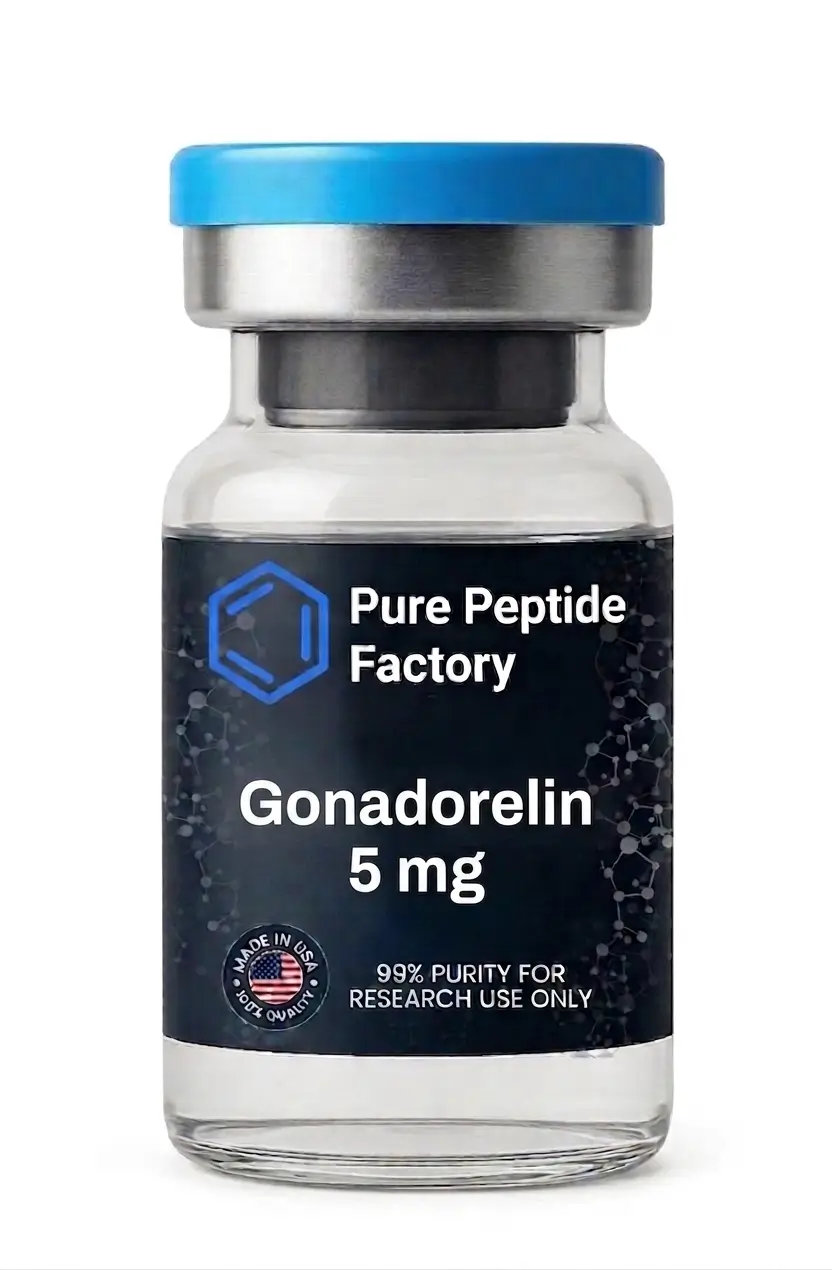
Gonadorelin 5 mg
$40.00 $50.00Price range: $40.00 through $50.00
Gonadorelin peptide for sale, research-grade synthetic GnRH decapeptide (pGlu-His-Trp-Ser-Tyr-Gly-Leu-Arg-Pro-Gly-NH₂) for hypothalamic-pituitary-gonadal axis, LH/FSH pulse dynamics, and reproductive endocrinology studies. 2mg, 5mg vials. Domestic cold-chain shipping, HPLC verified. Research use only.
Gonadorelin Peptide for Sale: Research-Grade GnRH Decapeptide
Researchers studying reproductive endocrinology, hypothalamic-pituitary-gonadal (HPG) axis regulation, or gonadotropin pulse dynamics need a reliable domestic source for gonadorelin. Pure Peptide Factory supplies this research-grade synthetic decapeptide in 2mg and 10mg lyophilized vials with full batch documentation and cold-chain shipping. As the synthetic form of endogenous gonadotropin-releasing hormone (GnRH), gonadorelin is a ten-amino-acid peptide that sits at the apex of the entire reproductive hormone cascade. Specifically, it stimulates the anterior pituitary to release luteinizing hormone (LH) and follicle-stimulating hormone (FSH), which in turn govern gonadal function in both sexes. When researchers find gonadorelin peptide for sale through our domestic supply chain, they receive a precisely characterized compound backed by decades of peer-reviewed research and a unique clinical history as an FDA-approved diagnostic agent (1).
What makes gonadorelin particularly valuable as a research tool is its paradoxical dual pharmacology. When researchers administer the peptide in brief, physiological pulses approximately 90 minutes apart, it faithfully mimics the body’s natural GnRH secretory pattern and stimulates gonadotropin release. However, when researchers administer the same peptide continuously, it suppresses LH and FSH secretion through receptor downregulation on pituitary gonadotrope cells. Consequently, this pulse-pattern dependence means gonadorelin functions as both a stimulatory and an inhibitory research tool depending entirely on how researchers administer it, giving them the ability to study both activation and suppression of the HPG axis using the same molecular compound (2). Furthermore, no other peptide in the reproductive endocrinology field offers this bidirectional experimental control, which is why researchers continue to seek gonadorelin peptide for sale despite the availability of newer GnRH analogs.
Why Researchers Choose Pure Peptide Factory for Gonadorelin Peptide for Sale
Documentation for a Clinically Validated Decapeptide
Gonadorelin is a precisely sequenced decapeptide (pGlu-His-Trp-Ser-Tyr-Gly-Leu-Arg-Pro-Gly-NH₂) with a molecular formula of C₅₅H₇₅N₁₇O₁₃ and a molecular weight of 1182.3 g/mol. Researchers prepare it via solid-phase peptide synthesis, and it features both an N-terminal pyroglutamic acid residue and a C-terminal glycinamide. These structural modifications confer resistance to exopeptidase degradation while maintaining full GnRH receptor binding affinity. Every batch we ship includes lot-specific HPLC and mass spectrometry documentation verifying purity (≥98%) and sequence integrity. Therefore, researchers who purchase gonadorelin peptide for sale from our facility can trust that the compound matches the published molecular identity before beginning any HPG axis protocol.
Two SKU Configurations for Pulsatile and Continuous Administration Studies
We stock gonadorelin in 2mg and 10mg lyophilized vials. The 2mg configuration accommodates pilot studies, diagnostic stimulation test models, and acute LH pulse measurement experiments where a single 100 µg dose reliably produces a measurable LH response within 15 to 30 minutes. By contrast, the 10mg format supports extended protocols involving pulsatile pump delivery systems, multi-week spermatogenesis induction studies, and continuous infusion models where sustained receptor downregulation is the experimental endpoint. As a result, researchers who obtain gonadorelin peptide for sale from Pure Peptide Factory can match vial size to protocol design without splitting vials or compromising sterile handling.
Domestic Cold-Chain Integrity
This decapeptide is stable as lyophilized powder but degrades with moisture exposure and temperature excursion after reconstitution. Consequently, we store all inventory under domestic cold-storage conditions at -20°C and ship using phase-change cooling rated for 96-hour protection. Most orders arrive within 1 to 3 business days, protecting peptide integrity from warehouse to laboratory bench.
Compare Against Complementary Reproductive Peptides Without Batch Variables
Many research protocols compare gonadorelin against other HPG-axis modulators such as human chorionic gonadotropin (hCG), Kisspeptin-10, or GnRH analogs including leuprolide and buserelin. Moreover, because we stock the full reproductive endocrinology peptide panel under identical cold-storage conditions, researchers who source gonadorelin peptide for sale alongside these complementary compounds eliminate supplier variability from their comparison data.
Synthesis Logs Archived for 24 Months
Should your IRB or compliance office request chain-of-custody records, we provide them without delay.
What Is Gonadorelin?
The Master Hormone of Reproduction, Synthesized for Research
Gonadorelin is the synthetic form of gonadotropin-releasing hormone (GnRH), also known as luliberin or luteinizing hormone-releasing hormone (LHRH). It is a decapeptide produced via solid-phase peptide synthesis that is chemically identical to the endogenous GnRH secreted by hypothalamic neurons into the hypophyseal portal circulation. GnRH is widely considered the master regulator of reproduction in all mammals. Its pulsatile release from the hypothalamus, occurring at intervals of approximately 90 to 120 minutes, orchestrates the entire downstream cascade of LH, FSH, and gonadal steroid production (2).
Structurally, gonadorelin possesses two features that enhance its stability relative to an unmodified linear peptide. The N-terminal glutamate residue is cyclized to pyroglutamic acid (pGlu), which protects against aminopeptidase degradation. Additionally, the C-terminus exists as a glycinamide rather than a free carboxylic acid, conferring resistance to carboxypeptidase cleavage. These modifications are naturally present in endogenous GnRH and are preserved in the synthetic research peptide. Furthermore, the ten-amino-acid sequence — pGlu-His-Trp-Ser-Tyr-Gly-Leu-Arg-Pro-Gly-NH₂ — has been conserved across mammalian evolution, underscoring the functional importance of each residue for receptor binding and activation (3).
Molecular Profile:
- Sequence: pGlu-His-Trp-Ser-Tyr-Gly-Leu-Arg-Pro-Gly-NH₂ (single-letter: pEHWSYGLRPG-NH₂)
- Molecular Formula: C₅₅H₇₅N₁₇O₁₃
- Molecular Weight: 1182.3 g/mol (free base); 1242.4 g/mol (acetate salt)
- CAS Number: 33515-09-2 (free base); 34973-08-5 (acetate salt)
- Classification: Synthetic decapeptide GnRH receptor agonist
- Synonyms: GnRH, LHRH, Luliberin, Gonadoliberin, LH-RH, Fertagyl, Lutrelef
- FDA Status: FDA-approved diagnostic agent (discontinued for commercial reasons); approved as Lutrelef (pulsatile pump) in Canada and several European countries
- Clinical formulation: Lutrelef 3.2mg/vial (delivered via LutrePulse pump for pulsatile administration)
How Gonadorelin Peptide for Sale Works: The Pulsatile Paradox
GnRHR Signaling: How Gonadorelin Activates the Pituitary
Gonadorelin binds to the gonadotropin-releasing hormone receptor (GnRHR), a Gαq/11-coupled seven-transmembrane receptor expressed on gonadotrope cells of the anterior pituitary. Once bound, it activates phospholipase C (PLC), which cleaves phosphatidylinositol 4,5-bisphosphate (PIP₂) into inositol trisphosphate (IP₃) and diacylglycerol (DAG). Subsequently, IP₃ triggers calcium release from intracellular stores, and the resulting calcium influx drives gonadotropin-containing secretory vesicles to fuse with the plasma membrane, releasing LH and FSH into the systemic circulation (2).
The mechanism of gonadorelin is defined by a single critical variable: pulse frequency. Understanding this pulse-pattern dependence is essential for designing any HPG axis experiment. Researchers who purchase gonadorelin peptide for sale must consider this variable carefully, because the same compound produces opposite effects depending entirely on how it is administered.
Pulsatile Delivery: How the Same Peptide Stimulates the HPG Axis
When researchers deliver gonadorelin in brief pulses separated by approximately 90 minutes, the GnRHR population on gonadotrope cells recovers between pulses. As a result, each subsequent GnRH stimulus produces a fresh wave of LH and FSH secretion. Low-frequency pulses preferentially release FSH, while high-frequency pulses favor LH release in a one-to-one manner. Furthermore, this frequency-encoded signaling is the mechanism by which the hypothalamus differentially regulates gonadal function across the menstrual cycle and in response to physiological demands. For researchers who need gonadorelin peptide for sale for pulsatile stimulation protocols, this natural pulse pattern is the key experimental variable.
Continuous Delivery: How the Same Peptide Suppresses the HPG Axis
However, when researchers deliver gonadorelin continuously rather than in pulses, the GnRHR population is persistently occupied. The receptors are internalized and degraded faster than the cell can synthesize new ones, resulting in receptor downregulation. Consequently, within days, LH and FSH secretion falls to near-zero levels, effectively producing a reversible medical gonadectomy. This desensitization mechanism is the basis for the therapeutic use of long-acting GnRH superagonists like leuprolide in prostate cancer, endometriosis, and central precocious puberty, where sustained GnRHR activation paradoxically suppresses gonadal function (3).
For researchers, this dual pharmacology means gonadorelin serves two entirely different experimental purposes: as a stimulator of the HPG axis when administered in pulses, and as a suppressor when administered continuously. No other peptide in reproductive biology provides this bidirectional experimental control. Researchers who obtain gonadorelin peptide for sale therefore acquire both an agonist and a functional antagonist in a single molecular tool, distinguished only by the pattern of administration.
Gonadorelin vs hCG: Understanding the Critical Difference
The most-searched comparison in the reproductive peptide research space is gonadorelin vs hCG. Both compounds ultimately stimulate testicular testosterone production and ovarian function, but they operate at fundamentally different levels of the HPG axis. Researchers seeking gonadorelin peptide for sale often compare it against hCG, and the choice between them determines the scope of the experimental question you can answer.
Comparing Site of Action: Pituitary vs Gonadal Level
Gonadorelin acts at the pituitary gland through the GnRHR receptor on gonadotrope cells, sitting at the hypothalamic-pituitary level as an upstream, central regulator. hCG, by contrast, acts at the gonads through the LH/CG receptor on Leydig cells and ovarian theca/granulosa cells, operating at a downstream, peripheral level. Consequently, gonadorelin stimulates endogenous pituitary LH secretion when delivered in pulses, while hCG mimics LH directly at the gonadal receptor without affecting pituitary LH output. This fundamental difference means researchers who buy gonadorelin peptide for sale can study the full feedback loop, whereas hCG studies only the end-organ response. Additionally, gonadorelin supports spermatogenesis through endogenous FSH stimulation, whereas hCG primarily drives Leydig cell testosterone production and may require added FSH for complete spermatogenesis.
Why Researchers Choose Gonadorelin Peptide for Sale Over hCG
A key advantage of gonadorelin is that it preserves the endogenous feedback loops that hCG bypasses entirely. Because hCG acts directly at the gonadal level, it can suppress pituitary LH secretion through negative feedback. Pulsatile gonadorelin, however, maintains the full hypothalamic-pituitary-gonadal signaling axis intact (4). Researchers investigating post-cycle recovery of the HPG axis following androgen suppression may find gonadorelin particularly informative because it tests whether the pituitary can respond to hypothalamic input, whereas hCG tests only whether the testes can produce testosterone. Both compounds are stocked in our facility under identical conditions for researchers who need gonadorelin peptide for sale alongside hCG for direct comparison protocols.
| Feature | Gonadorelin (GnRH) | hCG (Human Chorionic Gonadotropin) |
|---|---|---|
| Type | Synthetic decapeptide (10 amino acids) | Naturally occurring glycoprotein (237 amino acids, α + β subunits) |
| Molecular Weight | 1182.3 g/mol | ~36,700 g/mol |
| Site of Action | Pituitary gland (GnRHR on gonadotropes) | Gonads (LH/CG receptor on Leydig cells, ovarian theca/granulosa cells) |
| Level of HPG Axis | Hypothalamic-pituitary level (upstream, central) | Gonadal level (downstream, peripheral) |
| Effect on LH | Stimulates pituitary LH secretion (pulsatile) or suppresses it (continuous) | Mimics LH directly at the gonadal receptor; does not affect pituitary LH output |
| Effect on FSH | Stimulates pituitary FSH secretion | Minimal FSH-like activity; primarily an LH mimetic |
| Spermatogenesis Support | Yes, via endogenous FSH stimulation; induces spermatogenesis in CHH men when delivered pulsatile | Yes, via direct Leydig cell testosterone stimulation; may require added FSH for full spermatogenesis |
| Pulsatile administration required? | Yes. Continuous administration causes receptor downregulation and HPG suppression | No. hCG has a long half-life (~36 hours) and does not require pulsatile delivery |
| Clinical Status | FDA-approved diagnostic (discontinued); Lutrelef approved in Canada/Europe for pulsatile pump use | FDA-approved (Novarel, Ovidrel, Pregnyl) for cryptorchidism, hypogonadotropic hypogonadism, ovulation induction |
| Best for Studying | Central HPG axis function, pituitary responsiveness, pulsatile hormone dynamics, endogenous LH/FSH secretion | Direct gonadal stimulation, Leydig cell function, peripheral testosterone production independent of pituitary |
Gonadorelin vs Kisspeptin-10: Where Each Fits in HPG Axis Research
A second important comparison for researchers seeking gonadorelin peptide for sale is gonadorelin vs kisspeptin. Both are peptides that regulate the HPG axis, but they operate at different hierarchical levels.
Comparing Hypothalamic vs Pituitary Targeting
Kisspeptin-10 stimulates the hypothalamus to release endogenous GnRH through the KISS1R/GPR54 receptor on GnRH neurons, while gonadorelin is the synthetic GnRH itself and acts directly on pituitary gonadotropes. Consequently, kisspeptin tests whether the hypothalamic GnRH neuron population is intact and responsive, whereas gonadorelin tests whether the pituitary can respond once GnRH is present. Furthermore, kisspeptin-10 produces a rapid LH pulse peaking at approximately 45 minutes post-IV, acting entirely through endogenous GnRH release, while gonadorelin produces a faster LH pulse within 15 to 30 minutes through direct GnRHR activation. The two peptides answer complementary questions, and researchers studying the full HPG axis from hypothalamus to gonad often use both in parallel protocols (5). Both peptides are available from our inventory under identical cold-storage conditions for researchers who need gonadorelin peptide for sale alongside kisspeptin for comprehensive HPG axis studies.
| Feature | Gonadorelin (GnRH) | Kisspeptin-10 |
|---|---|---|
| Site of Action | Pituitary gonadotropes (GnRHR) | Hypothalamic GnRH neurons (KISS1R/GPR54) |
| Hierarchical Level | Final common pathway; directly triggers LH/FSH release | Upstream regulator; stimulates endogenous GnRH secretion |
| Endogenous Source | Hypothalamic GnRH neurons | Hypothalamic KISS1 neurons (anteroventral periventricular and arcuate nuclei) |
| Effect on LH | Rapid LH pulse (~15-30 minutes post-IV) | Rapid LH pulse (~45 minutes peak post-IV); acts through GnRH release |
| Clinical Research Status | FDA diagnostic (discontinued); Lutrelef pump in Canada/Europe | Investigational; studied for infertility, TRT alternative, hypoactive sexual desire disorder |
| Best for Studying | Pituitary function, GnRHR pharmacology, pulsatile dynamics, HPG suppression models | Central HPG axis regulation, puberty onset, upstream neuroendocrine control of reproduction |
Buy Gonadorelin Peptide: Research Applications
HPG Axis Pulse Dynamics and Pituitary Function Testing
The primary research application for gonadorelin is the study of pituitary gonadotrope function. A single intravenous or subcutaneous dose of 100 µg reliably produces a measurable LH and FSH response within 15 to 30 minutes in mammalian models. Researchers use this standardized stimulation test to distinguish hypothalamic from pituitary causes of gonadotropin deficiency: if LH rises after gonadorelin administration, the pituitary is functional and the defect lies at the hypothalamic level; if LH fails to rise, the pituitary itself is impaired (1). Researchers who purchase gonadorelin peptide for sale for pituitary function studies can use it as a reliable probe with well-characterized response kinetics across multiple species.
Spermatogenesis and Male Reproductive Function
Pulsatile gonadorelin delivered via subcutaneous pump induces spermatogenesis in men with congenital hypogonadotropic hypogonadism (CHH). A comparative clinical study by Zhang and colleagues (2019) demonstrated that pulsatile gonadorelin pump therapy induced earlier and higher rates of spermatogenesis compared to cyclical hCG/HMG therapy, supporting the concept that physiological GnRH pulsatility produces superior testicular outcomes compared to direct gonadal stimulation (6). Preclinically, researchers study how GnRH pulse frequency regulates spermatogonial stem cell differentiation, Sertoli cell function, and the testicular microenvironment.
Cryptorchidism and Testicular Descent Research
Researchers have studied gonadorelin extensively as a neoadjuvant hormonal treatment in infants with undescended testes. A 2022 randomized controlled trial by Fiala and colleagues, published in the Journal of Pediatric Urology, examined 36 infant boys with unilateral cryptorchidism randomly assigned to receive intranasal gonadorelin stimulation or no hormonal treatment before orchidopexy. The study confirmed that gonadorelin treatment is safe and does not adversely affect penile size, testicular volume, or hormonal levels at the time of surgery, providing researchers with a validated safety reference for pediatric HPG axis intervention studies (7).
Ovulation Induction and Female Reproductive Research
Pulsatile gonadorelin administration via the LutrePulse pump system is approved in Canada and several European countries for ovulation induction in women with hypothalamic amenorrhea. The pulsatile delivery mimics the natural GnRH secretory pattern, inducing follicular development, ovulation, and corpus luteum formation through physiological mechanisms rather than pharmacologic gonadotropin stimulation. Researchers studying ovarian function, folliculogenesis, and neuroendocrine control of the menstrual cycle use gonadorelin to model the endogenous hypothalamic signal that drives reproductive cyclicity.
Continuous Infusion and HPG Axis Suppression Models
When delivered continuously rather than in pulses, gonadorelin causes GnRHR downregulation and suppresses LH and FSH secretion to near-castrate levels within one to two weeks. This reversible suppression model is valuable for researchers studying the effects of gonadal hormone withdrawal on disease processes, including hormone-dependent cancers (prostate, breast, ovarian), endometriosis, and uterine fibroids. The suppression is fully reversible upon cessation of continuous administration, providing a clean experimental model with a built-in recovery phase.
Cancer Cell Biology and GnRHR Expression
Many hormone-dependent cancer cell lines express GnRH receptors, including prostate cancer (LNCaP, PC3), breast cancer (MCF-7, MDA-MB-231), ovarian cancer, and endometrial cancer cells. Gonadorelin serves as a research tool for studying GnRHR signaling in these cell lines, examining how receptor activation or blockade influences cancer cell proliferation, apoptosis, and metastatic behavior. Furthermore, researchers have exploited GnRHR expression on cancer cells for targeted drug delivery, conjugating cytotoxic agents to GnRH analogs to selectively deliver chemotherapy to GnRHR-positive tumors.
Gonadorelin Dosage Reference for Preclinical Research
For laboratory protocols only. We do not provide human dosing recommendations.
| Research Model | Typical Dose | Route | Frequency | Key Finding |
|---|---|---|---|---|
| Single LH pulse measurement (human, diagnostic reference) | 100 µg | Intravenous or subcutaneous | Single bolus | LH peak within 15-30 minutes; distinguishes hypothalamic vs pituitary deficiency |
| Cattle ovulation induction | 50-100 µg | Intramuscular | Single dose | Maximal LH concentration induced at both 50 µg and 100 µg doses |
| Llama ovulation induction | 50 µg gonadorelin acetate | Intramuscular | Single dose | 100% ovulation rate; used as positive control in luteal development studies |
| Male rabbit reproductive study | Gonadorelin (specific dose per protocol) | Intramuscular | Successive injections | Higher sperm volumes observed in first week vs hCG and control groups |
| Miniature pig LH secretion (GnRH agonist analog) | 0.1 mg IM (parenteral); 10 mg enteral | Intramuscular or enteral | Single dose | Both routes stimulated LH secretion; enteral route viable for GnRH analog delivery |
| Rodent HPG suppression model (continuous infusion) | Continuous GnRH analog delivery | Subcutaneous osmotic pump | Continuous (7-14 days) | LH and FSH near-castrate levels within 1-2 weeks; fully reversible |
For researchers designing HPG axis protocols, the published preclinical and clinical literature provides validated dose ranges across multiple species. The single 50 to 100 µg dose consistently produces a robust LH response in mammalian models ranging from llamas to cattle to humans. Pulsatile protocols typically use 5 to 20 µg per pulse delivered every 90 minutes via programmable pump. Continuous suppression protocols require sustained delivery over 7 to 14 days.
How to Reconstitute Gonadorelin Peptide for Sale
Step-by-Step Laboratory Protocol
- Sanitize the vial stopper with 70% isopropyl alcohol.
- Inject sterile bacteriostatic water or sterile saline slowly against the vial wall. The decapeptide is highly soluble; avoid directing the stream at the lyophilized cake to minimize foaming.
- Allow the powder to dissolve without agitation for 1 to 2 minutes.
- Gently swirl until the solution is completely clear and colorless. Do not shake vigorously.
- Verify a clear, colorless solution. Discard if any turbidity or particulate matter remains.
- Label with date and concentration. For pulsatile pump protocols, prepare solution under sterile conditions and load into the pump reservoir immediately.
Concentration Reference
- 2mg vial + 1 mL bacteriostatic water = 2 mg/mL; + 2 mL = 1 mg/mL
- 10mg vial + 1 mL bacteriostatic water = 10 mg/mL; + 2 mL = 5 mg/mL; + 10 mL = 1 mg/mL
For pulsatile pump delivery, a typical working concentration is 100 µg/mL, prepared by reconstituting the 2mg vial with 20 mL of diluent. This produces a solution where each 0.1 mL pulse delivers approximately 10 µg of gonadorelin, which falls within the physiological range for pulsatile GnRH stimulation protocols.
Storage Requirements
- Lyophilized powder: 24 months at -20°C, protected from light and moisture. The powder is hygroscopic; keep the vial sealed until use.
- Reconstituted solution: Research indicates gonadorelin acetate remains stable for at least 45 days when stored at either 24°C or 37°C. However, for laboratory protocols, store at 2 to 8°C and use within 21 to 28 days for best results.
- The pyroglutamic acid N-terminus and glycinamide C-terminus confer significant stability relative to unmodified peptides, giving gonadorelin better shelf-life characteristics than many research peptides.
Gonadorelin Peptide for Sale: Regulatory and Research Context
FDA Approval History and Current Status
Gonadorelin holds a unique place in peptide regulatory history. The FDA approved gonadorelin hydrochloride (brand name Factrel) and gonadorelin acetate (brand name Lutrepulse) as diagnostic agents for evaluating hypothalamic-pituitary-gonadal function. However, the manufacturers subsequently discontinued these products for commercial reasons unrelated to safety or efficacy. In Canada, gonadorelin remains available as Lutrelef (3.2mg/vial), delivered via the LutrePulse pump for pulsatile administration to induce ovulation in women with hypothalamic amenorrhea. Additionally, the peptide is available as a veterinary pharmaceutical (Fertagyl, Cystorelin) for the treatment of ovarian follicular cysts in dairy cattle.
Despite its discontinued US pharmaceutical status, gonadorelin remains legally available for laboratory procurement as a research-grade peptide. Pure Peptide Factory supplies gonadorelin peptide for sale strictly for in vitro and controlled laboratory animal studies. This product is not the FDA-approved diagnostic formulation, and it is not for human use.
Research Use Only
This product is strictly for laboratory research. It is not intended for human consumption, veterinary use, or diagnostic application. You must agree to research-use-only terms at checkout.
Product Specifications
Available Configurations
Gonadorelin is available in 2mg and 10mg lyophilized powder vials. Select your configuration from the product options above.
Quality Verification
- Purity: ≥98% (HPLC verified)
- Identity: Mass spectrometry confirmed against the 1182.3 g/mol molecular weight target with sequence verification
- Endotoxin: Less than 0.1 EU/mL
- Sterility: Verified per USP 71
- Form: White to off-white lyophilized powder (acetate salt)
- Storage: -20°C long-term; 2 to 8°C after reconstitution
- CAS Number: 33515-09-2 (free base); 34973-08-5 (acetate salt)
Current Batch: #PPF-GND-0526
Purity: 98.6%
Download: HPLC Certificate | MS Report
Frequently Asked Questions About Gonadorelin Peptide for Sale
Where can I find gonadorelin peptide for sale for my research?
Pure Peptide Factory supplies research-grade gonadorelin domestically in 2mg and 10mg vials. Orders ship same-day with cold-chain packaging and full HPLC/MS documentation. Most arrive within 1 to 3 business days. Researchers who need gonadorelin peptide for sale with guaranteed cold-chain integrity rely on our domestic supply chain.
What is gonadorelin used for in research?
Researchers use gonadorelin to study HPG axis pulse dynamics, pituitary gonadotrope function (LH/FSH secretion), spermatogenesis induction, cryptorchidism models, ovulation induction, continuous-infusion HPG suppression models, GnRHR signaling in cancer cell lines, and the neuroendocrine control of reproduction.
How does gonadorelin compare to hCG?
Gonadorelin acts at the pituitary level to stimulate endogenous LH and FSH release, while hCG acts directly at the gonadal level as an LH mimetic. Gonadorelin preserves the body’s natural feedback loops; hCG bypasses them. See the full comparison table above. Researchers seeking gonadorelin peptide for sale should consider which level of the HPG axis their protocol targets.
How does gonadorelin compare to Kisspeptin-10?
Kisspeptin-10 stimulates the hypothalamus to release endogenous GnRH. Gonadorelin is the synthetic GnRH itself and acts directly on the pituitary. Kisspeptin tests hypothalamic function; gonadorelin tests pituitary function. These are complementary, not competing, research tools.
What is the gonadorelin dosage for preclinical research?
Single-bolus studies in mammals typically use 50 to 100 µg administered intravenously or intramuscularly, producing a measurable LH peak within 15 to 30 minutes. Pulsatile protocols use 5 to 20 µg per pulse delivered every 90 minutes. Continuous suppression protocols require sustained delivery over 7 to 14 days. Refer to the dosage table above for model-specific details. Researchers who purchase gonadorelin peptide for sale can use the 2mg vial for acute studies and the 10mg vial for extended protocols.
Why does continuous gonadorelin suppress LH while pulsatile gonadorelin stimulates it?
Pulsatile delivery allows GnRH receptors on pituitary gonadotrope cells to recover between pulses, maintaining responsiveness. Continuous delivery causes persistent receptor occupancy, leading to GnRHR internalization and downregulation. Within one to two weeks of continuous exposure, LH and FSH secretion falls to near-zero levels. This effect is reversible upon cessation. Researchers who obtain gonadorelin peptide for sale can exploit this paradox to design both stimulation and suppression experiments with the same compound.
Is gonadorelin FDA approved?
Gonadorelin was previously FDA-approved as a diagnostic agent (Factrel, Lutrepulse), but the manufacturers discontinued both products for commercial reasons unrelated to safety. It remains approved as Lutrelef in Canada and several European countries for pulsatile ovulation induction. Our product is research-grade and intended exclusively for laboratory use.
How should I store gonadorelin after reconstitution?
Store the reconstituted solution at 2 to 8°C and use within 21 to 28 days. Research indicates gonadorelin acetate is stable for at least 45 days at room temperature (24°C) or body temperature (37°C) in solution, but refrigeration is recommended for laboratory protocols. The pyroglutamic acid N-terminus and glycinamide C-terminus provide above-average peptide stability.
Can gonadorelin be used with other peptides in research?
Yes. Many researchers compare gonadorelin against hCG, Kisspeptin-10, and GnRH analogs such as leuprolide acetate. Combination protocols studying HPG axis recovery may pair gonadorelin with exogenous gonadotropins or steroid hormones. Pure Peptide Factory stocks the full reproductive endocrinology peptide panel under identical conditions for researchers who need gonadorelin peptide for sale alongside complementary compounds.
What is the significance of the pyroglutamic acid modification?
The N-terminal pyroglutamic acid (pGlu) residue is a cyclized form of glutamic acid that protects the peptide from degradation by aminopeptidases. Combined with the C-terminal glycinamide, these terminal modifications are naturally present in endogenous GnRH and give the synthetic peptide significantly greater stability than unmodified linear peptides of similar length.
Buy Gonadorelin Peptide for Your Research
Secure Checkout
- Credit card, cryptocurrency, or wire transfer
- Same-day dispatch for orders placed before 2 PM EST
- Cold-chain packaging with phase-change cooling
- Discreet labeling with full tracking
Institutional Accounts
Net-30 terms and purchase order acceptance available for universities and research institutions. Contact us for bulk pricing on 50 vials or more, including matched orders alongside hCG, Kisspeptin-10, leuprolide, and other reproductive endocrinology research compounds. Researchers who need gonadorelin peptide for sale in bulk for extended HPG axis studies can take advantage of our institutional pricing program.
Related products
-
MT-1 (Melanotan I) 10 mg
$50.00 -
MT-2 (Melanotan 2) 10 mg
$50.00