Triptorelin
$45.00
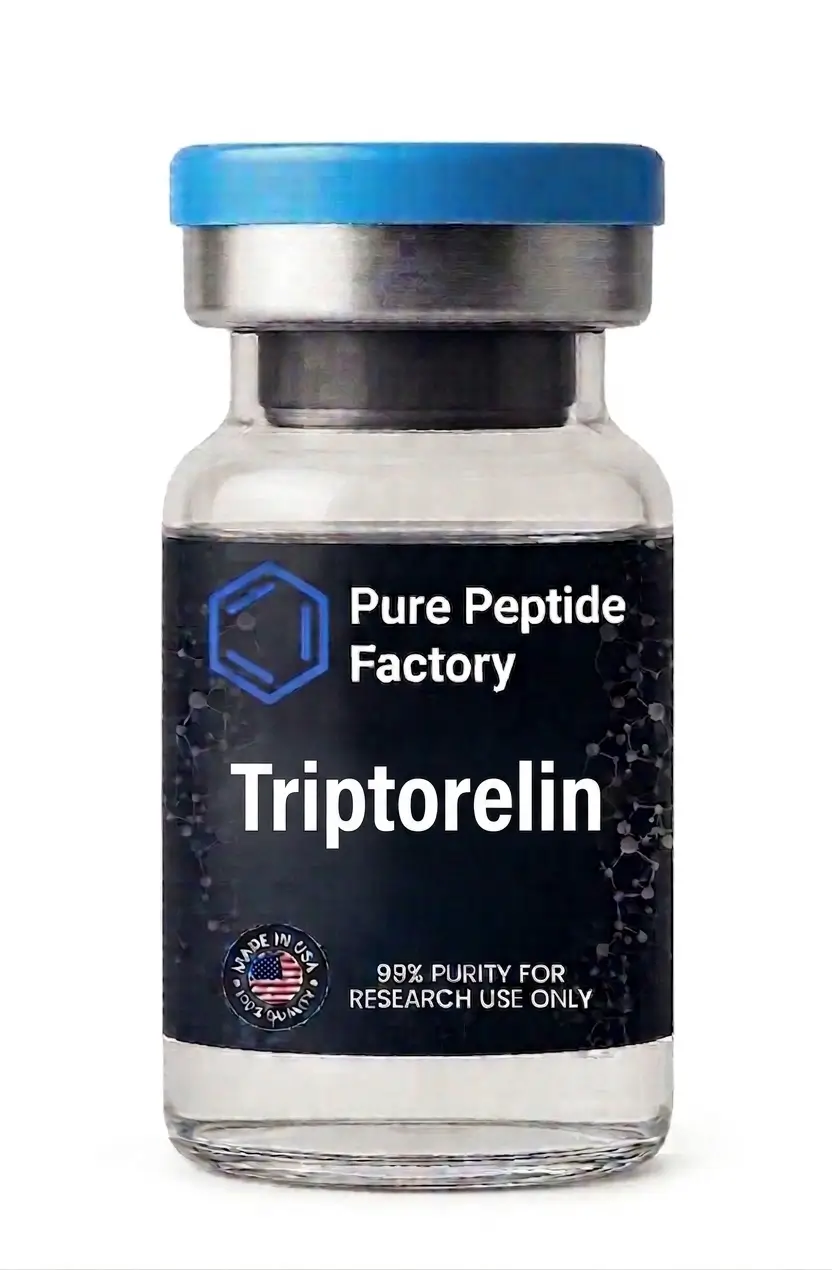
Pure Peptide Factory is a domestic research-grade Triptorelin supplier. This synthetic decapeptide GnRH agonist (Pyr-His-Trp-Ser-Tyr-D-Trp-Leu-Arg-Pro-Gly-NH2) is one of the most clinically validated peptides in endocrinology, with FDA-approved clinical use as Trelstar and Decapeptyl for prostate cancer and central precocious puberty. Research-grade Triptorelin acetate, HPLC verified at 98% minimum purity, batch-specific COA available before purchase. Studied in HPG axis research, reproductive endocrinology, and androgen deprivation models. Domestic cold-chain shipping. 2mg vials. Research use only.
Triptorelin Manufacturers: Research-Grade GnRH Decapeptide with Domestic Supply
When research institutions search for triptorelin manufacturers, the options fall into three categories: pharmaceutical API producers (who sell kilogram quantities to clinical formulators), clinical drug manufacturers like Ipsen (who produce Trelstar and Decapeptyl for prescription distribution), and research-grade peptide suppliers. Pure Peptide Factory is the third category. We synthesize and stock research-grade Triptorelin acetate domestically, provide batch-specific HPLC documentation with every order, and ship in cold-chain packaging to research labs across the United States.
If you are a reproductive endocrinology lab, a pharmacology research group studying the HPG axis, or an institution investigating GnRH agonist biology, this page covers what you need: the molecular profile, the mechanism, the research applications with current literature, and the sourcing information that makes triptorelin a reliable tool for your protocols.
Why Researchers Choose Pure Peptide Factory as Their Triptorelin Supplier
Research-Grade Synthesis with Institutional Documentation
Triptorelin is a 10-amino-acid peptide with a D-tryptophan modification at position 6 that extends its half-life and receptor binding affinity compared to native GnRH. Correctly synthesizing that D-amino acid requires proper stereochemical control, and confirming it requires mass spectrometry. Every batch we ship includes a lot-specific HPLC chromatogram and MS report verifying the 1311.47 g/mol target molecular weight, with the Certificate of Analysis downloadable before your order ships.
- Domestic Cold-Chain Shipping : Triptorelin is stable as a lyophilized powder but sensitive to heat and humidity once reconstituted. We ship from domestic cold-storage using phase-change cooling packs rated for 96-hour protection. Most orders reach your lab within 1 to 3 business days.
- Single-Size Research Configuration : We stock Triptorelin in 2mg vials, the standard research configuration used across published preclinical and translational protocols. This matches the vial size used in most comparative rodent studies and institutional research programs.
- Synthesis Logs Archived for 24 Months : Every batch is documented and archived. If your IRB or compliance office requests chain-of-custody records, synthesis documentation, or retention samples for validation, they are available on request.
What Is Triptorelin?
A Synthetic GnRH Decapeptide
Triptorelin is a synthetic analog of gonadotropin-releasing hormone (GnRH, also called LHRH). Native GnRH is a 10-amino-acid hypothalamic peptide that controls the anterior pituitary’s release of luteinizing hormone (LH) and follicle-stimulating hormone (FSH). Native GnRH has a very short plasma half-life (2 to 4 minutes) because position 6 glycine is rapidly cleaved. Triptorelin replaces that glycine with D-tryptophan, which blocks enzymatic cleavage and extends the functional half-life to approximately 7 to 8 hours in depot formulations.
This structural modification produces a GnRH agonist that binds and activates the pituitary GnRH receptor with higher potency than the native hormone and remains bound long enough to produce sustained receptor effects. Over time, sustained exposure leads to GnRH receptor downregulation and desensitization, which is the mechanism underlying its clinical use for androgen and estrogen suppression.
Molecular Profile:
- Sequence: Pyr-His-Trp-Ser-Tyr-D-Trp-Leu-Arg-Pro-Gly-NH2
- Molecular Formula: C64H82N18O13
- Molecular Weight: 1311.47 g/mol
- CAS: 57773-63-4 (free base); 140194-24-7 (acetate); 124508-66-3 (pamoate)
- Synonyms: TRP(6)-LHRH, Trelstar, Decapeptyl, Gonapeptyl, Pamorelin, Salvacyl
How Triptorelin Works: The Biphasic Mechanism
Triptorelin produces a biphasic response at the GnRH receptor that is central to how the compound is used in research:
Phase 1 — Acute Stimulation (Days 1 to 14): Initial Triptorelin exposure activates pituitary GnRH receptors, triggering acute release of LH and FSH. In male research models, this produces a 50 to 100% testosterone surge within 3 to 7 days. In female models, it produces an initial estradiol rise. This acute stimulation phase is why research protocols examining GnRH-dependent tissue responses use Triptorelin for controlled activation rather than inhibition.
Phase 2 — Receptor Desensitization (Weeks 2 to 4): Sustained Triptorelin exposure causes GnRH receptor internalization and downregulation. LH and FSH secretion falls to pre-pubertal levels. Testosterone drops to castrate levels (<50 ng/dL) in male models. Estradiol falls to postmenopausal levels in female models. This chemical castration effect is reversible on compound discontinuation in most models.
The therapeutic applications in prostate cancer, endometriosis, and central precocious puberty all depend on the Phase 2 suppression, but the Phase 1 stimulation is what makes Triptorelin a useful research tool for HPG axis activation studies, stimulation testing, and diagnostic protocols.
Triptorelin Acetate vs Triptorelin Pamoate: Why the Salt Form Matters
Research vendors and manufacturer listings distinguish between triptorelin acetate and triptorelin pamoate. The active peptide is identical in both. The difference is the counter-ion salt, which changes pharmacokinetics significantly:
| Feature | Triptorelin Acetate | Triptorelin Pamoate |
|---|---|---|
| Counter-ion | Acetate | Pamoate (embonate) |
| Water solubility | Readily soluble | Poorly soluble |
| Typical formulation | Immediate-release injectable | Depot/sustained-release |
| Clinical example | Decapeptyl 0.1mg daily | Trelstar 3.75mg monthly, 11.25mg quarterly, 22.5mg biannual |
| Duration of action | Hours | Weeks to months |
| Research use | Acute stimulation studies, pharmacokinetic research | Chronic suppression models, depot formulation research |
Our research-grade product is Triptorelin acetate, which matches the water-soluble form used in most preclinical research protocols. Researchers studying depot formulations typically work with triptorelin pamoate produced to commercial pharmaceutical specifications rather than research-grade material, because the depot formulation chemistry requires specialized microsphere encapsulation.
Triptorelin Research Applications
Central Precocious Puberty Research
Triptorelin’s largest recent research literature is in central precocious puberty (CPP). The Yu et al. Phase 3 trial (Advances in Therapy, 2024) evaluated the 6-month prolonged-release formulation (22.5mg pamoate) in Chinese children with CPP. At month 6, 100% of patients achieved luteinizing hormone suppression (stimulated peak LH ≤ 5 IU/L after GnRH stimulation). At month 12, 98.5% maintained suppression. This built on the earlier Carel et al. (European Journal of Endocrinology, 2006) work on the 3-month depot formulation.
The 2026 Frontiers in Pediatrics retrospective cohort (70 Chinese girls) compared quarterly (15mg every 90 days) versus monthly (3.75mg every 28 days) Triptorelin regimens. Both achieved equivalent LH suppression (0.30 ± 0.19 vs 0.30 ± 0.26 IU/L at 12 months) with comparable bone age and predicted adult height outcomes. This is meaningful for research design because it suggests reduced injection frequency does not compromise HPG axis suppression endpoints.
Cavarzere et al. (Endocrine, 2025) examined the diagnostic utility of the Triptorelin stimulation test compared to the standard GnRH stimulation test in children with suspected idiopathic CPP, supporting Triptorelin’s use as a diagnostic reagent in addition to a therapeutic agent.
Research endpoints in CPP protocols include:
- Stimulated peak LH after GnRH or Triptorelin challenge
- Bone age progression measured by TW3 method
- Predicted adult height calculations
- Uterine and ovarian volume assessment by pelvic ultrasound
- LH/FSH ratio and basal hormone profiles
Prostate Cancer and Androgen Deprivation Research
Triptorelin was one of the earliest GnRH agonists evaluated for prostate cancer androgen deprivation therapy. Merseburger and Hupe (Advances in Therapy, 2016) provided the comprehensive update on Triptorelin’s role, documenting 10-year prostate cancer-specific mortality under 5% in hormone-sensitive early-stage populations. Hachi et al. (Progrès en Urologie, 2018) reported reduction of lower urinary tract symptoms from approximately 54% to 12% in advanced prostate cancer models exposed to Triptorelin.
Research programs using Triptorelin in prostate cancer models examine:
- Androgen receptor signaling in LNCaP, 22Rv1, and PC-3 cell lines
- Bicalutamide combination protocols for flare protection during the Phase 1 stimulation
- Castration-resistant prostate cancer progression under sustained GnRH suppression
- Radiation therapy combined with androgen deprivation
Breast Cancer and Ovarian Function Suppression Research
The HOBOE Phase 3 trial (Perrone et al., European Journal of Cancer, 2019) evaluated Triptorelin for ovarian function suppression in premenopausal hormone-receptor-positive early breast cancer. Compared to tamoxifen alone, Triptorelin plus zoledronic acid plus letrozole significantly improved disease-free survival, though with increased toxicity. Frampton (Drugs, 2017) reviewed Triptorelin’s broader role as adjuvant anticancer therapy in early breast cancer.
Research applications include MCF-7 and T47D breast cancer cell line work, estrogen receptor signaling under GnRH suppression, combination protocols with aromatase inhibitors, and bone density protection research using concurrent bisphosphonate exposure.
Endometriosis Research
Triptorelin produces the estrogen suppression that drives endometriosis lesion regression. Research examines depot formulation protocols for sustained estradiol suppression, add-back therapy designs using low-dose estrogen replacement to manage hypoestrogenic effects, pre-surgical Triptorelin exposure for lesion size reduction before laparoscopic intervention, and fertility outcomes following post-surgical Triptorelin protocols.
HPG Axis Research and Stimulation Testing
Triptorelin is used as a diagnostic reagent in HPG axis research because the acute Phase 1 stimulation produces a reproducible LH and FSH surge that can be quantified. Research applications include:
- HPG axis reactivation studies following prolonged suppression
- Stimulation testing for differentiating central from peripheral causes of precocious puberty
- Comparative pharmacology studies examining pulsatile versus sustained GnRH receptor activation
- Post-anabolic-steroid HPG axis recovery research models
The biphasic mechanism makes Triptorelin uniquely useful for studying both activation and suppression of the same axis with a single compound, which is why it appears in protocols where other GnRH analogs would require separate stimulation and suppression agents.
Thymic and Immune System Research
An underexamined research area is Triptorelin’s effect on age-related thymic involution. Published murine data suggests chronic GnRH agonist exposure can partially restore thymic mass, reorganize cortical and medullary structure, and improve thymocyte proliferative response to mitogens in aged animals. Research in this area examines whether GnRH agonist protocols can be used alongside other immunomodulatory compounds to examine thymic rejuvenation mechanisms beyond the classical reproductive endocrine axis.
Triptorelin vs Leuprolide vs Goserelin: GnRH Agonist Comparison
The three most widely used GnRH agonists in research and clinical applications differ in structure, pharmacokinetics, and formulation options:
| Feature | Triptorelin | Leuprolide | Goserelin |
|---|---|---|---|
| Structure | D-Trp at position 6 | D-Leu at position 6 | D-Ser(tBu) at position 6, azaGly at position 10 |
| Brand names | Trelstar, Decapeptyl | Lupron, Eligard | Zoladex |
| Native analog position 6 change | Gly → D-Trp | Gly → D-Leu | Gly → D-Ser(tBu) |
| Receptor binding affinity | High | High | High |
| Depot formulations | 1, 3, 6-month | 1, 3, 4, 6-month | 1, 3-month implants |
| Research availability | Readily available as acetate | Readily available | Less common as research compound |
| Cost for equivalent research | Typically lowest | Mid-range | Higher |
Research comparing Triptorelin vs leuprolide in head-to-head CPP trials has generally shown comparable LH and FSH suppression at equivalent molar doses. Researchers selecting between them often choose based on formulation availability and cost rather than mechanistic differences. Studies examining subtle receptor binding kinetics differences (e.g., desensitization rates) represent a specific research niche where the structural distinctions matter.
Triptorelin Dosage Chart: Published Research Protocols
Published research dosing varies significantly by model, endpoint, and formulation:
| Model | Dose | Route | Frequency | Research Context |
|---|---|---|---|---|
| Mice (HPG axis) | 0.1 to 1 mg/kg | Subcutaneous | Single or repeated | Stimulation/suppression research |
| Rats (CPP/reproductive) | 0.5 to 5 mg/kg | Subcutaneous or intraperitoneal | Daily or depot | Pubertal endocrinology |
| Clinical CPP (daily) | 0.1 mg | Subcutaneous | Daily | Early research formulation |
| Clinical CPP (monthly depot) | 3.75 mg pamoate | Intramuscular | Every 28 days | Standard protocol |
| Clinical CPP (quarterly depot) | 11.25 mg pamoate | Intramuscular | Every 90 days | Extended-interval option |
| Clinical CPP (6-month depot) | 22.5 mg pamoate | Intramuscular | Every 180 days | Most recent formulation (Yu 2024) |
| Prostate cancer (monthly) | 3.75 mg pamoate | Intramuscular | Every 28 days | Standard ADT |
| Prostate cancer (quarterly) | 11.25 mg pamoate | Intramuscular | Every 90 days | Extended ADT |
| Stimulation testing | 0.1 mg acetate | Subcutaneous | Single | HPG diagnostic |
The large dose differences between acetate (daily) and pamoate (depot) formulations reflect the pharmacokinetic differences between the salt forms, not differences in potency. The depot formulations use significantly higher absolute doses because the compound is released slowly over weeks to months from polymer microspheres.
We do not provide human dosing recommendations. Triptorelin is a prescription medication in the FDA-approved context. Research-grade material is sold for laboratory research only. The dosing references above are synthesized from peer-reviewed publications for protocol design context.
Triptorelin for Sale: Buying and Regulatory Context
FDA Approval Status
Triptorelin is FDA approved as Trelstar (triptorelin pamoate, Allergan/Verity Pharmaceuticals) for advanced prostate cancer in men. Outside the US, it is approved under various brand names including Decapeptyl, Gonapeptyl, Pamorelin, and Diphereline for prostate cancer, central precocious puberty, endometriosis, uterine fibroids, and female infertility treatment protocols (IVF pituitary suppression).
Research-grade Triptorelin is a separate category. It is available for laboratory procurement under research-use-only terms without a prescription. This compound is not for human consumption, veterinary use, or diagnostic application. You must agree to research-use terms at checkout.
Triptorelin API and Manufacturing Context
When institutional researchers search for triptorelin API (active pharmaceutical ingredient) or triptorelin manufacturers, they are often evaluating whether to source through pharmaceutical API channels (kilogram quantities for formulation) or research-grade peptide suppliers (milligram to gram quantities for laboratory use). These are different supply chains with different documentation requirements.
Pharmaceutical API sourcing typically requires cGMP documentation, DMF filings, and audit trails for eventual human-use formulation. Research-grade peptide sourcing requires HPLC purity verification, mass spectrometry identity confirmation, and chain-of-custody documentation for reproducible laboratory research. Our supply chain is the second category. If you are sourcing for clinical manufacturing or human-use formulation, you need a pharmaceutical API supplier. If you are sourcing for laboratory research, institutional protocols, or preclinical studies, our research-grade material is the appropriate option.
How to Reconstitute Triptorelin
Step-by-Step Laboratory Protocol
- Sanitize the vial stopper with 70% isopropyl alcohol
- Inject bacteriostatic water slowly against the vial wall. Do not aim directly at the lyophilized cake
- Allow the cake to dissolve without agitation for 2 to 3 minutes
- Gently swirl until the solution is clear. Do not shake
- Inspect for clarity before use. Label with date and concentration
Concentration reference:
- 2mg vial + 1mL water = 2mg/mL
- 2mg vial + 2mL water = 1mg/mL
- 2mg vial + 4mL water = 0.5mg/mL
- Scale to the concentration your protocol requires
Storage Requirements
- Lyophilized powder: 24 months at -20°C, protected from light
- Reconstituted solution: 7 to 14 days at 2 to 8°C. Do not freeze reconstituted Triptorelin
- The N-terminal pyroglutamate residue is stable across a broad pH range, but avoid strongly alkaline conditions above pH 9
- Protect from light at all stages
Product Specifications
Available Configuration
Triptorelin is available in 2mg vials. Select your quantity from the product options above.
H3: Quality Verification
- Purity: 98% minimum (HPLC verified)
- Identity: Mass spectrometry confirmed against the 1311.47 g/mol target, with D-Trp stereochemistry confirmed
- Endotoxin: Less than 0.1 EU/mL
- Sterility: Verified per USP 71
- Form: Lyophilized powder (triptorelin acetate)
- Storage: -20°C long-term, 2 to 8°C short-term after reconstitution
Current Batch: #PPF-TRI-0426 Purity: 98.9% Download: HPLC Certificate | MS Report
FAQ
What is Triptorelin used for in research?
Triptorelin is used in reproductive endocrinology research, central precocious puberty models, prostate and breast cancer androgen/estrogen deprivation studies, endometriosis research, HPG axis stimulation testing, and thymic rejuvenation investigations. It is one of the most clinically validated GnRH agonists with substantial translational research literature.
Who manufactures Triptorelin?
Triptorelin is manufactured as a prescription drug by Ipsen (Decapeptyl, Pamorelin, Diphereline) and distributed in the US as Trelstar by Verity Pharmaceuticals. Research-grade Triptorelin is separately manufactured by peptide synthesis suppliers for laboratory use. Pure Peptide Factory is a domestic research-grade Triptorelin supplier with batch-specific HPLC and mass spectrometry documentation.
Where can I buy Triptorelin for research?
Pure Peptide Factory stocks research-grade Triptorelin acetate in 2mg vials with batch-specific documentation and domestic cold-chain shipping. Most orders arrive within 1 to 3 business days.
What is the difference between Triptorelin acetate and pamoate?
The active peptide is identical. The acetate salt is water-soluble and used in immediate-release and short-duration research applications. The pamoate salt is poorly water-soluble and is used in the monthly, quarterly, and 6-month depot formulations for sustained release over weeks to months. Research-grade material is most commonly supplied as acetate.
How does Triptorelin differ from Leuprolide?
Both are GnRH agonists with position 6 modifications for extended half-life. Triptorelin uses D-tryptophan at position 6. Leuprolide uses D-leucine. Both produce equivalent LH and FSH suppression at comparable molar doses in head-to-head clinical comparisons. Selection between them is typically based on formulation availability and research protocol history rather than mechanistic differences.
How does Triptorelin work at the receptor level?
Triptorelin binds the pituitary GnRH receptor with higher affinity than native GnRH. Initial exposure stimulates LH and FSH release (Phase 1 flare, days 1 to 14). Sustained exposure causes receptor internalization and downregulation, producing suppressed LH, FSH, testosterone, and estradiol to castrate or postmenopausal levels (Phase 2 suppression, weeks 2 onward). The biphasic mechanism is reversible on compound discontinuation in most research models.
What are the published dosages for Triptorelin research?
Rodent models typically use 0.1 to 5 mg/kg subcutaneous or intraperitoneal. Clinical depot formulations include 3.75 mg monthly, 11.25 mg quarterly, and 22.5 mg biannual. Stimulation testing uses 0.1 mg single subcutaneous. See the dosage chart section above for a full model-by-model breakdown with citations.
Is Triptorelin FDA approved?
Triptorelin pamoate is FDA approved as Trelstar for advanced prostate cancer in adult men. Outside the US, it is approved for additional indications including central precocious puberty, endometriosis, and IVF protocols under brand names including Decapeptyl and Pamorelin. Research-grade Triptorelin is a separate category sold for laboratory research only.
What is the difference between Triptorelin and GnRH?
GnRH is the native 10-amino-acid hypothalamic hormone with a plasma half-life of 2 to 4 minutes due to rapid enzymatic cleavage. Triptorelin is a synthetic analog with D-tryptophan substituted at position 6, blocking the primary cleavage site and extending the half-life substantially. Triptorelin also binds the GnRH receptor with higher affinity than the native hormone.
How should Triptorelin be stored?
Lyophilized powder stores at -20°C for up to 24 months protected from light. Reconstituted solution stores at 2 to 8°C for 7 to 14 days. Do not freeze reconstituted solution. Avoid strongly alkaline conditions.
Order Triptorelin for Research
Secure Checkout
- Credit card, cryptocurrency, or wire transfer
- Same-day dispatch for orders placed before 2 PM EST
- Cold-chain packaging with phase-change cooling
- Discreet labeling with full tracking
Institutional Accounts
Net-30 terms and purchase order acceptance available for universities and pharmaceutical companies. Contact us for bulk pricing on 50 vials or more.
Add to cart and get research-grade Triptorelin acetate delivered with the documentation your protocols require.