CJC-1295 (no DAC)
$25.00 $55.00Price range: $25.00 through $55.00
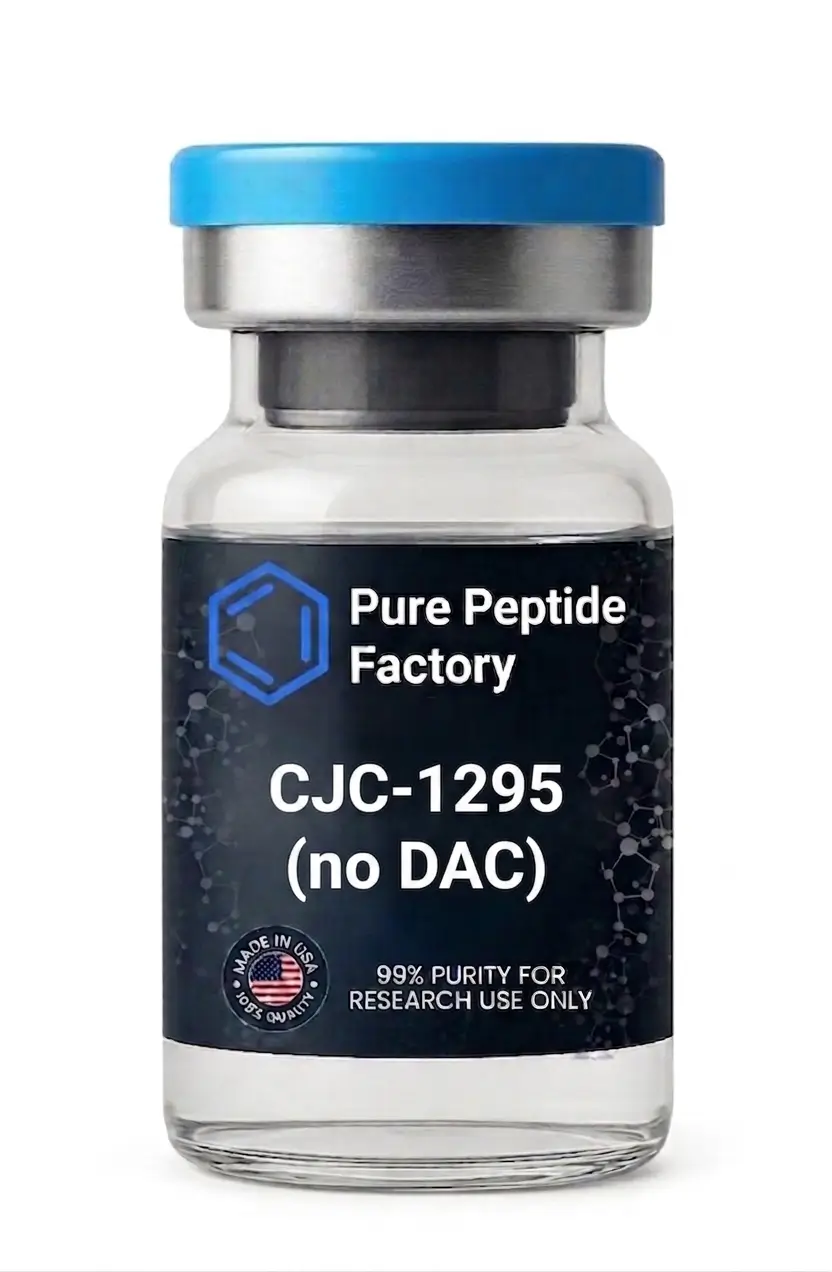
CJC-1295 No DAC peptide for research, Modified GRF(1-29), is a modified growth hormone-releasing hormone analog that stimulates pituitary GH secretion with physiologic pulsatility. The “no DAC” designation means shorter half-life and more natural GH pulse patterns compared to the DAC variant. Available in 2mg, 5mg, and 10mg vials with batch-specific HPLC verification. Domestic cold-chain shipping. Research use only.
CJC-1295 No DAC Peptide for Sale: Research-Grade Mod GRF 1-29
CJC-1295 No DAC, also known as Modified GRF(1-29), is a synthetic 29-amino acid analog of growth hormone-releasing hormone (GHRH). Researchers studying pulsatile GH secretion, pituitary somatotroph function, or dual-agonist GHRH and ghrelin receptor synergy need a reliable domestic source for this compound. Pure Peptide Factory supplies research-grade cjc 1295 no dac peptide in 2mg, 5mg, and 10mg lyophilized vials with full batch documentation and cold-chain integrity. Developed by ConjuChem Technologies in the mid-2000s, this compound features four amino acid substitutions (Tyr1, D-Ala2, Gln8, Leu27) that enhance resistance to dipeptidyl peptidase-IV (DPP-IV) cleavage and improve GHRH receptor binding affinity approximately 10-fold over native GRF(1-29). Without the Drug Affinity Complex (DAC) modification, it maintains a short half-life of approximately 30 minutes, producing discrete GH pulses that more closely mimic natural hypothalamic-pituitary signaling (1).
What distinguishes cjc 1295 no dac peptide from its DAC-conjugated counterpart is the preservation of pulsatile physiology. The DAC version binds serum albumin through a maleimidopropionic acid linker, extending the half-life to 6 to 8 days and producing continuous GH elevation, a non-physiological “GH bleed” that can downregulate GHRH receptors. By contrast, the No DAC variant generates discrete GH pulses lasting 2 to 4 hours, allowing receptor recovery between doses and preserving the negative feedback mechanisms that govern endogenous GH secretion. Consequently, researchers investigating acute GH pulse dynamics, circadian rhythm regulation, or receptor pharmacology select the No DAC form. For long-term metabolic models requiring sustained IGF-1 elevation, the CJC-1295 with DAC version is available from our catalog under identical cold-storage conditions (2).
Why Researchers Buy CJC-1295 No DAC Peptide from Pure Peptide Factory
Documentation for a Defined 29-Amino Acid GHRH Analog
CJC-1295 No DAC peptide is a precisely sequenced 29-amino acid peptide (Tyr-D-Ala-Asp-Ala-Ile-Phe-Thr-Gln-Ser-Tyr-Arg-Lys-Val-Leu-Ala-Gln-Leu-Ser-Ala-Arg-Lys-Leu-Leu-Gln-Asp-Ile-Leu-Ser-Arg-NH₂) with a molecular formula of C₁₅₂H₂₅₂N₄₄O₄₂ and a molecular weight of 3,367.9 g/mol. The four substituted residues are the functional modifications that distinguish it from native GRF(1-29), and incorrect synthesis at any of these positions will produce a compound with reduced receptor affinity and faster proteolytic degradation. Every batch we ship includes lot-specific HPLC and mass spectrometry documentation verifying purity (99.2% on current batch #PPF-CJC-0513) and sequence integrity. Furthermore, the Certificate of Analysis is downloadable before your compound ships. Therefore, researchers who purchase this peptide from our facility can trust the substituted residues are correct before beginning any GHRH receptor or GH pulsatility protocol.
Three SKU Configurations for Protocol Flexibility
We stock this peptide in 2mg, 5mg, and 10mg lyophilized vials. The 2mg configuration accommodates pilot studies, dose-finding protocols, and acute GHRH receptor binding assays. The 5mg format supports standard rodent GH pulsatility studies where 1 to 10 mcg/kg is administered 2 to 3 times daily for 14 to 28 days. Meanwhile, the 10mg size serves extended chronic administration protocols and dual-agonist studies pairing this GHRH analog with Ipamorelin. Consequently, researchers can match vial size to protocol duration without splitting vials or compromising sterile handling. For reconstitution, researchers typically pair this peptide with our bacteriostatic water, also stocked domestically under identical cold-chain conditions.
Domestic Cold-Chain Integrity
This synthetic 29-amino acid peptide remains stable as lyophilized powder but degrades with moisture exposure and temperature excursion after reconstitution. We store all inventory under domestic cold-storage conditions at -20°C and ship using phase-change cooling rated for 96-hour protection. As a result, most orders arrive within 1 to 3 business days, protecting peptide integrity from warehouse to laboratory bench.
Compare Against Complementary GH Axis Peptides Without Batch Variables
Many research protocols compare cjc 1295 no dac peptide against other GH secretagogues such as Ipamorelin (ghrelin receptor agonist), Sermorelin (native GRF 1-29), CJC-1295 with DAC (long-acting GHRH analog), or Tesamorelin (FDA-approved GHRH analog). Because we stock the full GH axis peptide panel under identical cold-storage conditions, researchers who source this peptide alongside these complementary compounds eliminate supplier variability from their cross-compound data.
Synthesis Logs Archived for 24 Months
Should your IRB or compliance office request chain-of-custody records, we provide them without delay.
What Is CJC-1295 No DAC Peptide?
A Modified GHRH Analog Engineered for Enhanced Stability and Receptor Affinity
CJC-1295 No DAC peptide is a synthetic analog of growth hormone-releasing hormone (GHRH), specifically a modified version of the first 29 amino acids of endogenous GHRH, also called GRF 1-29 or sermorelin. The “No DAC” designation distinguishes it from CJC-1295 with DAC, which includes a Drug Affinity Complex that binds to serum albumin and extends the half-life to 6 to 8 days. ConjuChem Technologies developed this compound in the mid-2000s as part of a program to create both short-acting and long-acting GHRH analogs for different research and clinical applications (1).
The Four Structural Modifications: Why Each Matters
The four amino acid substitutions in this peptide are functionally critical and were selected through rational drug design to address specific degradation pathways that limit the utility of native GHRH:
- Tyr1 substitution: Replaces the native histidine at position 1, increasing receptor binding affinity and reducing susceptibility to N-terminal degradation by aminopeptidases. This single change accounts for a significant portion of the peptide’s improved potency.
- D-Ala2 substitution: Replaces the native alanine with its D-enantiomer, conferring resistance to DPP-IV cleavage. DPP-IV is the primary enzymatic inactivation pathway for GHRH analogs, cleaving the Ala2-Asp3 bond. The D-Ala substitution renders this bond unrecognizable to the enzyme.
- Gln8 substitution: Replaces the native asparagine, preventing deamidation, a spontaneous chemical degradation that occurs during storage and reconstitution. This improves shelf-life and solution stability.
- Leu27 substitution: Replaces the native methionine, eliminating oxidative susceptibility at the sulfur-containing side chain and further extending functional half-life in biological matrices.
Pharmacokinetic Impact of the Modifications
Together, these modifications yield a compound with approximately 10-fold greater GHRH receptor binding affinity than native GRF(1-29) and a 4-fold increase in resistance to plasma proteolysis, while preserving the short, pulsatile pharmacokinetic profile that mimics natural GHRH secretion (2). Moreover, the D-Ala2 substitution specifically blocks the cleavage site that normally inactivates endogenous GHRH within minutes of secretion. As a result, researchers obtain a GHRH analog that produces a measurable, reproducible GH pulse while still clearing rapidly enough to allow multiple discrete pulses within a single experimental day.
Molecular Profile:
- Sequence: Tyr-D-Ala-Asp-Ala-Ile-Phe-Thr-Gln-Ser-Tyr-Arg-Lys-Val-Leu-Ala-Gln-Leu-Ser-Ala-Arg-Lys-Leu-Leu-Gln-Asp-Ile-Leu-Ser-Arg-NH₂
- Molecular Formula: C₁₅₂H₂₅₂N₄₄O₄₂
- Molecular Weight: 3,367.9 g/mol
- CAS Number: 863288-34-0
- Classification: Synthetic 29-amino acid GHRH receptor agonist
- Synonyms: Modified GRF(1-29), Mod GRF 1-29, CJC-1295 without DAC, Tetrasubstituted GRF(1-29)
- Half-Life: Approximately 30 minutes in plasma
- Developer: ConjuChem Biotechnologies (Montreal, Canada)
- Key Feature: Four amino acid substitutions for DPP-IV resistance and enhanced receptor binding
CJC-1295 No DAC Benefits in Research
The documented benefits of cjc 1295 no dac peptide in preclinical and clinical research include:
- Physiologic GH Pulsatility: The short half-life produces discrete, pulsatile GH release that more closely mimics natural hypothalamic-pituitary signaling patterns than long-acting analogs. This preserves negative feedback mechanisms and reduces receptor desensitization risk.
- Precise Timing Control: Researchers can time GH pulses to specific experimental windows such as post-exercise, sleep onset, or fasting states without sustained elevation confounding metabolic readouts.
- Receptor Sensitivity Preservation: Unlike CJC-1295 with DAC, which produces continuous GH elevation and risks GHRH receptor downregulation, the No DAC variant maintains receptor sensitivity over chronic protocols.
- IGF-1 Elevation Without Supraphysiologic Peaks: Produces moderate, physiologic-range IGF-1 increases rather than the sustained supraphysiologic levels seen with DAC-modified compounds.
- Stack Compatibility with Ipamorelin: The pulsatile profile pairs synergistically with GHRPs in dual-agonist protocols, amplifying each GH pulse through complementary GHRH and ghrelin receptor signaling. When both receptors activate simultaneously, the GH pulse amplitude exceeds the sum of either agonist alone (3).
- Established Clinical Framework: As Modified GRF(1-29), this compound has been investigated in human clinical trials for growth hormone deficiency, providing validated dosing and safety reference data.
CJC-1295 No DAC vs DAC: Understanding the Critical Research Distinction
The distinction between these two CJC-1295 variants is the most frequently researched topic in this class. Understanding their pharmacokinetic and mechanistic differences is essential for correct experimental design:
| Feature | CJC-1295 No DAC (Mod GRF 1-29) | CJC-1295 with DAC |
|---|---|---|
| Structure | 29 aa GHRH analog; 4 amino acid substitutions | 29 aa GHRH analog + DAC (maleimidopropionic acid) conjugate |
| Albumin Binding | None (free peptide in circulation) | Strong (DAC binds serum albumin at Cys34) |
| Half-Life | ~30 minutes | ~6 to 8 days |
| Dosing Frequency | 1 to 3 times daily (timed to pulses) | 1 to 2 times weekly |
| GH Release Pattern | Discrete, pulsatile bursts | Continuous, sustained elevation |
| IGF-1 Profile | Moderate, fluctuating increases | Sustained, elevated levels |
| Receptor Desensitization | Low risk (pulsed exposure allows recovery) | Higher risk (continuous activation) |
| Physiologic Fidelity | High (mimics natural GHRH pulsatility) | Low (overrides natural feedback) |
| Research Use Case | Acute GH pulse studies, circadian rhythm, receptor pharmacology | Long-term IGF-1 elevation, tissue repair, metabolic modeling |
Jette et al. (2005) at ConjuChem Biotechnologies characterized the DAC modification, demonstrating that CJC-1295 with DAC produced sustained GH and IGF-1 elevation for 6 to 8 days after a single injection in animal models, whereas the No DAC variant required daily administration to maintain comparable effects. Specifically, the DAC form elevated IGF-1 to approximately 3 times baseline for 9 to 11 days; the No DAC form returned to baseline within 2 to 4 hours per pulse (1). Ionescu and Frohman (2005) further demonstrated that pulsatile GH secretion persists even during continuous stimulation by the long-acting analog, confirming that the pituitary retains some capacity for pulse generation even under DAC-mediated tonic activation. However, the No DAC variant provides a cleaner experimental model for studying endogenous pulse dynamics (2).
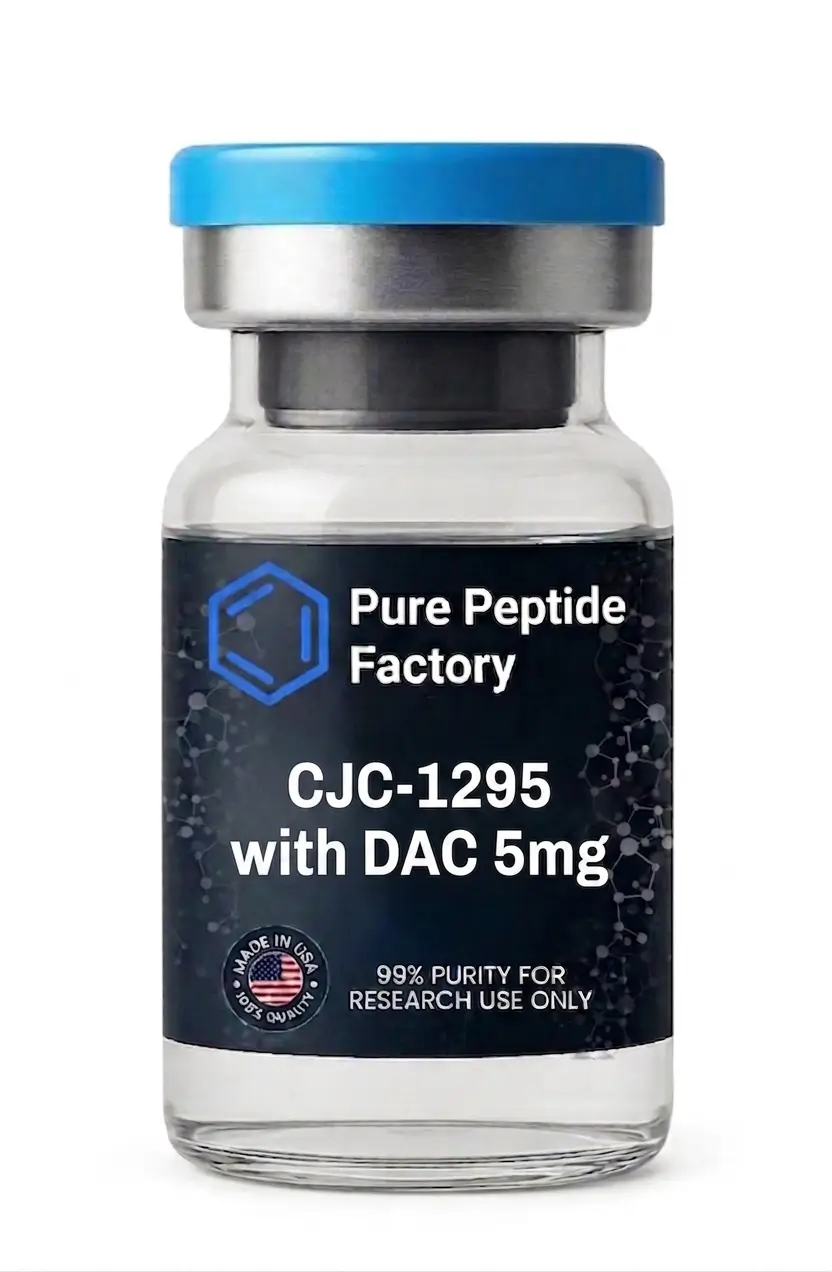
For researchers who need cjc 1295 no dac peptide for acute pulsatility studies, the short half-life is an experimental advantage. For those requiring sustained GH and IGF-1 elevation, our CJC-1295 with DAC product is available under identical cold-storage conditions. Consequently, both forms are stocked domestically for clean comparison protocols.
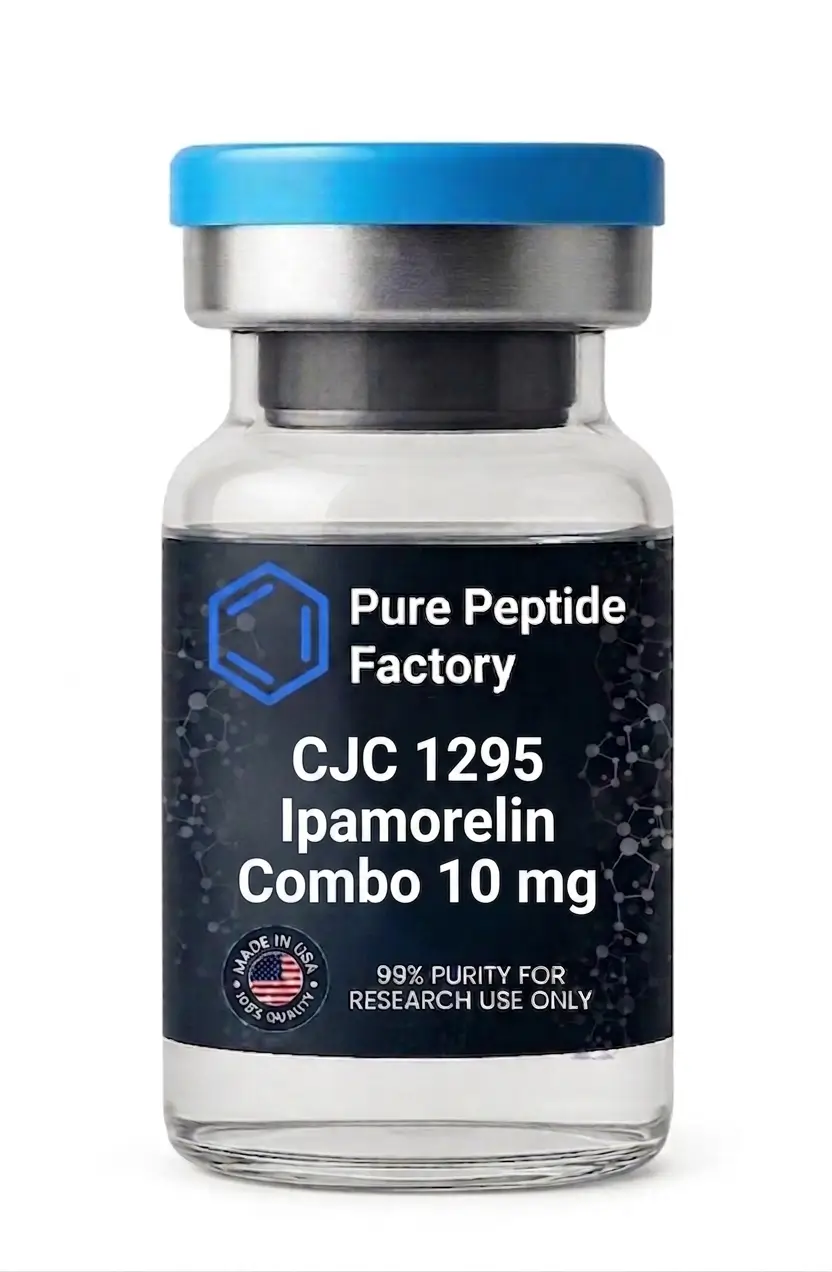
CJC-1295 No DAC and Ipamorelin: Synergistic Dual-Agonist Research
The combination of cjc 1295 no dac peptide with Ipamorelin is among the most studied dual-agonist protocols in growth hormone research. This pairing leverages complementary receptor mechanisms that converge on the pituitary somatotroph cell:
- CJC-1295 No DAC acts as a GHRH receptor agonist, activating adenylyl cyclase and cAMP-dependent signaling pathways. This triggers protein kinase A (PKA) activation and GH vesicle exocytosis through the cAMP/PKA/CREB pathway.
- Ipamorelin acts as a GH secretagogue receptor (GHS-R1a) agonist, activating phospholipase C and calcium-dependent signaling mechanisms through the ghrelin receptor. Notably, Ipamorelin is selective for GH release and does not significantly elevate ACTH, cortisol, prolactin, or aldosterone — a pharmacological profile that distinguishes it from non-selective GHRPs like GHRP-2 and GHRP-6.
The synergistic effect arises because GHRH and ghrelin signaling operate through distinct intracellular pathways (cAMP versus calcium) that converge on GH secretion. When both receptors activate simultaneously, the GH pulse amplitude is greater than the sum of either agonist alone — a true pharmacodynamic synergy rather than simple additive effects. Furthermore, for researchers studying endogenous GH secretion patterns, this combination more closely mimics the natural neuroendocrine architecture, where hypothalamic GHRH neurons and ghrelinergic neurons both contribute to GH pulsatility (3).
CJC-1295 No DAC Dosage Reference for Preclinical Research
For laboratory protocols only. We do not provide human dosing recommendations.
| Study Model | Dose | Route | Frequency | Duration | Key Finding |
|---|---|---|---|---|---|
| Rodent GH pulsatility | 1 to 10 mcg/kg | Subcutaneous or Intraperitoneal | 2 to 3 times daily | 14 to 28 days | Discrete GH pulses; preserved receptor sensitivity |
| Plus Ipamorelin stack (rodent) | 1 mcg/kg CJC + 1 mcg/kg Ipamorelin | Subcutaneous | 2 to 3 times daily | 4 to 8 weeks | Synergistic GH amplitude; amplified pulse height |
| In vitro GHRH receptor binding | 1 to 100 nM | Cell culture | Acute exposure | 30 to 120 minutes | cAMP elevation; PKA activation |
| Sleep and circadian studies | 1 to 2 mcg/kg | Subcutaneous | Before sleep onset | 7 to 14 days | Enhanced slow-wave sleep; preserved cortisol nadir |
In the Jette et al. study, CJC-1295 with DAC elevated GH 2 to 10-fold for up to 6 days and sustained IGF-1 elevation for 9 to 11 days after a single administration. For No DAC protocols, researchers must administer 1 to 3 times daily to achieve comparable cumulative GH exposure. Additionally, the No DAC variant is preferred when experimental design requires discrete, timed GH pulses rather than continuous elevation (1). All three SKU sizes (2mg, 5mg, 10mg) support the dose ranges listed above for rodent protocols.
How to Reconstitute CJC-1295 No DAC Peptide
Step-by-Step Laboratory Protocol
- Sanitize the vial stopper with 70% isopropyl alcohol.
- Using our bacteriostatic water (0.9% benzyl alcohol), inject the sterile diluent slowly against the vial wall. Allow diluent to trickle down; do not force-stream directly at the lyophilized cake.
- Allow the powder to dissolve without agitation for 1 to 2 minutes. The peptide is highly soluble in aqueous solution.
- Gently swirl until the solution is completely clear. Do NOT shake or vortex.
- Inspect for clarity. Discard if turbid or containing particulate matter.
- Label with date, concentration, and store as directed below.
Concentration Reference by SKU
| SKU | Vial Content | Diluent Volume | Concentration | 0.1 mL Aliquot |
|---|---|---|---|---|
| CJC-2MG | 2 mg | 1.0 mL | 2.0 mg/mL | 0.2 mg (200 mcg) |
| CJC-5MG | 5 mg | 2.5 mL | 2.0 mg/mL | 0.2 mg (200 mcg) |
| CJC-10MG | 10 mg | 5.0 mL | 2.0 mg/mL | 0.2 mg (200 mcg) |
Storage Requirements
- Lyophilized powder: 24 months at -20°C, protected from light and moisture.
- Reconstituted solution: 14 to 21 days at 2 to 8°C. Avoid repeated freeze-thaw cycles.
- The four amino acid substitutions (particularly D-Ala2 and Gln8) provide some protection against degradation, but standard peptide storage practices should still be followed.
CJC-1295 No DAC Side Effects in Research
Preclinical and clinical data indicate the following adverse effect profile for cjc 1295 no dac peptide:
- Injection Site Reactions: Erythema, pain, and bruising at subcutaneous injection sites are the most commonly reported adverse effects in clinical studies.
- Transient Flushing: Warmth and redness of the face and upper torso, typically resolving within 15 to 30 minutes post-injection. This is attributed to histamine release and vasodilation.
- Headache: Mild, self-limiting headaches reported in a minority of subjects, likely related to acute GH-induced fluid shifts.
- Water Retention: Mild peripheral edema may occur with chronic administration, reflecting GH’s anti-natriuretic and fluid-retaining properties.
- Receptor Desensitization (No DAC): Low risk compared to DAC variant due to pulsatile exposure and recovery periods between doses.
Product Specifications
Available Configurations
CJC-1295 No DAC peptide is available in 2mg, 5mg, and 10mg lyophilized powder vials. Select your configuration from the product options above.
Quality Verification
- Purity: 99.2% by RP-HPLC (current batch #PPF-CJC-0513)
- Identity: Confirmed by MALDI-TOF mass spectrometry against monoisotopic mass 3,367.9 Da
- Endotoxin: Less than 0.05 EU/µg by LAL assay
- Sterility: Verified per USP 71
- Form: Lyophilized powder
- Storage: -20°C long-term, 2 to 8°C after reconstitution
- CAS Number: 863288-34-0
Current Batch: #PPF-CJC-0513
Purity: 99.2%
Download: HPLC Certificate | Mass Spec Report
Frequently Asked Questions
What is CJC-1295 No DAC used for in research?
Researchers use cjc 1295 no dac peptide to study GHRH receptor pharmacology, growth hormone pulsatility, pituitary somatotroph function, and the neuroendocrine regulation of GH secretion. Moreover, its short half-life makes it ideal for experiments requiring precise timing of GH pulses, circadian rhythm studies, and investigations of receptor sensitivity and desensitization.
How does CJC-1295 No DAC work?
This peptide binds to GHRH receptors on pituitary somatotrophs, activating adenylyl cyclase and increasing intracellular cAMP. This subsequently triggers PKA activation and GH vesicle exocytosis. Additionally, the four amino acid substitutions (Tyr1, D-Ala2, Gln8, Leu27) enhance receptor binding affinity approximately 10-fold and provide 4-fold greater resistance to DPP-IV cleavage compared to native GRF(1-29).
What is the CJC-1295 No DAC half-life?
The plasma half-life is approximately 30 minutes. This short duration is by design — it produces discrete GH pulses that mimic natural hypothalamic GHRH release patterns. The rapid clearance prevents sustained receptor activation and preserves negative feedback mechanisms. For research protocols, this means 1 to 3 daily administrations maintain physiologic GH pulsatility.
What is the difference between CJC-1295 No DAC and with DAC?
The DAC (Drug Affinity Complex) modification binds to serum albumin, extending the half-life from approximately 30 minutes to 6 to 8 days. The DAC form produces continuous GH elevation and sustained IGF-1 increases; by contrast, the No DAC form produces discrete, pulsatile GH bursts that more closely mimic natural physiology. No DAC is preferred for acute timing studies and receptor pharmacology; CJC-1295 with DAC is preferred for long-term metabolic and tissue repair models.
Why combine CJC-1295 No DAC with Ipamorelin?
This peptide activates the GHRH receptor (cAMP pathway) while Ipamorelin activates the ghrelin receptor (calcium pathway). These distinct intracellular signaling cascades converge on GH secretion, producing a synergistic GH pulse greater than either agonist alone. Consequently, this dual-agonist approach more closely mimics the natural neuroendocrine architecture of GH regulation.
Where can I buy CJC-1295 No DAC for research?
Pure Peptide Factory supplies research-grade cjc 1295 no dac peptide domestically in 2mg, 5mg, and 10mg vials with same-day cold-chain shipping. Orders placed before 2 PM EST ship same-day and most arrive within 1 to 3 business days with full HPLC and mass spectrometry documentation.
Is CJC-1295 No DAC safe for research?
Preclinical and limited clinical data indicate this peptide is generally well-tolerated at research doses. Specifically, adverse effects are typically mild and transient (injection site reactions, flushing, headache). The short half-life allows rapid dose adjustment or discontinuation if needed. This compound is prohibited by WADA under Category S2.
How should I store CJC-1295 No DAC after reconstitution?
Store reconstituted solution at 2 to 8°C and use within 14 to 21 days. Avoid repeated freeze-thaw cycles. Reconstitute using our bacteriostatic water for optimal sterility and stability. Furthermore, the D-Ala2 and Gln8 substitutions provide some protection against degradation, but standard cold-storage practices should still be followed.
Can CJC-1295 No DAC be combined with other peptides in research?
Yes. The most extensively studied combination pairs it with Ipamorelin for dual-agonist GH pulsatility studies. Researchers also compare it with Sermorelin (native GRF 1-29), Tesamorelin (FDA-approved GHRH analog), and CJC-1295 with DAC for head-to-head pharmacokinetic studies. All compounds are available from our catalog under identical storage conditions.
Buy CJC-1295 No DAC Peptide for Your Research
Secure Checkout
- Credit card, cryptocurrency, or wire transfer
- Same-day dispatch for orders placed before 2 PM EST
- Cold-chain packaging with phase-change cooling
- Discreet labeling and full tracking
Institutional Accounts
Net-30 terms and purchase orders accepted for universities and research institutions. Contact us for bulk pricing on 50 vials or more, including matched orders alongside Ipamorelin, Sermorelin, CJC-1295 with DAC, Tesamorelin, and bacteriostatic water for comprehensive GH axis research protocols.
Add to cart and get batch-verified CJC-1295 No DAC peptide delivered with the documentation your GHRH receptor pharmacology, GH pulsatility, or dual-agonist synergy research requires.