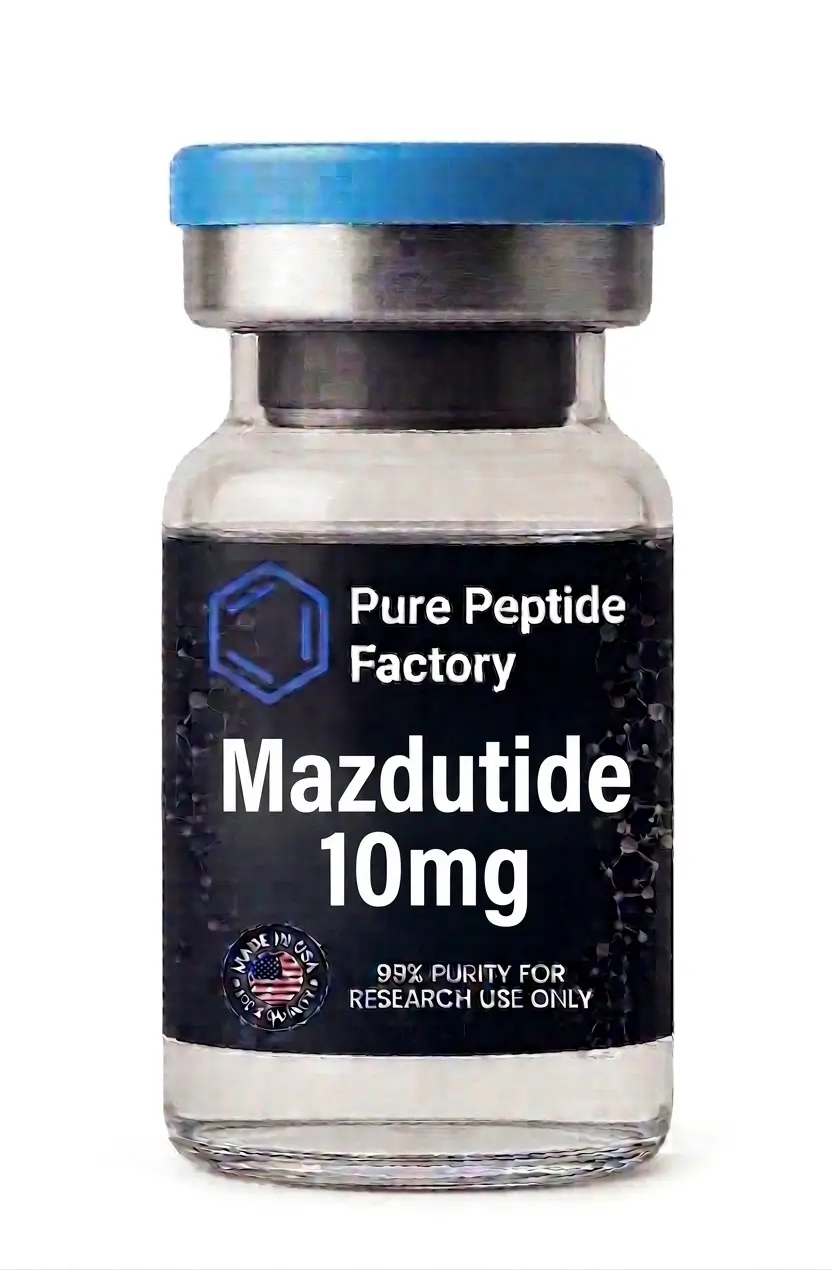
Mazdutide 10 mg
$110.00
Mazdutide peptide for research, a dual GLP-1/glucagon receptor co-agonist (IBI362) for obesity pharmacology, NASH, energy expenditure, and metabolic syndrome studies. 10mg lyophilized vials. HPLC verified at ≥98% purity with mass spectrometry sequence confirmation. Domestic cold-chain shipping. This 33-amino-acid oxyntomodulin analog became the world’s first approved GLP-1/glucagon dual receptor agonist when China’s NMPA approved it in June 2025 for weight management. The GLORY-1 Phase 3 trial published in the New England Journal of Medicine (May 2025) documented 14.84% mean weight reduction at 48 weeks. Research-grade Mazdutide, HPLC verified at 98% minimum purity, batch-specific COA. 10mg vials. Research use only.
Mazdutide Peptide for Sale: Research-Grade Dual GLP-1/Glucagon Agonist
Researchers studying obesity pharmacology, metabolic syndrome, or hepatic steatosis need a reliable domestic source for the dual GLP-1/glucagon receptor agonist mazdutide. Pure Peptide Factory supplies research-grade mazdutide peptide in 10mg lyophilized vials with full batch documentation and cold-chain integrity. Developed through the Innovent Biologics and Eli Lilly partnership under the code IBI362, this co-agonist simultaneously activates appetite-suppressing GLP-1 pathways while stimulating energy expenditure through glucagon receptor signaling. The combination produces superior weight loss and metabolic improvements compared to single-agonist compounds in both preclinical models and the GLORY-1 Phase 2b clinical trial. When you buy mazdutide peptide from our domestic stock, you receive a precisely characterized compound for studying next-generation obesity pharmacology (1).
What distinguishes this co-agonist from other incretin-based research compounds is the glucagon dimension. Tirzepatide combines GLP-1 and GIP receptor activation, driving appetite suppression and insulin sensitization. Retatrutide adds glucagon receptor activity to the GLP-1/GIP pair as a triple agonist. Mazdutide, by contrast, pairs GLP-1 with glucagon directly — omitting GIP entirely. This specific receptor combination makes mazdutide peptide particularly valuable for researchers studying the relative contributions of energy expenditure versus insulin secretion to metabolic outcomes. Furthermore, the GLORY-1 trial demonstrated dose-dependent weight loss of 8.3% to 15.4% over 24 weeks, providing researchers with a validated clinical reference framework for preclinical protocol design (2).
Why Researchers Buy Mazdutide Peptide from Pure Peptide Factory
Documentation for a Conformation-Sensitive Co-Agonist
Mazdutide peptide is a modified exendin-4 derivative engineered with a glucagon receptor targeting domain, a fatty acid side chain for albumin binding, and an optimized linker for extended pharmacokinetics. Its biological activity depends on intact secondary structure across both receptor-binding regions. Oxidized, truncated, or improperly folded material will lose glucagon receptor affinity while potentially retaining GLP-1 activity — producing misleading single-agonist results. Every batch we ship includes lot-specific HPLC and mass spectrometry documentation verifying purity (≥98%) and molecular identity. The Certificate of Analysis is downloadable before your compound ships. Consequently, researchers who purchase this co-agonist from our facility can trust both receptor-binding domains are intact before beginning any metabolic protocol.
10mg Vial Configuration for Extended Metabolic Studies
We stock mazdutide peptide in 10mg lyophilized vials. A standard 10-week murine obesity study using diet-induced obese mice requires approximately 2-4mg per animal at published doses of 10-30 nmol/kg administered 2-3 times weekly. Therefore, the 10mg vial covers 2-3 animals through a complete study cycle with margin for dose-finding and pilot runs. This configuration supports the extended timelines that metabolic endpoint studies demand without splitting vials or placing mid-protocol reorders that introduce batch variability. For reconstitution, researchers typically pair this peptide with our bacteriostatic water, also stocked domestically under identical cold-chain conditions.
Domestic Cold-Chain Integrity for Dual-Receptor Peptides
Improper temperature exposure during transit can induce conformational changes that reduce glucagon receptor affinity while preserving GLP-1 activity — skewing research data toward single-agonist phenotypes. We store all inventory under domestic cold-storage at -20°C and ship using phase-change cooling rated for 96-hour protection. Most orders arrive within 1 to 3 business days, protecting the peptide’s dual-receptor conformation from warehouse to laboratory bench.
Compare Against Complementary Incretin Peptides Without Batch Variables
Many research protocols compare mazdutide peptide against other incretin receptor agonists such as tirzepatide (GLP-1/GIP dual agonist), retatrutide (GLP-1/GIP/glucagon triple agonist), or semaglutide (GLP-1 mono-agonist). Because we stock the full incretin peptide panel under identical cold-storage conditions, researchers who source this co-agonist alongside these complementary compounds eliminate supplier variability from their cross-compound data.
Synthesis Logs Archived for 24 Months
Should your IRB or compliance office request chain-of-custody records, we provide them without delay.
What Is Mazdutide Peptide?
A Dual GLP-1/Glucagon Co-Agonist for Metabolic Research
Mazdutide peptide (development code IBI362) is a synthetic co-agonist peptide designed to simultaneously activate the glucagon-like peptide-1 (GLP-1) receptor and the glucagon receptor. It is a modified exendin-4 derivative incorporating a fatty acid side chain and optimized linker technology that extends the half-life to approximately 5-7 days, enabling once-weekly dosing in clinical protocols. Innovent Biologics and Eli Lilly developed the compound as part of a partnership focused on next-generation metabolic therapeutics, and it received approval in China in 2026 for obesity and type 2 diabetes.
How the Dual Mechanism Produces Synergistic Metabolic Effects
The co-agonist achieves its distinctive profile through coordinated activation of two receptor systems that converge on weight loss through complementary pathways.
First, GLP-1 receptor agonism suppresses appetite and improves glycemic control. Activation of GLP-1 receptors in the hypothalamus and brainstem stimulates POMC neurons while inhibiting NPY/AgRP neurons, producing reduced food intake and increased satiety. Additionally, GLP-1 signaling in pancreatic beta cells enhances glucose-dependent insulin secretion and suppresses glucagon release, improving glycemic control without hypoglycemia risk. This mechanism is shared across the incretin class and represents the foundation upon which the glucagon component builds.
Second, glucagon receptor activation increases energy expenditure and hepatic lipid oxidation. Activation of glucagon receptors in hepatocytes stimulates adenylyl cyclase, increasing cAMP and activating protein kinase A. Consequently, this pathway upregulates fatty acid oxidation, reduces de novo lipogenesis, and increases thermogenesis — effects entirely absent in GLP-1-only compounds. This is the mechanism that distinguishes mazdutide peptide from pure GLP-1 agonists like semaglutide.
Third, the co-agonist design produces synergistic weight loss. GLP-1-mediated appetite reduction creates a caloric deficit while glucagon-mediated energy expenditure increases total daily energy burn. Preclinical data and the GLORY-1 trial both suggest this combination produces significantly greater weight loss than GLP-1 monotherapy at equivalent doses (2). Furthermore, the glucagon component directly reduces hepatic steatosis, making this co-agonist particularly relevant for NASH and hepatic metabolism research.
Molecular Profile:
- Classification: Synthetic dual GLP-1/glucagon receptor co-agonist
- Structure: Modified exendin-4 derivative with glucagon receptor targeting domain
- Key Modifications: Fatty acid side chain for albumin binding; optimized linker for extended half-life
- Half-Life: Approximately 5-7 days (supports once-weekly dosing)
- Synonyms: IBI362, mazdutide co-agonist, GLP-1/glucagon dual agonist
- Developer: Innovent Biologics and Eli Lilly partnership
- Clinical Status: Approved in China (2026) for obesity and type 2 diabetes; not FDA approved
Mazdutide Peptide Research Applications
Obesity and Weight Loss Pharmacology
The primary research application for mazdutide peptide is obesity pharmacology. The GLORY-1 Phase 2b trial demonstrated dose-dependent weight loss ranging from 8.3% to 15.4% over 24 weeks in adults with obesity, with higher doses producing weight loss that exceeded semaglutide 2.4mg in historical comparisons. Weight loss was accompanied by significant reductions in waist circumference, visceral fat area, and body fat percentage. Consequently, researchers studying obesity mechanisms use this co-agonist to dissect the relative contributions of caloric intake reduction versus energy expenditure to total weight loss — a question that single-agonist compounds cannot address (1).
Type 2 Diabetes and Glycemic Control
GLORY-1 participants with type 2 diabetes demonstrated HbA1c reductions of 1.8-2.3% alongside improvements in fasting glucose, postprandial glucose, and HOMA-IR scores. Lipid profiles improved with reductions in triglycerides and non-HDL cholesterol. Furthermore, the glucose-dependent nature of GLP-1-mediated insulin secretion means hypoglycemia risk remains low — a significant advantage for chronic metabolic studies where glucose variability is a confounding variable.
NASH and Hepatic Steatosis Research
The glucagon receptor component makes mazdutide peptide particularly valuable for non-alcoholic steatohepatitis (NASH) research. Specifically, glucagon receptor activation stimulates hepatic fatty acid oxidation and reduces de novo lipogenesis, while GLP-1 signaling attenuates hepatic inflammation and fibrosis pathways. Preclinical models demonstrate that the co-agonist reduces liver fat content, improves NAS scores, and decreases markers of hepatocellular injury. Researchers comparing mazdutide vs tirzepatide for hepatic endpoints often find the glucagon component provides superior liver fat reduction compared to the GIP component, though this is an active area of investigation.
Energy Expenditure and Metabolic Rate Studies
Because glucagon receptor activation directly increases energy expenditure through thermogenic mechanisms, researchers use this co-agonist to study how pharmacological modulation of metabolic rate affects body composition independently of food intake. Pair-feeding controls are essential for these protocols: matching caloric intake between treatment and control groups isolates the energy expenditure contribution from the appetite suppression contribution.
Mazdutide vs Tirzepatide: Research Comparison
Researchers selecting co-agonist compounds frequently compare these two peptides. Because they target different receptor combinations, understanding the distinction is critical for protocol design:
| Feature | Mazdutide (IBI362) | Tirzepatide |
|---|---|---|
| Receptor Targets | GLP-1R + GlucagonR | GLP-1R + GIPR |
| Primary Weight Loss Mechanism | Appetite suppression + increased energy expenditure | Appetite suppression + enhanced insulin sensitivity |
| Hepatic Effects | Increased fatty acid oxidation; reduced steatosis | Improved insulin sensitivity; modest lipid effects |
| Energy Expenditure | Significant increase via glucagon receptor | Neutral to modest increase |
| Clinical Weight Loss (Highest Dose) | 15.4% at 24 weeks (GLORY-1) | 20.9% at 72 weeks (SURMOUNT-1) |
| Approval Status | Approved in China (2026); not FDA approved | FDA approved (Mounjaro/Zepbound, 2022-2023) |
| Best for Studying | Obesity with hyperphagia, NASH, metabolic syndrome with dyslipidemia, energy expenditure | Type 2 diabetes with obesity, insulin resistance, cardiovascular risk |
Researchers studying the relative importance of energy expenditure versus insulin sensitization often incorporate both compounds to isolate mechanism-specific contributions. Both are available from our catalog under identical conditions for direct comparison protocols.
Mazdutide Dosage Reference for Preclinical Research
For laboratory protocols only. We do not provide human dosing recommendations.
| Research Model | Dose | Route | Frequency | Duration | Key Finding |
|---|---|---|---|---|---|
| Murine DIO (diet-induced obesity) | 10-30 nmol/kg | Subcutaneous | 2-3 times weekly | 8-12 weeks | Dose-dependent weight loss; improved glucose tolerance |
| Hepatic steatosis model | 20 nmol/kg | Subcutaneous | Twice weekly | 6 weeks | Reduced liver triglycerides; improved NAS scores |
| In vitro receptor binding | 0.1-100 nM | Cell culture | Acute (30 min – 24h) | Per assay | cAMP accumulation; receptor internalization |
| Human obesity (GLORY-1 reference) | 2mg, 4mg, or 6mg SC weekly | Subcutaneous | Once weekly | 24 weeks | 8.3-15.4% weight loss; HbA1c reduction of 1.8-2.3% |
Concentration Reference for 10mg Vial
| Diluent Volume | Concentration | Volume for 2mg dose | Volume for 4mg dose |
|---|---|---|---|
| 1 mL | 10 mg/mL | 0.2 mL | 0.4 mL |
| 2 mL | 5 mg/mL | 0.4 mL | 0.8 mL |
| 5 mL | 2 mg/mL | 1.0 mL | 2.0 mL |
The 10mg vial configuration supports all preclinical dose ranges listed above for rodent metabolic studies. Researchers who purchase mazdutide peptide should note the compound’s 5-7 day half-life allows twice-weekly dosing in murine models without loss of efficacy between administrations.
How to Reconstitute Mazdutide Peptide
Step-by-Step Laboratory Protocol
- Sanitize the vial stopper with 70% isopropyl alcohol and allow 30 seconds to dry.
- Using our bacteriostatic water or sterile phosphate-buffered saline at pH 7.4, inject the diluent slowly against the vial wall. Avoid acidic vehicles, which can protonate histidine residues critical for receptor binding. Do not aim the stream directly at the lyophilized cake.
- Allow the powder to dissolve without agitation for 2 to 3 minutes. The peptide dissolves readily at concentrations below 5 mg/mL.
- Gently swirl until the solution is completely clear. Do NOT shake or vortex. Vigorous agitation promotes surface adsorption and foaming that reduces effective peptide concentration.
- For concentrations above 5 mg/mL, brief bath sonication at room temperature for 30 seconds disperses any aggregates without denaturing the peptide.
- Inspect for clarity and label with reconstitution date, vehicle, concentration, and lot number.
Storage Requirements
- Lyophilized powder: 24 months at -20°C, protected from light and moisture.
- Reconstituted in PBS: 7 days at 2-8°C under sterile conditions. Do NOT freeze reconstituted solution.
- For extended protocols, aliquot reconstituted solution into single-use volumes to avoid freeze-thaw cycles.
- At low concentrations (below 100 nM), the peptide adsorbs to polypropylene surfaces. Pre-coat tubes with 0.1% BSA or use low-binding labware.
Mazdutide Side Effects in Research Models
Mazdutide peptide exhibits a side effect profile consistent with the GLP-1 receptor agonist class, with additional considerations related to glucagon receptor activation:
- Gastrointestinal Effects: Nausea, vomiting, diarrhea, and decreased appetite occur at higher frequencies in higher dose groups. These are predominantly mild-to-moderate and decrease with continued administration. Researchers should incorporate adaptation periods in chronic studies.
- Heart Rate Elevation: Modest, dose-dependent increases in heart rate occur due to glucagon receptor agonism. Include cardiovascular monitoring in chronic administration protocols.
- Hepatic Enzyme Changes: Transient ALT/AST elevations have been observed in a small subset of clinical trial participants. Include liver function monitoring in extended protocols.
- Hypoglycemia Risk: The glucose-dependent mechanism keeps hypoglycemia risk low, but concomitant administration with insulin secretagogues in research models may potentiate glucose lowering.
- Injection Site Reactions: Mild erythema or induration may occur. Rotate injection sites in repeated-dose animal studies.
Product Specifications
Available Configuration
Mazdutide peptide is available in 10mg lyophilized powder vials. Select your quantity from the product options above.
Quality Verification
- Purity: ≥98% (HPLC verified)
- Identity: Mass spectrometry confirmed sequence identity
- Endotoxin: Less than 0.1 EU/mg
- Sterility: Verified per USP 71
- Form: Lyophilized powder, white to off-white
- Storage: -20°C long-term, 2-8°C short-term after reconstitution
Current Batch: #PPF-MAZ-0526
Purity: 98.7%
Download: HPLC Certificate | MS Report
Frequently Asked Questions
What is mazdutide peptide used for in research?
Researchers use mazdutide peptide to study obesity pharmacology, type 2 diabetes mechanisms, non-alcoholic steatohepatitis (NASH), metabolic syndrome, energy expenditure regulation, and comparative incretin biology. Its dual GLP-1/glucagon receptor agonism makes it uniquely valuable for dissecting the relative contributions of appetite suppression versus increased energy expenditure to weight loss outcomes.
What is the mazdutide dosage in preclinical research?
Published murine studies typically use 10-30 nmol/kg administered subcutaneously 2-3 times weekly for 8-12 weeks. Hepatic steatosis models use 20 nmol/kg twice weekly for 6 weeks. Human clinical reference data from GLORY-1 used 2-6 mg once weekly. All dosing must follow species-specific validation and institutional protocols. We do not provide human dosing recommendations.
How does mazdutide compare to tirzepatide?
Mazdutide peptide activates GLP-1 and glucagon receptors, combining appetite suppression with increased energy expenditure. Tirzepatide activates GLP-1 and GIP receptors, combining appetite suppression with enhanced insulin sensitivity. Mazdutide is preferred for research emphasizing energy expenditure, hepatic lipid oxidation, or NASH; tirzepatide is preferred for research emphasizing insulin secretion and cardiovascular risk. See the full comparison table above.
Where can I buy mazdutide peptide for research?
Pure Peptide Factory supplies research-grade mazdutide peptide domestically in 10mg vials with same-day cold-chain shipping. Orders placed before 2 PM EST ship same-day and most arrive within 1-3 business days with full HPLC and mass spectrometry documentation.
What are the mazdutide side effects in research models?
Side effects are primarily gastrointestinal (nausea, diarrhea, decreased appetite) and dose-dependent, consistent with the GLP-1 receptor agonist class. Additional considerations include modest heart rate elevation, transient hepatic enzyme changes, and injection site reactions. Include appropriate monitoring controls in chronic administration protocols.
Is mazdutide FDA approved?
No. Mazdutide is approved in China (2026) for obesity and type 2 diabetes but is not FDA approved in the United States. Research-grade mazdutide is strictly for laboratory research purposes and is not intended for human consumption.
How should I store mazdutide peptide after reconstitution?
Store reconstituted solution at 2-8°C and use within 7 days. Do not freeze. For extended protocols, aliquot into single-use volumes. Use low-binding labware at concentrations below 100 nM to prevent surface adsorption. Reconstitute using our bacteriostatic water or sterile PBS at pH 7.4.
Can mazdutide be combined with other incretin peptides in research?
Yes. Many researchers compare mazdutide against tirzepatide for GLP-1/glucagon versus GLP-1/GIP comparison, or against retatrutide to isolate the contribution of the GIP receptor component. Combination protocols should include single-agent control arms. All compounds are available from our catalog under identical cold-storage conditions.
Buy Mazdutide Peptide for Your Research
Secure Checkout
- Credit card, cryptocurrency, or wire transfer
- Same-day dispatch for orders placed before 2 PM EST
- Cold-chain packaging with phase-change cooling
- Discreet labeling and full tracking
Institutional Accounts
Net-30 terms and purchase orders accepted for universities and research institutions. Contact us for bulk pricing on 50 vials or more, including matched orders alongside tirzepatide, retatrutide, semaglutide, and bacteriostatic water for comprehensive metabolic research protocols.
Add to cart and get batch-verified mazdutide peptide delivered with the documentation your obesity pharmacology, NASH, or metabolic syndrome research requires.