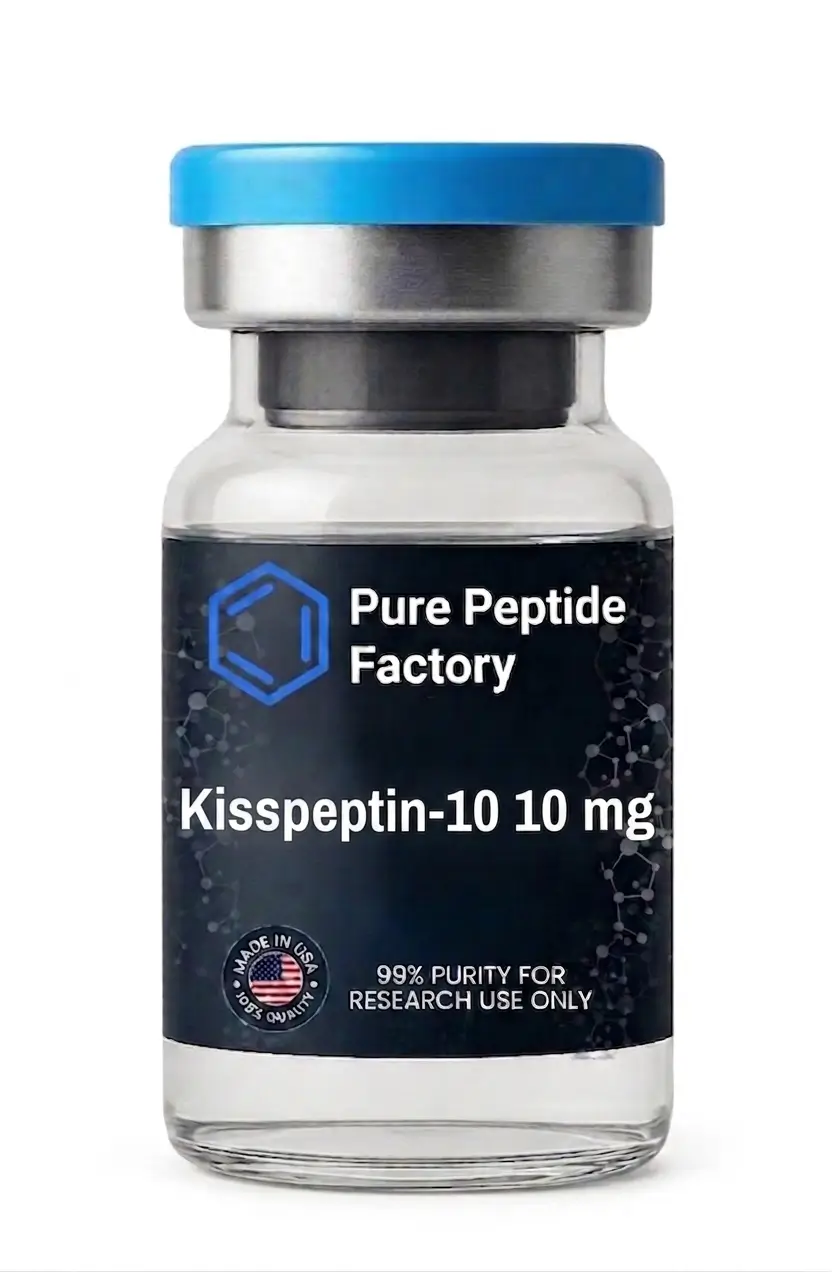
Kisspeptin-10 10 mg
$30.00 $60.00Price range: $30.00 through $60.00
Buy kisspeptin-10 at Pure Peptide Factory in research-grade 5mg and 10mg configurations. Specifically, kisspeptin-10 is the 10-amino-acid C-terminal fragment of the KISS1 gene product that retains full agonist activity at the GPR54/KISS1R receptor. Furthermore, the Waljit Dhillo group at Imperial College London has run multiple Phase 1/2 human trials demonstrating kisspeptin’s role as the upstream regulator of GnRH neurons and HPG axis function. The 2019 NEJM Abbara paper documented dramatically reduced OHSS risk with kisspeptin-54 IVF triggering versus hCG. HPLC verified at 98% minimum purity, batch-specific COA. 5mg and 10mg vials. Research use only.
Buy Kisspeptin-10: The Imperial College Dhillo Group Reproductive Research Peptide
Buy kisspeptin-10 at Pure Peptide Factory and access the 10-amino-acid synthetic peptide that redirected the entire field of reproductive endocrinology. Specifically, when researchers buy kisspeptin-10, they’re working with the C-terminal fragment of the parent kisspeptin protein that Waljit Dhillo’s group at Imperial College London has demonstrated functions as the upstream regulator of the entire hypothalamic-pituitary-gonadal (HPG) axis. Furthermore, the 2019 New England Journal of Medicine paper by Abbara, Clarke, Comninos, and Dhillo documented that kisspeptin-54 triggering during IVF cycles produced dramatically reduced ovarian hyperstimulation syndrome (OHSS) compared to standard hCG triggering, demonstrating clinical translation potential.
For researchers studying GPR54/KISS1R receptor pharmacology, hypothalamic GnRH pulse generator biology, IVF protocol research, hypothalamic amenorrhea, puberty onset mechanisms, or reproductive aging, kisspeptin-10 is the foundational research compound. Pure Peptide Factory stocks research-grade kisspeptin-10 in 5mg and 10mg vials with domestic cold-chain shipping and batch-specific HPLC documentation. When researchers buy kisspeptin-10 for laboratory work, the C-terminal amidation and specific 10-amino-acid sequence (Tyr-Asn-Trp-Asn-Ser-Phe-Gly-Leu-Arg-Phe-NH2) require sophisticated synthesis verification that not all vendors provide.
Why Researchers Buy Kisspeptin-10 from Pure Peptide Factory
Documentation for the C-Terminal KISS1 Fragment
When you buy kisspeptin-10, you’re working with the shortest biologically active fragment of the parent kisspeptin protein. Specifically, the 10-amino-acid sequence corresponds to residues 112-121 of the KISS1 gene product (also called metastin) and retains full agonist activity at the GPR54/KISS1R receptor. Furthermore, the C-terminal phenylalanine amidation is critical for receptor binding, and improperly synthesized peptide without this modification shows reduced activity. Therefore, every batch we ship includes a lot-specific HPLC chromatogram and mass spectrometry report verifying the molecular weight target with C-terminal amidation confirmation. The Certificate of Analysis is downloadable before your compound ships.
Domestic Cold-Chain Shipping for Reproductive Research
Researchers who buy kisspeptin-10 typically pair it with bacteriostatic water for reconstitution. Specifically, kisspeptin-10’s relatively short half-life in solution (approximately 4 minutes in human plasma) means that protocol design depends on consistent compound quality. We ship from domestic cold-storage using phase-change cooling rated for 96-hour protection. Consequently, most orders to buy kisspeptin-10 reach your lab within 1 to 3 business days.
Two Configurations for Research Protocol Flexibility
We stock kisspeptin-10 in 5mg and 10mg vials. Specifically, the 5mg vial accommodates pilot studies and single-dose receptor binding work, while the 10mg vial supports extended dosing protocols and the published Imperial College clinical research range. Therefore, researchers can match vial size to protocol scale without splitting vials or compromising reconstituted solution freshness. When you buy kisspeptin-10 in matched configurations, your research protocols benefit from batch consistency across the entire study duration.
Synthesis Logs Archived for 24 Months
We document and archive every batch. Therefore, if your IRB or compliance office requests chain-of-custody records or synthesis documentation, we can provide them on demand.
What Is Kisspeptin-10?
The 10-Amino-Acid C-Terminal Fragment of the KISS1 Gene Product
Kisspeptin-10 is a synthetic decapeptide (10 amino acids) corresponding to residues 112-121 of the KISS1 gene product. Specifically, the parent KISS1 gene encodes a 145-amino-acid prohormone that is enzymatically cleaved into multiple bioactive fragments including kisspeptin-54, kisspeptin-14, kisspeptin-13, and kisspeptin-10. By contrast, all four kisspeptin variants share the identical C-terminal 10-amino-acid sequence and produce equivalent agonist activity at the GPR54/KISS1R receptor.
The compound was first identified in 1996 as the metastasis-suppressor protein metastin. However, the field redirected dramatically in 2003 when Manuel Tena-Sempere’s group and independent investigators discovered that loss-of-function mutations in the GPR54 receptor produced hypogonadotropic hypogonadism in humans. Furthermore, this finding established kisspeptin-GPR54 signaling as the upstream gatekeeper of reproductive function, redirecting decades of research on puberty onset, fertility, and reproductive aging.
Molecular Profile of Kisspeptin-10
- Type: Synthetic 10-amino-acid C-terminal fragment
- Sequence: Tyr-Asn-Trp-Asn-Ser-Phe-Gly-Leu-Arg-Phe-NH2
- Single-letter code: YNWNSFGLRF-NH2
- Origin: KISS1 gene product residues 112-121
- Molecular Formula: C63H83N17O14
- Molecular Weight: 1302.45 g/mol
- CAS: 374675-21-5
- Receptor target: GPR54 (also called KISS1R)
- C-terminal modification: Phenylalanine amidation
- Synonyms: Kp-10, Metastin 45-54, KISS1 (112-121)
- Plasma half-life: Approximately 4 minutes
How Kisspeptin-10 Works at the GPR54/KISS1R Receptor
The mechanistic innovation of kisspeptin-10 is direct activation of the GPR54 receptor on hypothalamic GnRH neurons. Specifically, GPR54 is a Gq-coupled G-protein coupled receptor expressed throughout the hypothalamus, particularly on the GnRH neurons that drive pulsatile GnRH release into the pituitary portal circulation. Furthermore, GPR54 activation triggers downstream signaling cascades through phospholipase C, IP3, and intracellular calcium mobilization that produce GnRH neuron depolarization and pulsatile firing.
This positions kisspeptin-10 mechanistically upstream of GnRH analogs like triptorelin and gonadorelin. Specifically, GnRH analogs act directly on pituitary GnRH receptors to trigger LH and FSH release, while kisspeptin-10 acts on the hypothalamic neurons that produce endogenous GnRH. As a result, kisspeptin-10 produces a more physiological pulsatile pattern of LH/FSH release through endogenous GnRH stimulation, rather than the bypass-the-hypothalamus signaling that characterizes direct pituitary stimulation.
The cellular signaling cascade after kisspeptin-10 binds GPR54:
Phospholipase C activation. Gq-coupled receptor activation leads to PLC stimulation, which hydrolyzes PIP2 into IP3 and DAG.
Intracellular calcium mobilization. IP3 triggers calcium release from endoplasmic reticulum stores, depolarizing GnRH neurons.
GnRH pulse generation. The depolarization triggers pulsatile GnRH release into the median eminence, which subsequently drives pulsatile LH/FSH secretion from the anterior pituitary.
Downstream sex steroid effects. LH/FSH stimulation drives gonadal sex steroid production (testosterone in males, estradiol/progesterone in females) through the standard HPG axis cascade.
Buy Kisspeptin-10: Imperial College Research Authority
The Waljit Dhillo Group at Imperial College London
Researchers who buy kisspeptin-10 leverage the most extensively researched HPG axis modulator in modern reproductive endocrinology. Specifically, Waljit Dhillo and his collaborators (Ali Abbara, Sophie Clarke, Alexander Comninos, Channa Jayasena, Tricia Tan, and others) at Imperial College London have published over 50 peer-reviewed clinical and preclinical studies on kisspeptin since 2007. Furthermore, the Imperial group’s research has spanned IVF triggering, hypothalamic amenorrhea, polycystic ovary syndrome, hypogonadotropic hypogonadism, and reproductive aging.
The 2019 NEJM IVF Triggering Trial
The seminal Abbara, Clarke, Comninos, and Dhillo 2019 paper in the New England Journal of Medicine compared kisspeptin-54 with human chorionic gonadotropin (hCG) for triggering oocyte maturation in IVF. Specifically, the trial randomized 363 women undergoing IVF to receive either kisspeptin-54 (a longer fragment with same C-terminal sequence) or hCG triggering. Kisspeptin-54 produced equivalent oocyte yield and pregnancy rates while substantially reducing the risk of ovarian hyperstimulation syndrome (OHSS).
The OHSS reduction is clinically significant because OHSS represents the most common serious complication of IVF, affecting approximately 5% of women and producing fluid shifts, hemoconcentration, thrombosis risk, and occasional fatalities. Therefore, kisspeptin’s mechanism (triggering endogenous GnRH and LH release rather than directly stimulating ovarian follicles) addresses the fundamental cause of OHSS by avoiding the supraphysiological LH-equivalent activity of hCG.
Stephanie Seminara and the Massachusetts General Hospital Research Line
Independent of the Imperial group, Stephanie Seminara at Massachusetts General Hospital has run a parallel research program characterizing kisspeptin’s role in puberty onset, GnRH pulse generation, and reproductive aging. Specifically, Seminara’s group identified the GPR54 loss-of-function mutations producing hypogonadotropic hypogonadism in 2003. As a result, the kisspeptin field has dual research authority anchors at both Imperial College London (clinical research) and Massachusetts General Hospital (mechanistic and genetic research).
Buy Kisspeptin-10 for Research Applications
IVF and Reproductive Medicine Research
The primary research application driving demand to buy kisspeptin-10 is IVF and reproductive medicine investigation. Specifically, the Imperial College trials demonstrated kisspeptin-mediated triggering produces normal oocyte maturation while reducing OHSS risk through the more physiological LH/FSH release pattern. Research applications include:
- Oocyte maturation and ovulation induction protocols
- OHSS risk reduction studies in poor responders and high responders
- Endometrial receptivity research with kisspeptin-mediated triggering
- IVF protocol optimization for specific patient populations
- Pregnancy rate comparisons across triggering strategies
- Comparative endocrinology studies versus hCG and GnRH agonist triggering
Hypothalamic Amenorrhea and Anovulation Research
Researchers who buy kisspeptin-10 use the compound to study hypothalamic amenorrhea, a condition where psychological stress, excessive exercise, or low body weight suppresses GnRH pulse generation and produces secondary amenorrhea. Specifically, the Imperial College group demonstrated that kisspeptin administration restores LH pulse generation in women with functional hypothalamic amenorrhea, providing both mechanistic insight and potential therapeutic strategy.
Research applications include:
- Functional hypothalamic amenorrhea (FHA) endocrinology research
- Exercise-induced amenorrhea models
- Stress-induced reproductive suppression studies
- Comparative LH pulsatility analysis under kisspeptin vs placebo
- Recovery of menstrual function research with kisspeptin protocols
Polycystic Ovary Syndrome (PCOS) Research
Kisspeptin-10 research extends into PCOS, where elevated LH:FSH ratios and disrupted gonadotropin pulsatility characterize the endocrine pathology. Specifically, researchers use kisspeptin to probe whether modulation of the upstream HPG axis input can normalize the disrupted LH pulsatility characteristic of PCOS.
Hypogonadotropic Hypogonadism Research
The 2003 discovery that GPR54 loss-of-function mutations produce hypogonadotropic hypogonadism established kisspeptin-GPR54 signaling as the genetic foundation of pubertal initiation. Furthermore, research applications include:
- Genetic kisspeptin pathway disorder characterization
- Kallmann syndrome differential diagnosis research
- Constitutional delayed puberty studies
- Idiopathic hypogonadotropic hypogonadism (IHH) endocrinology
Puberty Onset and Pubertal Disorders Research
The discovery that kisspeptin-GPR54 signaling triggers pubertal onset has redirected pediatric endocrinology research. Specifically, kisspeptin-10 serves as a research tool for examining precocious puberty, delayed puberty, and the genetic and environmental factors that modulate pubertal timing. As a result, research applications include central precocious puberty mechanism studies, delayed pubertal onset evaluation, and developmental origins of reproductive dysfunction.
GPR54/KISS1R Receptor Pharmacology
Beyond clinical reproductive applications, kisspeptin-10 serves as a research tool for examining GPR54 receptor signaling, pharmacology, and downstream cellular cascades. Specifically, GPR54 expression extends beyond hypothalamic GnRH neurons to placenta, gonads, and various peripheral tissues. Therefore, research applications include receptor binding studies in transfected cell lines, biased agonism profiling at GPR54, ligand-receptor structure-activity relationship studies, and comparative pharmacology with other kisspeptin family fragments.
Kisspeptin-10 vs Gonadorelin vs hCG: Three Approaches to HPG Axis Research
Researchers entering reproductive endocrinology research need to understand how kisspeptin-10 differs from the established HPG axis pharmacology tools:
| Feature | Kisspeptin-10 | Gonadorelin (GnRH) | hCG |
|---|---|---|---|
| Length | 10 aa | 10 aa | 237 aa glycoprotein |
| Site of action | Hypothalamic GnRH neurons | Pituitary GnRH receptor | Gonadal LH receptor |
| Receptor | GPR54/KISS1R | GnRHR | LHCGR |
| Mechanism | Triggers endogenous GnRH release | Direct pituitary GnRH stimulation | Direct ovarian/testicular stimulation |
| Pulsatility | Physiological pattern preserved | Single bolus or continuous infusion | Sustained activation (long half-life) |
| OHSS risk in IVF | Substantially reduced | Reduced vs hCG | Highest risk |
| Clinical use | Phase 2/3 IVF research | FDA-approved diagnostic, IVF, hypogonadism | FDA-approved IVF triggering |
| Half-life | ~4 minutes | ~30 minutes | ~24-36 hours |
| Best for studying | Upstream HPG axis modulation, IVF OHSS reduction | Pituitary GnRH receptor pharmacology | Gonadal LH-equivalent activity |
The mechanistic distinction matters for research design. Specifically, kisspeptin-10 enables studies of upstream HPG axis modulation that GnRH analogs and hCG cannot address because those compounds bypass hypothalamic regulation. Therefore, researchers studying GnRH pulse generator biology, hypothalamic amenorrhea, or the upstream regulation of reproductive function buy kisspeptin-10, while researchers studying direct pituitary or gonadal pharmacology choose triptorelin or hCG-equivalent compounds.
Kisspeptin-10 vs Other Kisspeptin Family Variants
Researchers comparing kisspeptin-10 to other kisspeptin family fragments need to understand which variant fits their research question:
| Feature | Kisspeptin-10 | Kisspeptin-14 | Kisspeptin-54 (Metastin) |
|---|---|---|---|
| Length | 10 aa | 14 aa | 54 aa |
| Source | KISS1 residues 112-121 | KISS1 residues 108-121 | KISS1 residues 68-121 |
| C-terminal sequence | Identical (10 aa) | Identical (10 aa) | Identical (10 aa) |
| GPR54 affinity | Equivalent | Equivalent | Equivalent |
| Plasma half-life | ~4 minutes | ~30 minutes | ~28 minutes |
| Synthesis cost | Lowest | Moderate | Highest |
| Best for studying | Mechanism research, cost-effective protocols | Extended duration without full peptide | Imperial College clinical IVF research |
The shared C-terminal 10 amino acids drive receptor binding equivalently across all variants. By contrast, the longer N-terminal extensions in kisspeptin-14 and kisspeptin-54 protect against rapid degradation, producing the longer half-life. Therefore, researchers buy kisspeptin-10 for cost-effective mechanism studies and short-duration protocols, while clinical IVF research often uses kisspeptin-54 for sustained triggering.
Kisspeptin-10 Research Dosage Framework
Published clinical and preclinical research dosing across major studies:
| Research Context | Dose | Route | Frequency | Reference |
|---|---|---|---|---|
| IVF triggering (kisspeptin-54) | 9.6 nmol/kg | Subcutaneous | Single bolus | Abbara NEJM 2019 (Kp-54) |
| Healthy male LH stimulation | 0.3 to 3 nmol/kg | IV bolus | Single dose | Multiple Imperial studies |
| Hypothalamic amenorrhea | 0.1 to 6.4 nmol/kg/hour | IV infusion | Continuous 8 hours | Jayasena 2014 |
| Cell culture GPR54 binding | Nanomolar concentrations | In vitro | Per assay | Multiple |
| Mouse hypothalamic neuron | Per protocol (mg/kg scaled) | SC or IP | Per study design | Multiple preclinical |
We do not provide human dosing recommendations. The dosing references above synthesize peer-reviewed Imperial College and Massachusetts General Hospital publications and serve only as laboratory research design context. Kisspeptin-10 is not FDA approved for any indication.
How to Reconstitute Kisspeptin-10
Step-by-Step Laboratory Protocol
- Sanitize the vial stopper with 70% isopropyl alcohol
- Inject bacteriostatic water or sterile saline slowly against the vial wall
- Allow the lyophilized powder to dissolve without agitation for 2 to 3 minutes
- Gently swirl until the solution clears. Do not shake (vigorous agitation can affect peptide conformational stability)
- Inspect for clarity and label with date and concentration before use
Concentration Reference for 5mg Vial
- 5mg vial + 1mL water = 5mg/mL
- 5mg vial + 2mL water = 2.5mg/mL
- 5mg vial + 5mL water = 1mg/mL
Concentration Reference for 10mg Vial
- 10mg vial + 1mL water = 10mg/mL
- 10mg vial + 2mL water = 5mg/mL
- 10mg vial + 5mL water = 2mg/mL
- 10mg vial + 10mL water = 1mg/mL
- For nanomolar receptor binding assays, prepare extensive serial dilutions from concentrated stock
Storage Requirements
- Lyophilized powder: 24 months at -20°C, protected from light
- Reconstituted solution: 14 days at 2 to 8°C. Do not freeze reconstituted kisspeptin-10
- The C-terminal amidation is critical for receptor binding; freeze-thaw cycles may degrade peptide structure
- Working dilutions should be prepared fresh for studies where reproducibility matters at nanomolar concentrations
Buy Kisspeptin-10: Regulatory and Research Context
Research Status
Kisspeptin-10 is not FDA approved for any indication. The compound remains in active clinical research with multiple Phase 1 and Phase 2 trials ongoing through the Imperial College London group, Massachusetts General Hospital, and collaborating institutions. Specifically, the kisspeptin-54 IVF triggering pathway has progressed through Phase 2 efficacy trials and represents the most clinically advanced kisspeptin application.
Research Use Only
Research-grade kisspeptin-10 is available for laboratory procurement under research-use-only terms without a prescription. This compound is not for human consumption, veterinary use, or diagnostic application. You must agree to research-use-only terms at checkout when you buy kisspeptin-10 from Pure Peptide Factory.
Product Specifications
Available Configurations
When researchers buy kisspeptin-10 from us, the compound is available in 5mg and 10mg vials. Select your configuration from the product options above based on protocol scale.
Quality Verification
- Purity: 98% minimum (HPLC verified)
- Identity: Mass spectrometry confirmed against the 1302.45 g/mol target
- Sequence: Tyr-Asn-Trp-Asn-Ser-Phe-Gly-Leu-Arg-Phe-NH2 verified
- C-terminal amidation: Confirmed
- Endotoxin: Less than 0.1 EU/mL
- Sterility: Verified per USP 71
- Form: Lyophilized powder
- Storage: -20°C long-term, 2 to 8°C short-term after reconstitution
Current Batch: #PPF-KISS-0426
Purity: 98.7%
Download: HPLC Certificate | MS Report
Buy Kisspeptin-10 Frequently Asked Questions
What is kisspeptin-10 used for in research?
Researchers who buy kisspeptin-10 use the compound for IVF and oocyte maturation research, hypothalamic amenorrhea studies, polycystic ovary syndrome (PCOS) endocrinology, hypogonadotropic hypogonadism investigations, puberty onset mechanism research, GPR54/KISS1R receptor pharmacology, and HPG axis upstream regulation studies. Furthermore, the Imperial College London Dhillo group has demonstrated kisspeptin-54 IVF triggering produces equivalent oocyte yield with substantially reduced OHSS risk versus hCG.
Where can I buy kisspeptin-10 for research?
Pure Peptide Factory stocks research-grade kisspeptin-10 in 5mg and 10mg vials with batch-specific HPLC and mass spectrometry documentation. Furthermore, domestic cold-chain shipping delivers most orders to buy kisspeptin-10 within 1 to 3 business days.
What are kisspeptin benefits in research models?
Published research documents triggering of physiological GnRH pulses (versus the supraphysiological signaling of hCG), reduced OHSS risk in IVF triggering protocols, restoration of LH pulsatility in functional hypothalamic amenorrhea, induction of pubertal onset in genetic models of delayed puberty, and modulation of LH:FSH ratios in PCOS research models.
How does kisspeptin-10 work mechanistically?
Kisspeptin-10 binds the GPR54 (KISS1R) receptor on hypothalamic GnRH neurons, triggering Gq-coupled signaling through phospholipase C and IP3-mediated calcium mobilization. As a result, GnRH neurons depolarize and produce pulsatile GnRH release into the pituitary portal circulation, which subsequently drives pulsatile LH/FSH secretion. Therefore, kisspeptin acts upstream of GnRH analogs in the HPG axis cascade.
What is the typical kisspeptin dosage in research?
Published clinical research uses 0.3 to 9.6 nmol/kg kisspeptin (mostly Kp-54, with Kp-10 at lower equivalent doses given its shorter half-life). Specifically, the Abbara 2019 NEJM IVF triggering trial used 9.6 nmol/kg kisspeptin-54. By contrast, hypothalamic amenorrhea protocols use 0.1 to 6.4 nmol/kg/hour continuous infusion. We do not provide human dosing recommendations.
How does kisspeptin compare to gonadorelin?
Kisspeptin-10 and gonadorelin (synthetic GnRH) are both 10-amino-acid peptides but act at different sites in the HPG axis. Specifically, kisspeptin-10 acts on hypothalamic GnRH neurons via GPR54, triggering endogenous GnRH release. By contrast, gonadorelin acts directly on pituitary GnRH receptors, bypassing hypothalamic regulation. Therefore, kisspeptin produces more physiological pulsatile patterns while gonadorelin can produce single bolus or continuous activation depending on dosing protocol.
How does kisspeptin compare to hCG?
Kisspeptin-10 acts upstream in the HPG axis (hypothalamus), while hCG acts downstream (gonads). Specifically, kisspeptin triggers endogenous GnRH and LH release through normal pulsatile mechanisms, while hCG provides direct gonadal LH-equivalent stimulation through the LHCGR receptor. As a result, kisspeptin-mediated IVF triggering produces equivalent oocyte yield with substantially reduced OHSS risk compared to hCG, as documented in the Abbara 2019 NEJM trial.
What is the difference between kisspeptin-10 and kisspeptin-54?
Both peptides share the identical C-terminal 10-amino-acid sequence that drives GPR54 binding. By contrast, kisspeptin-54 contains 44 additional N-terminal amino acids that protect against rapid plasma degradation. Therefore, kisspeptin-54 has approximately 28-minute plasma half-life versus kisspeptin-10’s 4-minute half-life. The Imperial College IVF triggering trials used kisspeptin-54 specifically because the longer half-life supports sustained LH release for oocyte maturation.
What are kisspeptin-10 side effects?
Published clinical research documents a generally favorable safety profile across the dose ranges used in clinical trials. Specifically, the Imperial College trials reported predominantly minor adverse events including transient flushing, mild headache, and injection-site reactions. Furthermore, no serious safety signals have emerged across multiple Phase 1 and Phase 2 trials. By contrast with hCG triggering, kisspeptin substantially reduces OHSS risk in IVF protocols.
Is kisspeptin-10 FDA approved?
No. Kisspeptin-10 is not FDA approved for any indication. The compound remains in clinical development with completed Phase 1 and Phase 2 trials in IVF triggering, hypothalamic amenorrhea, and other reproductive endocrinology applications. Furthermore, no Phase 3 trials have been completed. Therefore, kisspeptin-10 is investigational rather than approved. However, research-grade kisspeptin-10 is legally available for laboratory procurement under research-use-only provisions.
Can researchers buy kisspeptin-10 in different vial sizes?
Yes. Pure Peptide Factory stocks kisspeptin-10 in 5mg and 10mg vials. Specifically, the 5mg vial accommodates pilot studies and single-protocol research, while the 10mg vial supports extended dosing and bulk applications. Therefore, researchers can match vial size to protocol scale when they buy kisspeptin-10 for laboratory work.
How should kisspeptin-10 be stored?
Lyophilized powder stores at -20°C for up to 24 months protected from light. Reconstituted solution stores at 2 to 8°C for up to 14 days. Do not freeze reconstituted kisspeptin-10. Working dilutions should be prepared fresh for receptor binding assays at nanomolar concentrations where reproducibility matters.
Order Kisspeptin-10 for Research
Researchers buy kisspeptin-10 from Pure Peptide Factory through the same secure checkout process as all our research peptide products.
Secure Checkout
- Credit card, cryptocurrency, or wire transfer
- Same-day dispatch for orders placed before 2 PM EST
- Cold-chain packaging with phase-change cooling
- Discreet labeling with full tracking
Institutional Accounts
Net-30 terms and purchase order acceptance available for universities and pharmaceutical companies. Furthermore, contact us for bulk pricing on 50 vials or more, including matched bulk orders to buy kisspeptin-10 alongside triptorelin and oxytocin for comparative HPG axis and reproductive research protocols.
Verify Kisspeptin-10 Research Literature
For additional kisspeptin-10 research literature, see the PubMed kisspeptin publication index for the Imperial College Dhillo group’s published research, the Imperial College Waljit Dhillo profile for ongoing clinical trial information, and ClinicalTrials.gov for current kisspeptin clinical trial registrations.
Add to cart and buy kisspeptin-10 with the documentation your reproductive endocrinology, IVF triggering, hypothalamic amenorrhea, or GPR54/KISS1R receptor pharmacology research requires.
Related products
-
MT-2 (Melanotan 2) 10 mg
$50.00 -
MT-1 (Melanotan I) 10 mg
$50.00