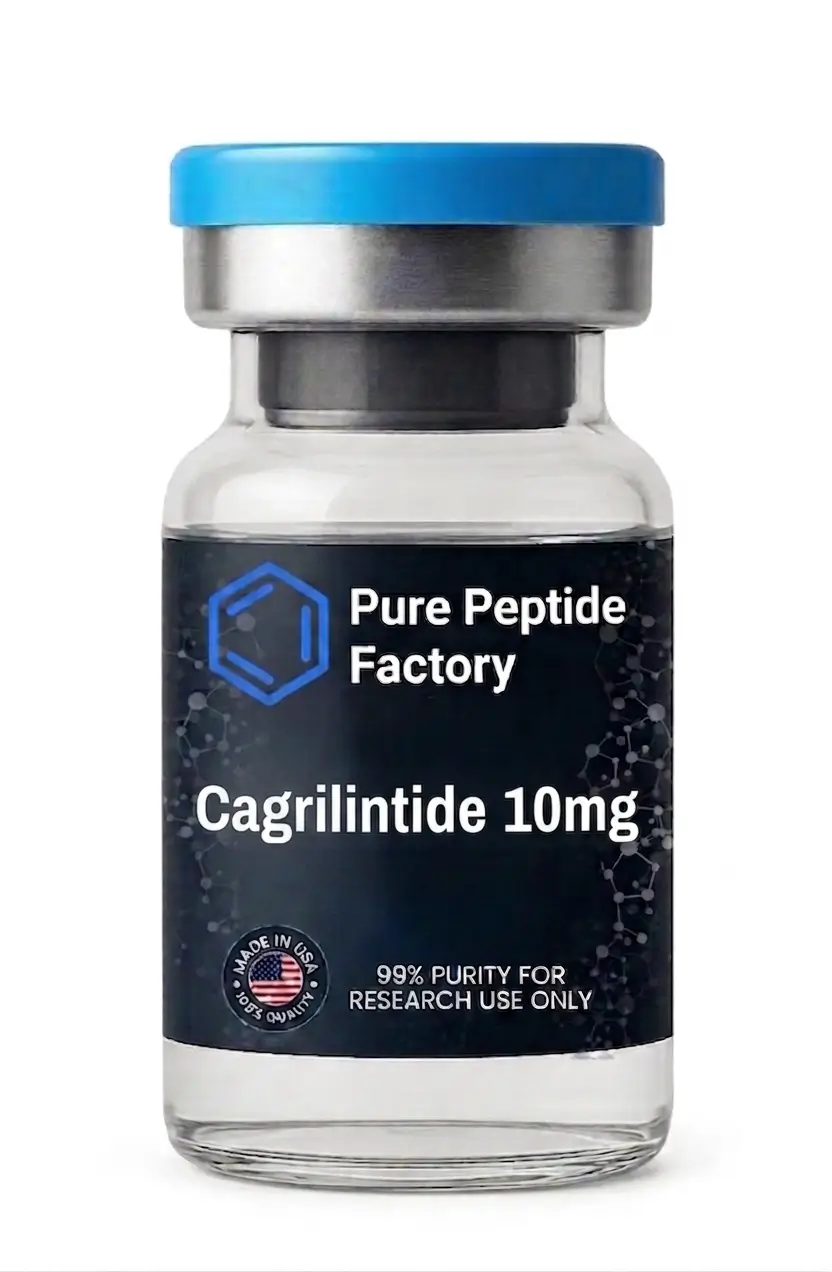
Cagrilintide 10mg
$30.00 $100.00Price range: $30.00 through $100.00
Cagrilintide peptide for sale at Pure Peptide Factory in research-grade 2mg, 5mg, and 10mg configurations. Specifically, cagrilintide is a 37-amino-acid synthetic amylin analog developed by Novo Nordisk (compound code AM833) at the Måløv Research Centre under Lars Knudsen’s team. The REDEFINE 1 Phase 3 trial published in the New England Journal of Medicine demonstrated 22.7% mean weight reduction at 68 weeks with the CagriSema combination versus 3.0% placebo. HPLC verified at 98% minimum purity, batch-specific COA. 2mg, 5mg, and 10mg vials. Research use only.
Cagrilintide Peptide for Sale: The Novo Nordisk Amylin Analog Behind CagriSema
Cagrilintide peptide is the long-acting amylin analog Novo Nordisk developed as the partner compound for next-generation obesity therapy. Specifically, the compound (Novo Nordisk code AM833) emerged from the Måløv Research Centre in Denmark, where Lars Knudsen and colleagues — the same team that developed semaglutide — engineered a 37-amino-acid synthetic peptide modeled on human amylin with structural modifications that produce once-weekly dosing pharmacokinetics. Furthermore, the REDEFINE 1 Phase 3 trial published in the New England Journal of Medicine in June 2025 demonstrated 22.7% mean weight reduction at 68 weeks with the CagriSema combination (cagrilintide + semaglutide) versus 3.0% on placebo across 3,417 adults.
For researchers studying amylin receptor pharmacology, calcitonin receptor signaling, dual-mechanism obesity therapy alongside GLP-1 agonists, or the next generation of cardiometabolic therapeutics, cagrilintide represents the foundational research compound. Pure Peptide Factory stocks research-grade cagrilintide peptide in 2mg, 5mg, and 10mg configurations with domestic cold-chain shipping and batch-specific HPLC documentation. When researchers buy cagrilintide for laboratory work, the long-acting peptide structure with C-terminal amidation and C16 fatty acid acylation requires sophisticated synthesis verification that not all vendors provide.
Why Researchers Buy Cagrilintide Peptide from Pure Peptide Factory
Documentation for an Acylated Long-Acting Peptide
Cagrilintide is a 37-amino-acid synthetic peptide with a critical C16 fatty diacid moiety that provides albumin binding and the once-weekly half-life profile. Specifically, improperly synthesized cagrilintide with incomplete or scrambled lipidation shows reduced receptor binding and altered pharmacokinetics. Therefore, every batch we ship includes a lot-specific HPLC chromatogram and mass spectrometry report verifying the molecular weight target with C16 fatty acid acylation confirmation. The Certificate of Analysis is downloadable before your compound ships.
Domestic Cold-Chain Shipping for Research Reproducibility
Cagrilintide’s stability profile favors lyophilized storage at -20°C, but reconstituted solution handling matters significantly for research protocol design. Furthermore, our customers ordering cagrilintide typically pair it with bacteriostatic water for reconstitution. We ship from domestic cold-storage using phase-change cooling rated for 96-hour protection. Consequently, most orders reach your lab within 1 to 3 business days.
Three Configurations for Research Protocol Flexibility
We stock cagrilintide peptide in 2mg, 5mg, and 10mg vials. Specifically, the 2mg configuration accommodates pilot studies and small-scale receptor pharmacology work, the 5mg vial matches standard published research dosing across the 0.16-4.5mg weekly range used in clinical trials, and the 10mg configuration supports extended dosing protocols and bulk research applications. Therefore, researchers can match vial size to protocol scale without splitting vials or compromising reconstituted solution freshness.
Synthesis Logs Archived for 24 Months
We document and archive every batch. Therefore, if your IRB or compliance office requests chain-of-custody records or synthesis documentation, we can provide them on demand.
What Is Cagrilintide Peptide?
A Long-Acting Amylin Analog from Novo Nordisk
Cagrilintide is a synthetic 37-amino-acid acylated peptide derived from human amylin (also called Islet Amyloid Polypeptide, IAPP), the pancreatic hormone co-secreted with insulin from beta cells in response to meals. Specifically, native amylin has a plasma half-life of approximately 13 minutes, which limits its therapeutic utility despite genuine effects on appetite suppression, gastric emptying, and glucagon suppression. The Novo Nordisk team led by Lars Knudsen engineered cagrilintide with structural modifications including C-terminal amidation, several amino acid substitutions for stability, and a C16 fatty diacid moiety that confers albumin binding for an extended half-life of approximately 7 days, supporting once-weekly subcutaneous dosing.
By contrast with the existing FDA-approved short-acting amylin analog pramlintide (Symlin), which requires three-times-daily injection at mealtimes, cagrilintide’s once-weekly profile makes it practical as a chronic obesity therapy. Furthermore, the structural design parallels semaglutide’s albumin-binding strategy, which is why cagrilintide pairs cleanly with semaglutide in the CagriSema combination currently in Phase 3 development.
Molecular Profile of Cagrilintide Peptide:
- Type: Synthetic 37-amino-acid acylated amylin analog
- Origin compound: Human amylin (IAPP)
- Acylation: C16 fatty diacid moiety for albumin binding
- Half-life: Approximately 7 days (supports once-weekly dosing)
- CAS: 1415456-99-3
- Molecular Formula: C194H299N53O60
- Molecular Weight: Approximately 4291 g/mol
- Synonyms: AM833, NN9838 (developmental codes), cagrilintide acetate
- Developer: Novo Nordisk Research Centre, Måløv, Denmark
- Discovery team: Lars Knudsen and colleagues
- Clinical phase: Phase 3 (CagriSema combination) and Phase 2/3 (monotherapy)
How Cagrilintide Peptide Works at Amylin and Calcitonin Receptors
The mechanism of cagrilintide peptide centers on activation of the amylin receptor family, which is a heterodimeric complex of the calcitonin receptor (CTR) plus one of three receptor activity-modifying proteins (RAMPs). Specifically, the three amylin receptor subtypes are AMY1R (CTR + RAMP1), AMY2R (CTR + RAMP2), and AMY3R (CTR + RAMP3). Furthermore, cagrilintide also activates the calcitonin receptor itself with reduced selectivity compared to native amylin, producing a slightly broader receptor activation profile.
When cagrilintide peptide binds amylin receptors in the brainstem area postrema, dorsal vagal complex, and hypothalamic feeding circuits, three primary effects emerge:
- Appetite suppression and reduced food intake. Cagrilintide activates POMC neurons in the arcuate nucleus and produces direct effects on satiety circuits in the brainstem. As a result, food intake decreases and meal size reduces, producing weight loss through reduced caloric consumption.
- Slowed gastric emptying. Amylin receptor activation in the gastrointestinal tract slows gastric emptying rate, prolonging meal-induced satiety signaling and contributing to reduced caloric intake.
- Glucagon suppression. Cagrilintide reduces postprandial glucagon secretion from pancreatic alpha cells, which contributes to glucose-lowering effects when used in diabetic populations.
The mechanism complements rather than overlaps with GLP-1 receptor agonist effects. Specifically, GLP-1 agonists like semaglutide, tirzepatide, and survodutide primarily act through GLP-1 receptors on hypothalamic AgRP neurons and pancreatic beta cells, while cagrilintide acts through amylin receptor circuits in distinct brain regions. As a result, the CagriSema combination produces additive weight loss beyond what either compound achieves alone.
Cagrilintide Peptide Research: The REDEFINE Phase 3 Program
The CagriSema clinical program is one of the largest Phase 3 obesity trial programs ever conducted, and the data anchor cagrilintide peptide’s research authority.
REDEFINE 1 Trial (NEJM, June 2025)
The REDEFINE 1 trial, published in the New England Journal of Medicine in June 2025, randomized 3,417 adults with obesity (BMI ≥30) or overweight (BMI ≥27) with at least one weight-related complication. Specifically, participants received once-weekly subcutaneous CagriSema (cagrilintide 2.4mg + semaglutide 2.4mg), cagrilintide monotherapy, semaglutide monotherapy, or placebo across 68 weeks.
Primary endpoint outcomes:
| Treatment Arm | Mean Weight Reduction at 68 Weeks |
|---|---|
| Placebo | 3.0% |
| Semaglutide 2.4mg monotherapy | 15.7% |
| Cagrilintide 2.4mg monotherapy | 12.1% |
| CagriSema (cagrilintide + semaglutide) | 22.7% |
The CagriSema arm produced 22.7% mean weight reduction versus 3.0% on placebo — among the largest weight loss outcomes documented in any obesity Phase 3 trial. Furthermore, the additive effect (22.7% combination versus 15.7% semaglutide alone) demonstrates the mechanistic complementarity between GLP-1 receptor and amylin receptor activation that drives the CagriSema therapeutic strategy.
REDEFINE 2 Trial (Type 2 Diabetes)
REDEFINE 2 examined CagriSema in adults with type 2 diabetes and obesity. Specifically, the trial design parallels REDEFINE 1 with cagrilintide peptide’s metabolic effects evaluated alongside the weight loss endpoints. Phase 3 results have demonstrated dual-action efficacy in cardiometabolic disease populations, supporting expanded indications beyond pure obesity.
REDEFINE Program Scope
The REDEFINE program totals over 8,000 participants across multiple Phase 3 trials examining CagriSema in obesity, type 2 diabetes, MASH (metabolic dysfunction-associated steatohepatitis), and cardiovascular outcomes contexts. As a result, cagrilintide research-grade peptide allows preclinical investigation of mechanisms paralleling the most extensive amylin analog clinical pipeline ever conducted.
Cagrilintide Peptide Research Applications
Obesity and Weight Management Research
The primary research application for cagrilintide peptide is preclinical obesity research using diet-induced obesity (DIO) mouse models, genetic obesity models (ob/ob, db/db, Zucker rats), and combination protocols with GLP-1 agonists. Specifically, published research documents:
- 8-12% weight reduction in DIO mouse models with cagrilintide monotherapy
- Additive 18-22% weight reduction with cagrilintide + semaglutide combination
- Reduced food intake measured via metabolic chambers
- Preserved lean mass alongside fat mass reduction
- Improved glucose homeostasis and insulin sensitivity
Research endpoints include body composition analysis (DEXA, MRI), indirect calorimetry, food intake monitoring, glucose tolerance testing, insulin tolerance testing, and amylin receptor expression profiling.
Amylin Receptor Pharmacology Research
Cagrilintide peptide serves as a research tool for examining amylin receptor signaling in isolation from the broader metabolic effects of native amylin’s short half-life. Specifically, the long-acting profile allows sustained receptor activation studies impossible with native amylin or pramlintide. Research applications include:
- AMY1R, AMY2R, AMY3R receptor binding studies in transfected cell lines
- Calcitonin receptor selectivity profiling
- Receptor activity-modifying protein (RAMP) interactions
- Brainstem area postrema neuron electrophysiology
- POMC neuron activation studies in hypothalamic preparations
Combination Protocol Research with GLP-1 Agonists
The research framework most directly relevant to the clinical pipeline is combination protocol studies pairing cagrilintide with GLP-1 receptor agonists. Specifically, the additive mechanism (amylin + GLP-1) produces effects beyond either compound alone, which has been documented across multiple preclinical and clinical research programs. Researchers running combination protocols in our facility benefit from sourcing cagrilintide peptide alongside tirzepatide, survodutide, and mazdutide under identical handling conditions to eliminate batch variability.
Type 2 Diabetes and Glycemic Research
Cagrilintide peptide produces glucose-lowering effects through three mechanisms: glucagon suppression, slowed gastric emptying, and weight loss-mediated insulin sensitivity improvement. Research applications include:
- HbA1c response curves in T2DM rodent models
- Postprandial glucose handling in oral glucose tolerance tests
- Beta-cell function preservation studies
- Comparative glycemic control versus GLP-1 monotherapy
Cardiovascular and Metabolic Disease Research
The CagriSema cardiovascular outcomes pipeline has driven research expansion into cardiometabolic disease models. Specifically, cagrilintide research applications now include:
- Endothelial function and inflammatory marker modulation
- Blood pressure effects of amylin receptor activation
- Lipid profile changes independent of weight loss
- Cardiac remodeling studies in hypertensive obesity models
MASH and Hepatic Fibrosis Research
Building on the metabolic benefits, the CagriSema program includes MASH (metabolic dysfunction-associated steatohepatitis) research that parallels the survodutide MASH program. As a result, cagrilintide peptide research now extends into:
- Liver fat quantification by MRI-PDFF in obesity models
- Hepatic fibrosis stage progression studies
- Comparative MASH endpoint research versus GLP-1/glucagon dual agonists
Cagrilintide vs Semaglutide vs Tirzepatide vs Retatrutide
Researchers comparing cagrilintide peptide to existing weight management research compounds need to understand the mechanistic distinctions:
| Feature | Cagrilintide | Semaglutide | Tirzepatide | Retatrutide |
|---|---|---|---|---|
| Type | Amylin analog (37 aa) | GLP-1 agonist (31 aa) | GLP-1/GIP dual (39 aa) | GLP-1/GIP/GCG triple (39 aa) |
| Receptor targets | AMY1/2/3R + CTR | GLP-1R | GLP-1R + GIP-R | GLP-1R + GIP-R + GCGR |
| Half-life | ~7 days | ~7 days | ~5 days | ~6 days |
| Phase 3 weight loss | 12.1% (mono), 22.7% (combo) | 14.9% (STEP 1) | 22.5% (SURMOUNT-1) | 24.2% (Phase 2) |
| FDA approval status | Not approved (Phase 3) | Approved (Wegovy/Ozempic) | Approved (Mounjaro/Zepbound) | Phase 3 |
| Mechanism complement | Adds amylin to GLP-1 | Reference | Adds GIP receptor | Adds glucagon receptor |
| Best for studying | Amylin pharmacology, combination obesity | GLP-1R signaling, reference standard | GIP/GLP-1 synergy | Triple agonist pharmacology |
The mechanistic distinction matters for research design. Cagrilintide peptide and GLP-1 agonists answer different research questions and operate through complementary pathways. Furthermore, the CagriSema combination demonstrates that combining mechanisms produces additive effects beyond what either compound achieves alone.
For comparative research protocols, our facility stocks cagrilintide alongside semaglutide research compounds, tirzepatide, survodutide, and mazdutide under identical handling conditions.
Cagrilintide vs Pramlintide: Long-Acting vs Short-Acting Amylin Analogs
Researchers studying amylin receptor pharmacology often compare cagrilintide peptide to pramlintide, the FDA-approved short-acting amylin analog (Symlin) used in type 1 and type 2 diabetes treatment:
| Feature | Cagrilintide | Pramlintide (Symlin) |
|---|---|---|
| Length | 37 amino acids | 37 amino acids |
| Acylation | C16 fatty diacid | None |
| Half-life | ~7 days | ~50 minutes |
| Dosing | Once weekly | 3x daily at mealtimes |
| Approval status | Phase 3 | FDA approved 2005 |
| Primary indication studied | Obesity, T2DM | T1DM, T2DM mealtime control |
| Best for studying | Chronic amylin pharmacology | Acute mealtime amylin physiology |
Both compounds activate the same amylin receptor system, but the dosing profiles support different research questions. Specifically, pramlintide produces acute mealtime effects suitable for short-duration studies, while cagrilintide enables chronic exposure protocols matching the obesity Phase 3 development context.
Cagrilintide Peptide Dosage Research Framework
Published clinical and preclinical research dosing across the CagriSema program:
| Research Context | Dose | Route | Frequency | Reference |
|---|---|---|---|---|
| REDEFINE 1 (cagrilintide mono, weeks 17+) | 2.4 mg | Subcutaneous | Once weekly | NEJM 2025 |
| REDEFINE 1 (CagriSema fixed-dose) | 2.4 mg cagrilintide + 2.4 mg semaglutide | Subcutaneous | Once weekly | NEJM 2025 |
| Phase 2 dose-finding | 0.16, 0.30, 0.60, 1.2, 2.4, 4.5 mg | Subcutaneous | Once weekly | Phase 2 program |
| Mouse DIO model | Per protocol (mg/kg scaled) | Subcutaneous | Daily or QOD | Multiple |
| Cell culture receptor binding | Nanomolar concentrations | In vitro | Per assay | Multiple |
| Combination with GLP-1 agonist | Per study design | Subcutaneous | Once weekly | Multiple |
Dose escalation in clinical research: The Phase 3 protocol used 16-week dose escalation from 0.25mg through 0.5mg, 1mg, 1.7mg, to 2.4mg target, paralleling semaglutide’s escalation pattern. Research protocols mimicking clinical trial design should incorporate the escalation phase to match published tolerability data.
We do not provide human dosing recommendations. The dosing references above synthesize peer-reviewed clinical and preclinical research and serve only as laboratory research design context. Cagrilintide peptide is not FDA-approved as monotherapy.
How to Reconstitute Cagrilintide Peptide
Step-by-Step Laboratory Protocol
- Sanitize the vial stopper with 70% isopropyl alcohol
- Inject bacteriostatic water slowly against the vial wall (do not aim at the lyophilized cake)
- Allow the lyophilized powder to dissolve without agitation for 3 to 5 minutes. The C16 fatty diacid acylation makes cagrilintide more hydrophobic than standard peptides, so patient dissolution matters
- Gently swirl until the solution clears. Do not shake vigorously (vigorous agitation can promote aggregation)
- Verify a clear, colorless solution before use
- Label with reconstitution date and concentration
Concentration reference for 2mg vial:
- 2mg vial + 1mL water = 2mg/mL
- 2mg vial + 2mL water = 1mg/mL
Concentration reference for 5mg vial:
- 5mg vial + 1mL water = 5mg/mL
- 5mg vial + 2mL water = 2.5mg/mL
- 5mg vial + 5mL water = 1mg/mL
Concentration reference for 10mg vial:
- 10mg vial + 1mL water = 10mg/mL
- 10mg vial + 2mL water = 5mg/mL
- 10mg vial + 5mL water = 2mg/mL
- 10mg vial + 10mL water = 1mg/mL
Storage Requirements
- Lyophilized powder: 24 months at -20°C, protected from light
- Reconstituted solution: 28 days at 2 to 8°C. Do not freeze reconstituted cagrilintide
- The C16 fatty diacid moiety increases hydrophobicity; dissolve slowly and protect from light at all stages
- Avoid repeated freeze-thaw cycles on reconstituted solution
Cagrilintide Peptide for Sale: Regulatory Context
Current Clinical Development Status
Cagrilintide peptide is not yet FDA-approved for any indication. However, the CagriSema combination is in Phase 3 development with anticipated FDA submission following REDEFINE program completion. Specifically, the regulatory pathway parallels Novo Nordisk’s prior obesity program submissions for semaglutide (Wegovy), with the Phase 3 weight loss data (22.7% mean reduction) supporting approval for chronic weight management.
The European Medicines Agency, Health Canada, and Japan PMDA are also evaluating CagriSema in parallel regulatory pathways. Furthermore, anticipated approval timelines are 2026-2027 across major markets pending Phase 3 readouts.
Research Use Only
Research-grade cagrilintide peptide is available for laboratory procurement under research-use-only terms without a prescription. This compound is not for human consumption, veterinary use, or diagnostic application. You must agree to research-use-only terms at checkout.
Product Specifications
Available Configurations
Cagrilintide peptide is available in 2mg, 5mg, and 10mg vials. Select your configuration from the product options above based on protocol scale.
Quality Verification
- Purity: 98% minimum (HPLC verified)
- Identity: Mass spectrometry confirmed against the cagrilintide molecular weight target with C16 fatty acid acylation verification
- Endotoxin: Less than 0.1 EU/mL
- Sterility: Verified per USP 71
- Form: Lyophilized powder
- Storage: -20°C long-term, 2 to 8°C short-term after reconstitution
Current Batch: #PPF-CAG-0426
Purity: 98.6%
Download: HPLC Certificate | MS Report
Cagrilintide Peptide Frequently Asked Questions
What is cagrilintide peptide used for in research?
Researchers use cagrilintide peptide in obesity and weight management research, amylin receptor pharmacology studies, combination protocols with GLP-1 receptor agonists (semaglutide, tirzepatide), type 2 diabetes glycemic research, MASH and hepatic fibrosis investigations, cardiovascular outcomes research, and brainstem appetite regulation studies.
Where can I buy cagrilintide peptide for research?
Pure Peptide Factory stocks research-grade cagrilintide peptide in 2mg, 5mg, and 10mg vials with batch-specific HPLC and mass spectrometry documentation. Furthermore, domestic cold-chain shipping delivers most orders within 1 to 3 business days.
What is cagrilintide?
Cagrilintide is a 37-amino-acid synthetic amylin analog developed by Novo Nordisk (compound code AM833) for weight management research. Specifically, the compound is engineered from human amylin with structural modifications including C-terminal amidation and a C16 fatty diacid moiety that confers approximately 7-day half-life supporting once-weekly subcutaneous dosing.
What is the difference between cagrilintide and semaglutide?
Cagrilintide is an amylin analog targeting amylin receptors (AMY1R, AMY2R, AMY3R). By contrast, semaglutide is a GLP-1 receptor agonist. Furthermore, the two compounds operate through complementary pathways and produce additive weight loss when combined as CagriSema. See the comparison table above for full details.
How does cagrilintide compare to tirzepatide?
Cagrilintide is an amylin receptor analog. Tirzepatide is a GLP-1/GIP dual receptor agonist. Specifically, in Phase 3 trials, cagrilintide monotherapy produced 12.1% weight reduction versus tirzepatide’s 22.5% in SURMOUNT-1. However, the CagriSema combination (cagrilintide + semaglutide) produced 22.7% — comparable to tirzepatide. Therefore, cagrilintide functions best as a combination partner rather than monotherapy.
What is CagriSema?
CagriSema is the fixed-dose combination of cagrilintide peptide (2.4mg) plus semaglutide (2.4mg) administered once weekly as a single subcutaneous injection. Specifically, the combination produced 22.7% mean weight reduction at 68 weeks in REDEFINE 1, the largest Phase 3 weight loss trial to date. Furthermore, the additive mechanism (amylin + GLP-1) demonstrates pharmacological synergy beyond either compound alone.
What is cagrilintide’s mechanism of action?
Cagrilintide peptide activates the amylin receptor family (AMY1R, AMY2R, AMY3R), which are heterodimeric complexes of the calcitonin receptor plus receptor activity-modifying proteins (RAMPs). Specifically, activation produces appetite suppression through brainstem and hypothalamic feeding circuits, slowed gastric emptying, and glucagon suppression. Furthermore, cagrilintide also activates the calcitonin receptor itself, producing a slightly broader receptor activation profile than native amylin.
What dose of cagrilintide is used in research?
Phase 3 clinical research uses 2.4mg subcutaneously once weekly after 16-week dose escalation. By contrast, Phase 2 dose-finding studied 0.16mg, 0.30mg, 0.60mg, 1.2mg, 2.4mg, and 4.5mg doses. Preclinical rodent studies use mg/kg dosing scaled by species. We do not provide human dosing recommendations.
What are cagrilintide side effects in research models?
Published clinical research documents predominantly gastrointestinal side effects (nausea, vomiting, diarrhea, constipation) similar to GLP-1 receptor agonists. Specifically, GI effects were mostly mild-to-moderate and decreased over time as participants adapted. Furthermore, no serious safety signals emerged across the REDEFINE Phase 3 program.
Is cagrilintide FDA approved?
Cagrilintide peptide is not yet FDA approved for any indication. However, Novo Nordisk anticipates FDA submission for CagriSema (cagrilintide + semaglutide) following Phase 3 program completion. The FDA approval timeline is anticipated 2026-2027 pending REDEFINE readouts. Research-grade cagrilintide is legally available for laboratory procurement under research-use-only provisions.
How does cagrilintide compare to retatrutide?
Cagrilintide is an amylin receptor analog. Retatrutide is a GLP-1/GIP/glucagon triple receptor agonist. Specifically, retatrutide produced 24.2% weight loss in Phase 2 with single-compound monotherapy. By contrast, cagrilintide monotherapy produced 12.1% but combines additively with GLP-1 agonists for 22.7% in CagriSema. Therefore, the compounds answer different research questions.
How should cagrilintide peptide be stored?
Lyophilized powder stores at -20°C for up to 24 months protected from light. Reconstituted solution stores at 2 to 8°C for up to 28 days. Do not freeze reconstituted cagrilintide. The C16 fatty diacid acylation requires careful reconstitution with patient dissolution and minimal agitation.
Order Cagrilintide Peptide for Research
Secure Checkout
- Credit card, cryptocurrency, or wire transfer
- Same-day dispatch for orders placed before 2 PM EST
- Cold-chain packaging with phase-change cooling
- Discreet labeling with full tracking
Institutional Accounts
Net-30 terms and purchase order acceptance available for universities and pharmaceutical companies. Furthermore, contact us for bulk pricing on 50 vials or more, including matched bulk orders for cagrilintide peptide alongside tirzepatide, survodutide, and mazdutide for comparative obesity research protocols.
Verify Cagrilintide Clinical Pipeline
For current cagrilintide Phase 3 trial status, see ClinicalTrials.gov REDEFINE program and the Novo Nordisk pipeline page. The FDA Investigational New Drug program provides regulatory context for compounds in active clinical development.
Add to cart and get research-grade cagrilintide peptide delivered with the documentation your obesity, amylin pharmacology, or combination protocol research requires.
Related products
-
Cagrisema 5 mg
$50.00